
Most advice on poppies gets the main question wrong. People ask, are poppies good cut flowers, and they get a blanket yes or no. That's the mistake.
The answer depends on which poppy you're cutting, when you harvest it, and how you condition it. Treat all poppies the same and you'll be disappointed. Choose the right variety, cut at the right stage, and handle the stems correctly, and some poppies become far more usable than their reputation suggests.
For florists, wedding planners, and DIY couples, that distinction matters. A delicate, papery bloom that drops fast at full open is a problem for long event windows. A cracked-bud Iceland poppy that's handled properly is a very different product.
Table of Contents
- The Poppy Paradox Why They Have a Challenging Reputation
- Not All Poppies Are Created Equal Choose the Right Varieties
- The Art of the Poppy Harvest Timing and Technique
- Conditioning Poppies for Maximum Vase Life
- Designing and Styling with Poppies in Arrangements
- Shipping Handling and Advanced Grower Techniques
The Poppy Paradox Why They Have a Challenging Reputation
Poppies earned their difficult reputation deservedly. If you cut the wrong kind at the wrong stage and drop it straight into water, you'll often get a flower that looks beautiful for a moment and then collapses before the job is done.
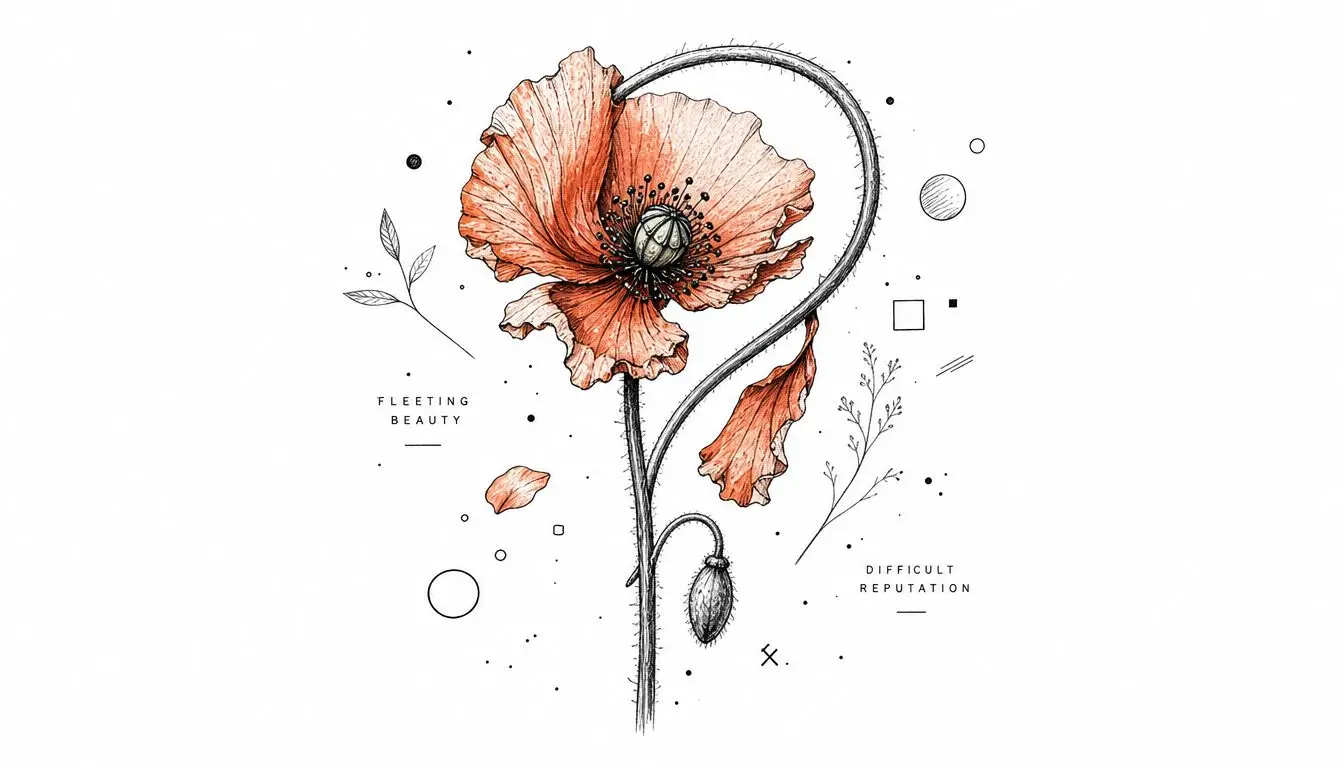
Why cut poppies fail so fast
The core issue is biological, not mysterious. Most poppy varieties typically last only 2 to 3 days in a vase because a milky latex sap that oozes immediately after cutting clogs vascular channels and prevents water uptake; searing the stem ends for approximately 10 seconds seals this sap and significantly extends durability, as noted by Three Acre Farm on growing and handling poppies.
That one fact explains most poppy failures. The stem is cut, latex leaks, water movement is reduced, and the bloom can't support itself well enough for design work. People often blame the flower's delicacy, but the bigger problem is poor post-harvest handling.
Practical rule: If you treat a poppy stem like a tulip or zinnia stem, expect a poor result.
The reputation is deserved, but incomplete
The trouble starts when growers and buyers turn that real weakness into a universal rule. “Poppies are bad cut flowers” sounds tidy, but it hides the trade-off. Some poppies are poor vase performers. Some are workable only with heat treatment. Some are excellent if harvested and conditioned correctly.
That's why professionals get such mixed results. One florist may buy fully open stems for a same-day dinner and think poppies are usable enough. Another may try to hold those same flowers for an installation window and decide never again.
A more useful way to think about poppies is this:
- They are not forgiving. Mistakes in timing show up fast.
- They are variety dependent. One type can behave very differently from another.
- They reward technique. Proper handling changes the outcome.
Poppies aren't low-skill flowers. They're precision flowers.
That precision is exactly what makes them valuable in high-end design. The tissue-paper petals, curved stems, and just-opened movement give an arrangement something sturdier flowers can't. But the beauty only holds if the handling matches the flower.
Not All Poppies Are Created Equal Choose the Right Varieties
The biggest mistake buyers make is shopping for “poppies” as if that's a single cut-flower category. It isn't. Variety choice is the difference between a stem you can work into an event schedule and a stem you should admire in the field.
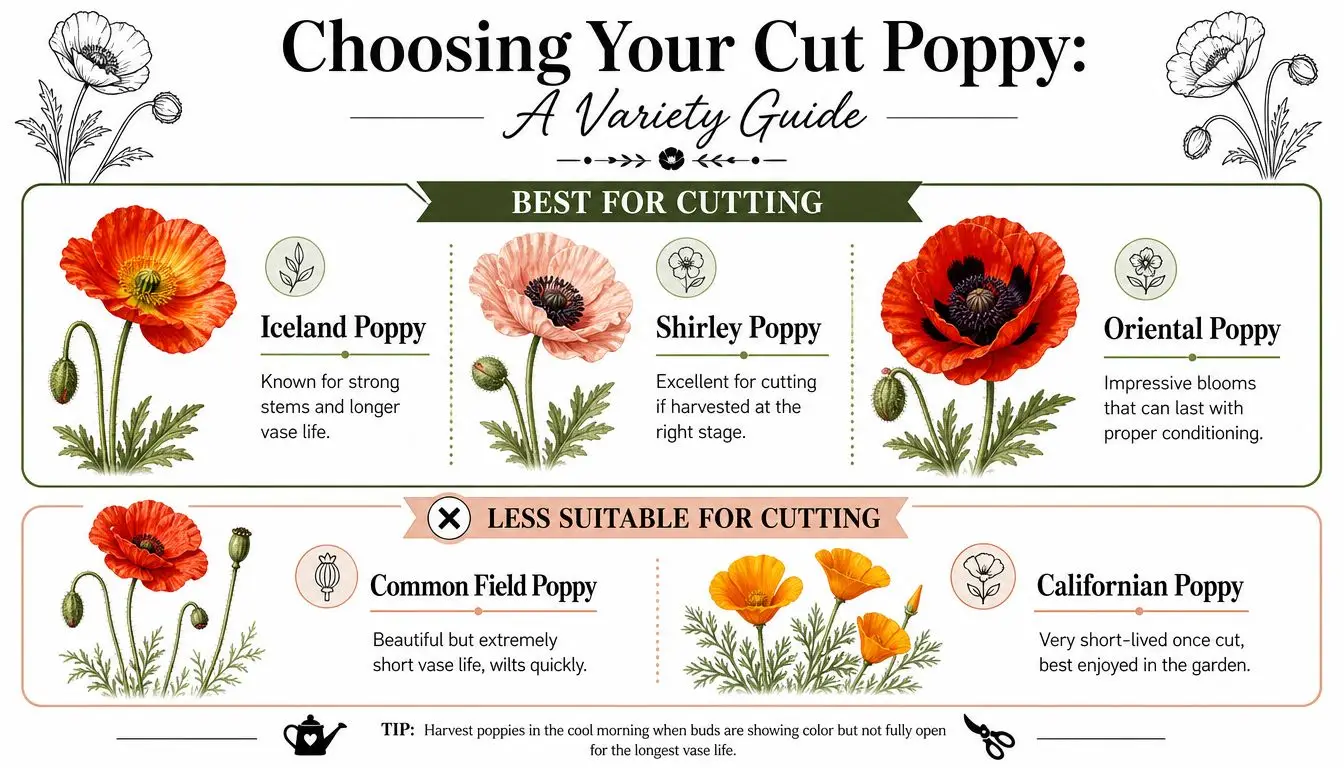
A quick variety comparison
There is a significant variety-specific discrepancy in vase life; for example, Iceland poppies can achieve 5 to 7 days, while Breadseed poppies last only 2 to 3 days. Varieties like Oriental and Shirley poppies require mandatory heat treatment to prevent their milky latex from shortening vase life, according to Bootstrap Farmer's poppy cultivation guide.
Here's the practical breakdown.
| Variety | Cut flower use | Typical handling reality | Best fit |
|---|---|---|---|
| Iceland poppy | Strongest candidate for regular cut use | More reliable if harvested young and handled carefully | Weddings, retail bouquets, spring event work |
| Shirley poppy | Good cut flower with proper treatment | Needs careful stage selection and heat treatment | Airy bouquet work, delicate garden designs |
| Oriental poppy | Dramatic but more demanding | Showy bloom, mandatory heat treatment, less forgiving | Statement pieces, short-window design |
| Breadseed poppy | Usually a poor choice for long vase performance | Better understood as a brief-use stem or garden flower | Same-day use, garden cutting, not long holds |
That variety gap is where many DIY wedding problems start. A planner hears that poppies are romantic and seasonal, orders a generic mix, then expects all stems to perform like Iceland poppies. They won't.
Who should use which type
If you need the safest route, start with Iceland poppies. They're the variety I'd point most professionals toward first because their cut-flower performance is much more workable than the broad “poppies don't last” advice suggests.
If your design goal is softness and translucence, Shirley poppies can be worth the extra handling. If your goal is spectacle, Oriental poppies have presence, but they aren't the stem I'd choose for a long production timeline unless every post-harvest step is controlled.
Breadseed poppies are where expectations need tightening. They can be lovely, but they aren't the stem to promise for an arrangement that must look fresh through a long event sequence.
A good comparison point is 12 Cut-and-Come-Again Zinnias in Glass Vase, a cheerful arrangement of 12 vibrant cut-and-come-again zinnias in a clear glass vase. It shows the opposite end of the handling spectrum. Zinnias read as playful and abundant, and they're generally chosen for easy, lively endurance. Poppies are chosen for character, movement, and fragility. They aren't interchangeable design products.
Buy poppies by variety name, not by color alone.
That one discipline prevents a lot of expensive disappointment.
The Art of the Poppy Harvest Timing and Technique
Poppy harvest is not about chasing the prettiest open flower in the row. That flower is for the garden. The cut stem you want is still holding itself back.
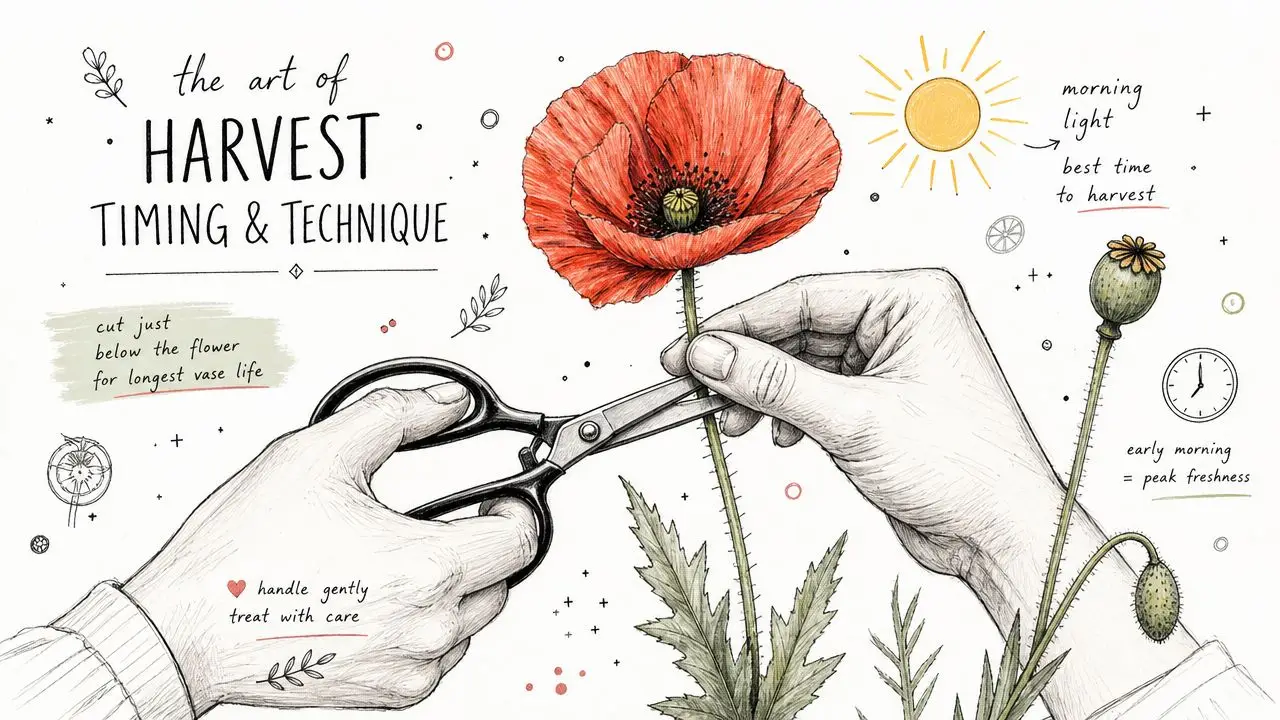
Read the bud, not the open flower
Harvesting must occur in the cracked bud stage, as once pollinated, poppies become “basically useless” as cut flowers due to rapid petal drop. Iceland poppies harvested at this stage can have a vase life of 5 to 10 days with proper care, as described by Sierra Flower Farm's Iceland poppy notes.
The cracked bud stage is the moment that matters. The casing has split and you can see color, but the petals haven't fully expanded. That's the sweet spot. If you wait for the bloom to flatten and show off in the field, you've usually missed your best cut point.
For teams training new harvesters, I'd describe it this way:
- Too tight: The bud is closed and hard, with no meaningful crack.
- Just right: The wrapper has split and petal color is visible.
- Too far: The flower is open enough to attract attention from across the bed.
This is also why morning harvest is such a good habit. You're catching stems before the day advances too far and before pollination changes the flower's usefulness.
A workable harvest routine
Use a simple routine and keep it consistent.
- Walk for stage, not color. Don't pick the loudest bloom in the patch.
- Cut clean stems early. Handle lightly. Crushed stems don't improve later.
- Separate by maturity. Cracked buds for holding. More open stems for immediate work.
- Process quickly. Poppies don't benefit from sitting around dry after cutting.
A short demonstration helps if you're training staff or doing DIY event prep:
The best poppy stem for design often looks unimpressive at harvest. That's normal.
Florists who are new to poppies sometimes resist cutting them this early because the stems don't look “finished.” That instinct makes sense visually, but it shortens the usable window. With poppies, discipline at harvest is what gives you design freedom later.
Conditioning Poppies for Maximum Vase Life
Harvest gets you potential. Conditioning determines whether you keep it.
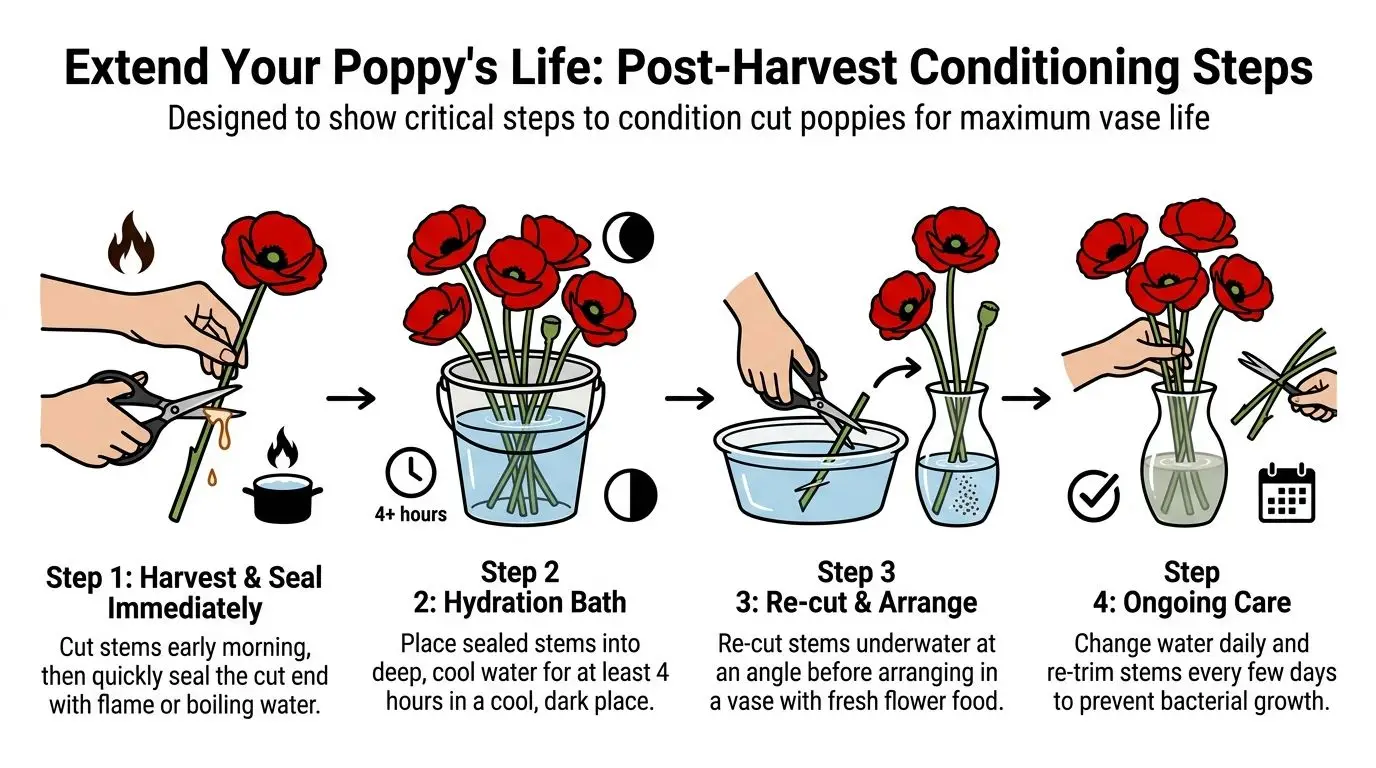
Heat treatment is mandatory for many stems
The post-harvest step that many general guides skip is the one that matters most. Poppy stems often need heat treatment right after cutting so the latex problem doesn't undo the harvest work.
Practical options include:
- Flame searing: Briefly sear the stem end to cauterize it.
- Hot water treatment: Dip stem ends in hot water instead of using a flame.
- Fast transfer to water: Once treated, get stems into hydration without delay.
For Oriental and Shirley poppies, this isn't an optional refinement. It's standard handling. If you skip it, you're testing the flower under the worst possible conditions and then blaming the variety.
A useful reference for broader post-harvest handling habits is Barbara's Flower Boutique's archive on flower conditioning methods for cut stems. The exact species varies, but the discipline is the same. Fast processing, clean water, and consistent stem treatment matter more than hopeful arranging tricks.
The rest period matters too
After sealing the stems, give poppies time to hydrate in a cool place before arranging. Don't cut, treat, and jam them straight into a finished design if you can avoid it. They benefit from a quiet recovery period.
A simple workflow looks like this:
- Seal the stem ends immediately
- Hydrate in cool water
- Re-cut if needed before design
- Use clean vessels and fresh solution
Bench note: Poppies usually punish rushed processing more than they punish gentle design handling.
Many event failures arise when teams spend effort on color palette and mechanics but process flowers too fast at the bucket stage. With poppies, the bucket stage is the job. The arrangement just reveals whether the prep was done well.
Designing and Styling with Poppies in Arrangements
Poppies don't want to behave like formal focal flowers. The stems bend, the buds nod, and the petals have that crinkled texture that looks best when it has room to breathe. If you force them into a tight, symmetrical recipe, they lose what makes them compelling.
Use poppies where movement helps
Poppies shine in designs that benefit from looseness. Garden-style bouquets, airy centerpieces, and ceremony pieces with a bit of line and gesture suit them well. They bring animation even before every bud is fully open.
That makes them especially useful when you want an arrangement to feel gathered rather than manufactured. Their shape introduces pauses and arcs that sturdier flowers can't fake.
A good visual approach is to borrow from the softer side of rustic flower arrangements with natural movement. Poppies fit that language well because they already carry a field-grown look. You don't need to over-style them.
Pairings that don't fight the flower
What works best with poppies is restraint.
- Use supportive flowers, not competing ones. Let poppies be the flicker and motion near the edge of the design.
- Choose light companions. Fine foliage, branching material, and flowers with an open habit tend to sit better beside them.
- Save dense focal flowers for another job. Heavy, rigid blooms can make poppies look accidental instead of intentional.
For weddings, I like poppies most when they're treated as expressive ingredients, not structural anchors. They can absolutely carry emotional weight in a bouquet, but they shouldn't be asked to do all the engineering. Build the arrangement with support underneath, then let the poppies provide the lift and softness on top.
Shipping Handling and Advanced Grower Techniques
Professionals shouldn't dismiss poppies just because they're fussy. The very traits that make them tricky also create opportunity. A flower that's cut young, shipped in bud, and opened closer to use can solve timing problems that fully open garden flowers can't.
Why professionals should not dismiss poppies
The strongest argument for poppies in professional work is flexibility, not toughness. They're still delicate. But delicate and unusable are not the same thing.
One of the least discussed advantages is that cracked-bud material gives you a controllable stage for transport and event timing. That matters for florists handling multi-day weddings, installations, or staggered design sessions.
An emerging technique makes that even more interesting. Dry-storing cracked poppy buds in a refrigerator and rehydrating them later has an 85% success rate among specialty growers, according to Floret's poppy primer. That kind of result directly challenges the lazy idea that poppies are automatically poor commercial flowers.
Storage choices that create flexibility
For growers and designers, the value of dry storage is simple. It can widen your working window.
A practical decision framework looks like this:
| Situation | Better approach |
|---|---|
| Immediate arrangement work | Use stems that are ready to open soon and process promptly |
| Event work with a delay before installation | Favor cracked buds and controlled holding |
| Shipping to another team | Send younger material that can finish opening later |
| Uncertain timing | Consider advanced storage methods instead of fully open stems |
This is also where sourcing matters. Teams that regularly order flowers for events often benefit from working with suppliers who understand shipping rhythms and stem stage. For buyers comparing options, Barbara's Flower Boutique has a page on wholesale cut flowers for event and design use, which is relevant if you're evaluating shipped product rather than field-harvested stems.
The main caution is that advanced handling doesn't erase bad earlier choices. Dry storage won't save overmature blooms. Shipping won't improve stems that were cut too late. Poppies reward discipline all the way through the chain.
The short answer to are poppies good cut flowers is yes, sometimes. The better answer is that the right varieties are good cut flowers when the harvest stage, conditioning method, and storage plan all match the flower.
Barbara's Flower Boutique LLC sells cut flowers online through Barbara's Flower Boutique LLC, with FedEx shipping available and shipping paid by the customer. If you're sourcing stems for floral design, weddings, or event work, it's one option to compare alongside local farms and wholesale channels.
Discover more from Barbara's Flower Boutique
Subscribe to get the latest posts sent to your email.