
Guests arrive at cocktail hour with one hand on a glass and the other reaching for a canapé. They're standing, turning, greeting family, scanning the room, and setting the tone for the rest of the event in those first minutes. That's exactly why cocktail table centrepieces matter so much. They sit at eye level in a busy part of the room, and if they're too tall, too fussy, too loose, or too fragile, everyone notices.
The challenge is that cocktail tables ask more from flowers than dinner tables do. The surface is smaller. The traffic is heavier. The arrangement has to look finished from every angle, stay stable when guests lean in, and leave enough room for drinks, plates, phones, and handbags. Good design helps, but mechanics decide whether a centerpiece survives the hour.
For a standard 100-guest wedding, planners typically use 5 to 7 cocktail tables, based on roughly 1 cocktail table per 15 to 20 guests, and the full event often lands at 13 to 18 total centerpieces once guest tables, a sweetheart or head table, and optional accent pieces are counted. That's why these pieces deserve a real plan, not an afterthought.
What follows are eight practical approaches that work in the field. Each one includes design logic, materials, sizing guidance, budget-minded variations, and setup notes for florists, planners, and ambitious DIY couples.
Table of Contents
- 1. Minimalist Single-Stem Statement Centerpieces
- 2. Lush Garden-Style Mixed Arrangements
- 3. Monochromatic Ombre Centerpieces
- 4. Elevated Tall Arrangements with Greenery Focus
- 5. Low Disk and Bubble Bowl Arrangements
- 6. Seasonal Wildflower and Native Plant Centerpieces
- 7. Tropical and Exotic Bloom Centerpieces
- 8. Textured Mixed Greenery and Foraged-Look Centerpieces
- Comparison of 8 Cocktail Table Centerpiece Styles
- Choosing the Right Centrepiece for Your Event
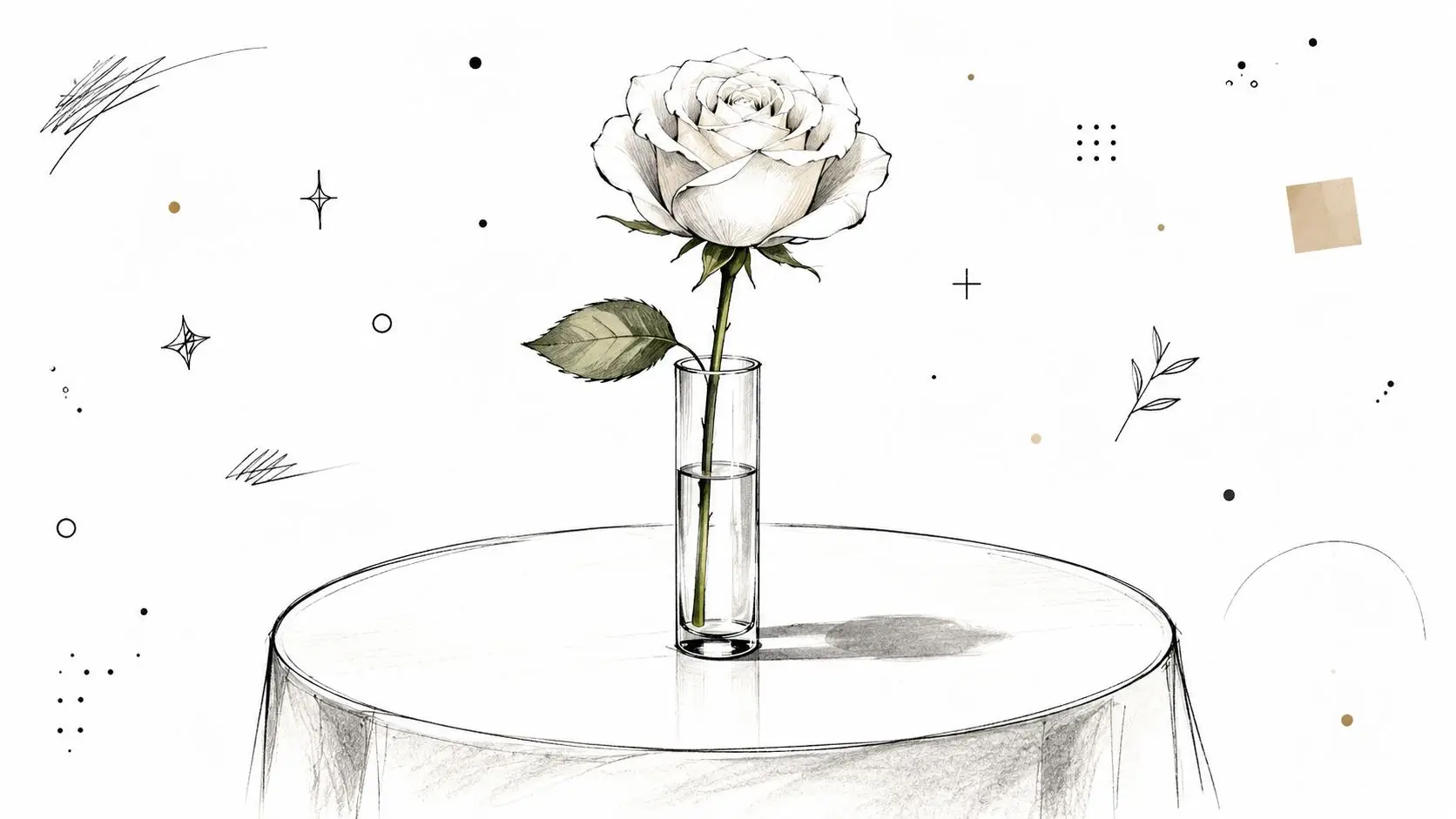
1. Minimalist Single-Stem Statement Centerpieces
A cocktail table is already working hard. It holds drinks, phones, napkins, and the quick conversations that define the first hour of a reception. A single-stem centerpiece earns its place only when the flower, vessel, and proportion are all right.
Why this style works
I use this format in rooms with strong architecture or strong styling already in place. Rooftops, galleries, black-tie receptions, and corporate events with custom linens usually need restraint more than volume. One excellent stem gives the eye a focal point without crowding the tabletop.
It also solves a practical problem. Guests standing around a high-top need clear space more than they need floral mass. Low-footprint pieces reduce spills, stop guests from shifting the arrangement to make room, and keep sightlines open from every side.
Minimal design is unforgiving.
Every flaw shows. Bent necks, water marks, poor hydration, a vase that is too light, or a stem cut too short will read as a mistake instead of a design choice. That is the trade-off. You use fewer ingredients, but you need better ingredients and tighter execution.
A useful reference point for the look is 12 Cut-and-Come-Again Zinnias in Glass Vase. The takeaway for event work is simple. Clean glass and expressive stems can carry a table without filler, collaring greens, or extra ribbon.
Blueprint: materials, sizing, and mechanics
For most cocktail tables, use one of these vessel types:
- Slim cylinder vase: Best for roses, tulips, and callas with a straight or lightly curved line
- Narrow bud vase: Best for single blooms or very light branching stems
- Small bottle-style vase: Good for a relaxed restaurant or garden-modern look, but only if the base is weighted
Size matters more here than in fuller designs. On a standard cocktail table, the vessel usually looks right at roughly 4 to 8 inches tall, with a finished stem height that feels intentional rather than towering. If the flower sits too low, it disappears among glassware. If it rises too high without enough visual weight, it wobbles and catches sleeves.
I keep the recipe tight:
- One stem per vase for the cleanest modern read
- Two stems max if they move as one line, such as a pair of mini callas or one bloom with one grass
- One color family for formal work. White, green, blush, or a single dark tone usually reads cleanest under mixed event lighting
For florists and planners buying in volume, this style lives or dies on stem quality and consistency, so it helps to source from wholesale cut flower suppliers that can give you reliable stem length and opening stage.
Best stem choices by event feel
Some flowers are naturally better suited to the single-stem format than others.
- Reflexed rose: Formal, controlled, works well for weddings and luxury corporate events
- Phalaenopsis orchid stem: Architectural and high-end, but transport takes care
- Calla lily: Clean line, strong silhouette, excellent for modern rooms
- Tulip: Soft and elegant, best when natural bending is part of the look
- Anthurium: Bold and graphic, especially useful in contemporary or tropical-modern settings
- Branching jasmine, quince, or dogwood: Best for dramatic negative space, but only on tables with generous diameter and very stable vessels
Budget variations
This design can be done at three levels without changing the concept.
Entry level: One seasonal focal bloom in a rented or purchased bud vase. Good for large guest counts, restaurant buyouts, and DIY setups where labor time needs to stay low.
Mid-range: Premium bloom, upgraded glass, better conditioning time, and tighter stem matching across all tables. At this level, the style starts to look polished instead of sparse.
Higher-end: Specialty stems such as orchids or sculptural branches, custom vessels, and on-site placement after guest tables are set. Labor goes up because spacing, angle, and water clarity all need attention right until doors open.
Setup and transport tips
Transport is the part people underestimate. Single stems bruise easily because there is no surrounding material to protect them, and a top-heavy vase can tip during even a short drive.
Use shallow crates with dividers. Pack vases upright with non-slip shelf liner under each one. If the bloom head is large, leave final stem trimming for site so you can adjust height to the actual tabletop and linens.
For installation, place the vase slightly off the exact center only if the table also holds candles, signage, or a tray of glasses. Otherwise, center placement usually looks more deliberate in minimalist work.
If you are tempted to use airy, papery flowers, this note on whether poppies work as cut flowers is worth reading before you base an event recipe on them.
2. Lush Garden-Style Mixed Arrangements
Garden-style pieces look effortless only after someone does a lot of editing. The best ones feel gathered, but the silhouette is controlled. On cocktail tables, that balance matters more than on banquet rounds because every side is visible and every stray stem changes the footprint.
This style suits tented weddings, estate venues, farm dinners, and any event where softness matters more than formal symmetry. Roses with spray roses, ranunculus, zinnias, textural filler, and layered foliage can all work together if the palette stays disciplined.
Build the shape first
Start with your framework before you chase pretty ingredients. I build a low, slightly loose mound with greenery and a few larger blooms, then tuck in medium flowers, then finish with airy accents. If you start with the cute detail flowers, the arrangement tends to lose shape fast.
For cocktail tables, keep the centre of gravity low and the edges soft. Guests should be able to see over it while standing. If they have to angle their body around it to talk, the piece is too wide or too tall.
Garden style fails when every stem gets equal attention. You need focal blooms, support blooms, and negative space.
A practical materials list looks like this:
- Foundation flowers: Garden roses, standard roses, mums, or hydrangea to establish volume
- Secondary blooms: Spray roses, ranunculus, lisianthus, or zinnias to bridge transitions
- Air and movement: Waxflower, scabiosa, cosmos, or similar fine-textured stems
- Greenery: Use more than one texture so the arrangement doesn't flatten visually
Budget variations that still look generous
If the client wants this look without paying for premium stems throughout, put the money into a few hero blooms and let reliable supporting flowers carry the shape. Mixed greens and strong secondary flowers often do more visual work than people expect.
For florists and DIY couples building recipes from shipped stems, this wholesale cut flower guide helps frame sourcing decisions. The biggest mistake with lush cocktail table centrepieces isn't using less expensive flowers. It's using too many varieties with no hierarchy.
Another good adjustment is to make only the highest-visibility cocktail tables fully lush and simplify the rest into lighter companion designs. The room still feels coherent, and the budget goes where guests notice it first.
3. Monochromatic Ombre Centerpieces
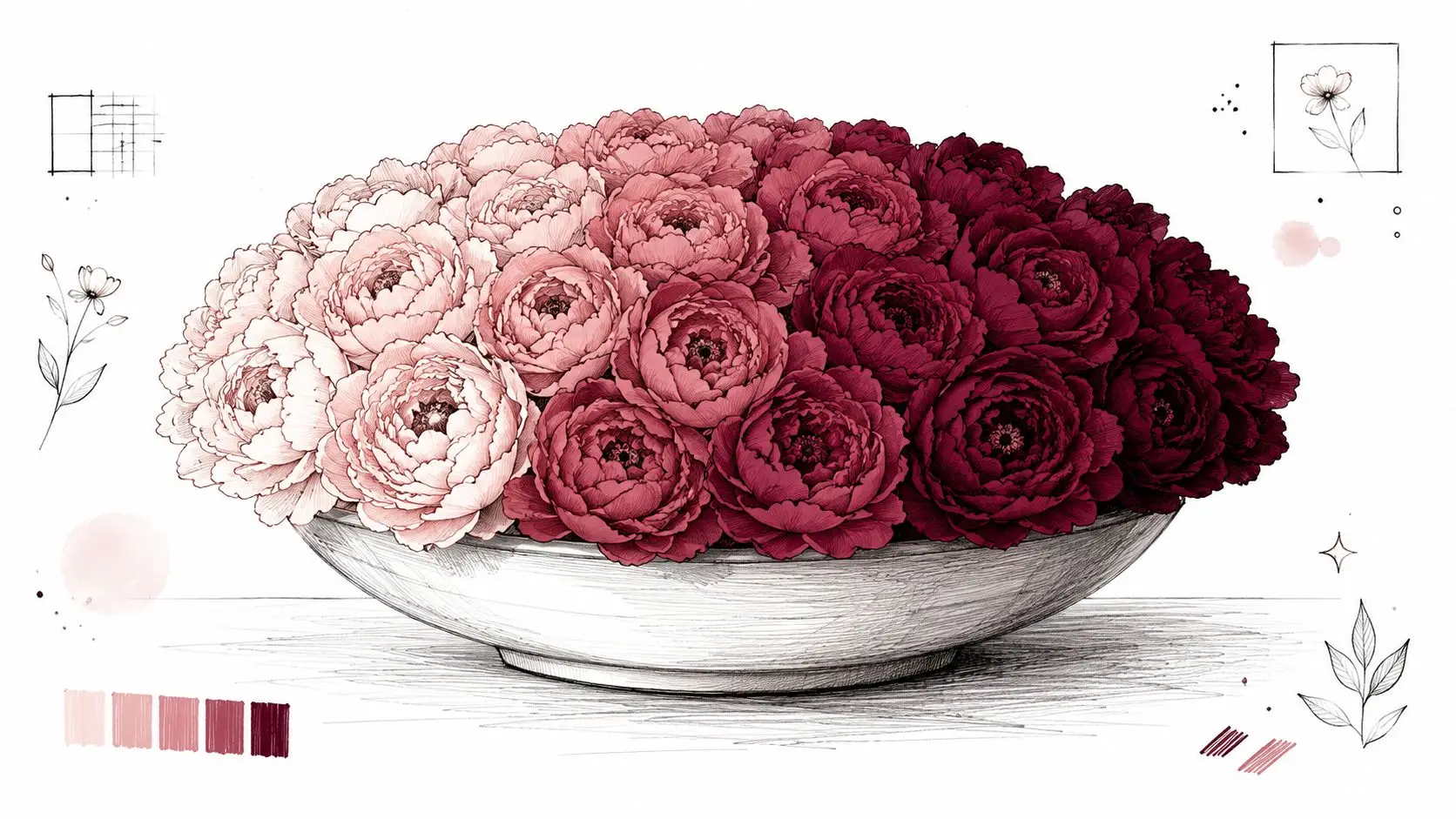
An ombre arrangement gives you drama without visual noise. That's why it works well in modern spaces where a mixed palette would feel busy. One flower family, or at least one tight color family, creates a very polished read from across the room.
Where ombre succeeds
This is the arrangement I'd suggest for a client who wants color but not chaos. Blush to burgundy, ivory to plum, or pale peach to coral all read elegant when the vessel stays quiet and the bloom shape is consistent. Roses, carnations, peonies, and orchids lend themselves to this especially well.
The trick is deciding whether the gradient should read clearly at a glance or only reveal itself up close. Cocktail hour pieces usually benefit from a clear gradient because people encounter them while moving. If the transitions are too subtle, the effect disappears in the room.
Mechanics that keep the gradient clean
Group by shade before you ever start arranging. Don't try to sort bloom color on the fly with wet hands and open boxes around you. Lay flowers from lightest to darkest and work in directional clusters so the fade looks intentional.
What works best:
- Use one dominant bloom type: Too many flower forms break the color read.
- Repeat each shade in more than one place: That keeps the arrangement from looking striped.
- Keep stem height even within each zone: Height changes should support shape, not disrupt the gradient.
A neutral vessel matters here. White, stone, smoke, and clear glass keep attention on the transition. If the bowl color competes, the ombre effect weakens.
Designer's note: Ombre is less forgiving than mixed color work. One off-tone stem can break the whole arrangement.
This style is especially useful when the event branding or wedding palette includes one signature hue that needs to feel elevated rather than literal. It photographs cleanly, reads well in low light, and still feels detailed up close.
4. Elevated Tall Arrangements with Greenery Focus
Tall cocktail table centrepieces can be beautiful, but they're also the easiest to get wrong. Many look top-heavy, block faces, or sway every time someone sets down a drink. If you're going tall, the answer usually isn't more flowers. It's better structure.
Greenery-led designs solve that problem because foliage creates line without demanding heavy bloom mass at the top. Eucalyptus, salal, ruscus, monstera, and branching elements can give the arrangement height and movement while keeping the floral load selective.
Use foliage as structure
Build the architecture with greens first. Establish the highest points, the side reach, and the internal support grid before adding focal flowers. Once the line is set, tuck blooms into deliberate resting points rather than scattering them evenly.
This approach suits museum events, modern weddings, brand launches, and spaces with high ceilings. Tall greenery pieces can echo the room without making the cocktail tables feel cluttered.
A good build sequence is simple:
- Start narrow at the vessel opening: Wide starts often become unstable.
- Create asymmetry on purpose: Tall doesn't have to mean symmetrical, but the visual weight still needs balance.
- Place focal blooms where the eye naturally lands: Usually lower than beginners expect
Transport without wrecking the line
Shipping and transport present a challenge with this style. Thin branches shift. Long greenery bruises. Tall stems twist if they aren't boxed with internal support. If you're delivering built arrangements, brace the vessel and isolate the top structure so it can't roll against the box wall.
There's also a practical conversation to have with clients. The modern cocktail table itself didn't become a marketed furniture category until the 1930s and 1940s, when furniture makers popularized it in American homes after earlier European and Ottoman influences. That history matters because today's standing cocktail format asks for all-angle visibility. Tall work should frame interaction, not interrupt it.
When this style fails, it usually fails in one of two ways. The vessel is too light for the top growth, or the designer treats greenery as filler instead of structure.
5. Low Disk and Bubble Bowl Arrangements
If you want the safest answer for a crowded cocktail hour, choose low rounded work. It's hard to beat a compact disk or bubble bowl arrangement for stability, sightlines, and guest comfort. These pieces feel finished, they don't snag jackets, and they hold their own even when the room gets noisy and fast.
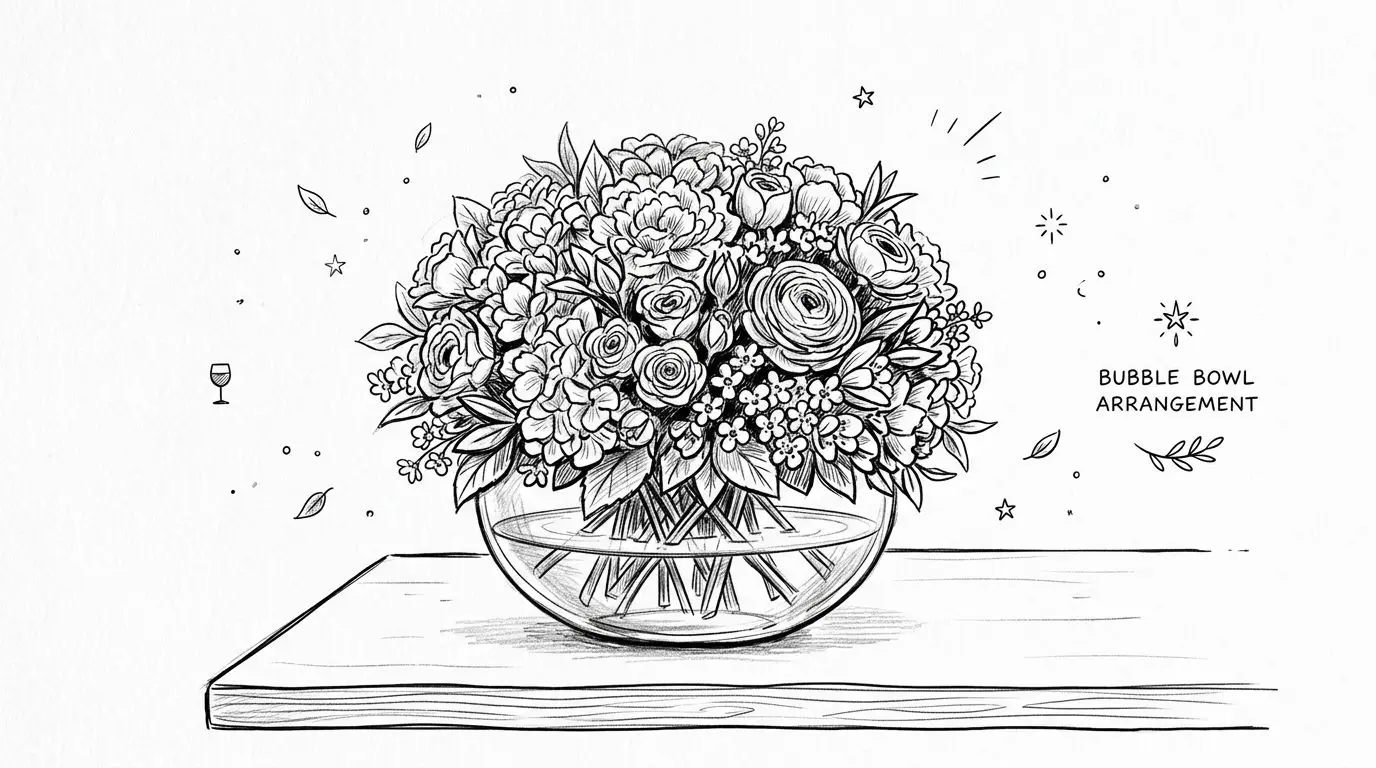
Here's the basic shape in visual form.
The safest shape for busy cocktail hours
A bubble bowl arrangement works because the mass sits close to the surface. The arrangement doesn't fight the narrow footprint of the table. It complements it. For hotels, country clubs, gala foyers, and indoor wedding receptions, this is often the most forgiving design style.
Use a shallow dome rather than a perfect sphere. A round ball shape can look stiff on a high-top table. A lower dome feels softer and leaves better visual breathing room around the edge.
The weak point is density. Low designs need enough material to look intentional from all sides. If they're underfilled, they can read sparse and unfinished.
Build density without making it stiff
Keep stems short and directional. Let the outer ring dip slightly so the edge softens. Greenery should support the silhouette, not stick out beyond it in random spikes.
A practical build approach:
- Use floral foam or another secure mechanic: Low work needs internal order, especially if it's traveling.
- Choose flowers that mass well: Spray roses, carnations, chrysanthemums, and compact roses all help create a finished dome.
- Avoid oversized focal blooms unless the bowl is substantial: One bloom that's too large can make the whole arrangement feel lopsided.
One major content gap in this category is stability. Existing inspiration around small cocktail table centrepieces often shows bud vases and simple low designs, but doesn't really answer how to keep arrangements from slipping, tipping, or blocking views on tall, narrow tables during a busy cocktail hour. In practice, vessel weight, non-slip surface material, and a compact footprint matter as much as flower choice.
For a closer look at low-profile floral mechanics in action, this short video is useful as a visual reference.
6. Seasonal Wildflower and Native Plant Centerpieces
Wildflower-inspired work can be beautiful on cocktail tables, but it needs more control than most clients expect. Loose doesn't mean random. Native and seasonal materials often have varied stem habits, smaller faces, and more natural movement, so the vessel choice and stem count matter a lot.
This style fits vineyard weddings, garden parties, rustic receptions, and sustainability-minded events. It also works well when the venue already has a strong natural setting and you want the flowers to feel rooted in place rather than imported in.
Keep the look loose, not messy
The best wildflower cocktail pieces have a clear shape under the looseness. I like to start with a low base and then let a few stems dance above it. That keeps the piece readable from a distance while still preserving the meadow feel up close.
Mixing true native material with cultivated flowers is often the smartest move. Native stems bring character, and cultivated support flowers help with coverage and reliability. That combination is usually stronger than trying to force every stem to look purely wild.
Use fewer varieties than you think you need. Wildflower work becomes messy fast when every stem competes for attention.
Texture is a key selling point here. Seed heads, airy filler, small daisylike flowers, herbs, and branching stems add far more interest than one big bloom type repeated over and over.
What to tell clients before they commit
Clients often love the idea of native flowers for ethical or regional reasons, but they may not understand how seasonal that choice is. Availability, stem length, and color range can shift quickly. Set that expectation early and give yourself room to substitute within the same mood.
For design inspiration grounded in a more natural event style, these rustic flower arrangement ideas are a useful companion. The lesson carries over to cocktail table centrepieces. Texture and gesture matter more than perfect bloom uniformity.
This style also benefits from labeling in editorial or educational settings. If the event is sustainability-focused, small printed identifiers or a note in the program can help guests connect with the regional story behind the flowers without forcing the design to explain itself.
7. Tropical and Exotic Bloom Centerpieces
Tropical centrepieces don't need to be huge to make an impact. In fact, smaller cocktail tables usually benefit from fewer elements with stronger shapes. One anthurium, a curved orchid stem, a fan of foliage, and a tight water presentation can say more than a crowded mix of exotic flowers all competing at once.
This style works for destination weddings, rooftop parties, luxury hotel events, and corporate gatherings that want color with a cleaner silhouette. Tropical flowers naturally read as intentional because the forms are so distinct.
Choose fewer, bolder elements
The biggest mistake with tropical cocktail table centrepieces is overstuffing them. Birds of paradise, orchids, anthuriums, ginger, heliconia, and broad leaves all have visual weight. If you combine too many at equal intensity, the arrangement starts to feel chaotic and oversized for the table.
Instead, pick one star and support it. A single dramatic bloom with glossy foliage and one line flower often feels more expensive than a fuller design built without hierarchy.
Good combinations include:
- Anthurium and orchid: Sleek and modern
- Bird of paradise and tropical foliage: Strong line and instant destination feel
- Orchid stems in a low vessel: Clean, architectural, and easier to place on narrower tabletops
Conditioning matters more than color
Tropical material asks for specific care. Warm handling, patient conditioning, and clean hydration matter more than people think. If the stems arrive chilled or dehydrated, no styling trick will fully rescue them.
There's also a broader market context here. The global cocktail table market was valued at about $2.84 billion in 2024 and is projected to reach $4.16 billion by 2033, with one competing forecast putting the market at $5 billion in 2025 and $7 billion by 2033. For florists, that matters less as a headline and more as a reminder that commercial event furniture and the styling around it keep growing together.
Tropical work is at its best when the flowers look like they belong in the vessel, not like they were forced into a standard wedding recipe.
8. Textured Mixed Greenery and Foraged-Look Centerpieces
Some of the most elegant cocktail table centrepieces barely rely on blooms at all. Texture can carry the whole design. Layered foliage, herbs, seed pods, vine, branch, and a few strategic flowers can create a gathered, expensive look that feels modern, organic, and highly custom.
This style is especially strong for design-forward weddings, restaurant events, and spaces where the floral story should feel atmospheric rather than overtly romantic. It also adapts well across seasons because the emphasis is on form and contrast.
Texture does the heavy lifting
Start with one structural element. That might be branch, trailing vine, or broad foliage. Add medium textures next, then finish with small details that reward a closer look. If every texture sits at the same scale, the arrangement goes flat.
The flowers in this style should punctuate, not fill. A few roses, scabiosa, orchids, or even one cluster bloom can be enough. The eye remembers the composition more than the ingredient list.
A good recipe usually includes:
- One strong line element: Branch, vine, or blade-like foliage
- One broad mass element: Salal, magnolia, monstera, or another grounding green
- One airy detail layer: Fern, seeded stems, or fine foliage
- Selective florals: Used only where the arrangement needs a resting point
How to keep foraged-look work intentional
Foraged-look design can collapse into mess if the mechanics are weak. Use a clear internal structure, even if the finished arrangement is meant to look spontaneous. Guests should see movement, not imbalance.
This style also lends itself to repurposing, at least visually. Pieces can move from cocktail hour to bar tops, lounge areas, or memory tables more easily than very formal floral bowls. What's still missing from the broader conversation is hard logistical guidance. Current wedding discussions highlight interest in reusing cocktail florals for budget reasons, but couples still don't get authoritative detail on the feasibility of transporting and resetting shipped live flowers without quality loss, or the labor trade-offs involved.
That's why I treat foraged-look work as flexible, not automatically repurposable. It can move well, but only if the mechanics were designed for movement in the first place.
Comparison of 8 Cocktail Table Centerpiece Styles
| Style | Complexity 🔄 | Resource Needs ⚡ | Expected Outcomes 📊 | Ideal Use Cases 💡 | Key Advantages ⭐ |
|---|---|---|---|---|---|
| Minimalist Single-Stem Statement Centerpieces | Low, simple construction but requires precise conditioning | Low, few premium stems, small vessels, easy shipping | Clean, sophisticated focal points with strong negative space | Modern/upscale weddings, cocktail tables, small tabletops | Cost-efficient, highlights bloom quality, easy to ship |
| Lush Garden-Style Mixed Arrangements | High, layered composition and varied mechanics | High, many stems, varied foliage, floral foam, heavier packing | Romantic, abundant visual impact and full coverage | Traditional weddings, garden parties, farm-to-table events | Flexible with seasons, conceals table flaws, expressive design |
| Monochromatic Ombre Centerpieces | Medium, planning and color sequencing required | Medium, multiple shades of one variety, moderate shipping care | Striking gradient effect, very photogenic and cohesive | Social-media-forward events, branded or color-focused weddings | Dramatic visual impact, cohesive aesthetic with fewer form variables |
| Elevated Tall Arrangements with Greenery Focus | High, structural balance and proportion expertise | High, tall vessels, lots of greenery, reinforced shipping | Dramatic vertical presence, long-lasting due to foliage | Large venues, galleries, contemporary galas, statement tables | Reduces bloom cost, longevity, architectural drama |
| Low Disk and Bubble Bowl Arrangements | Medium, precise dense packing and foam work | Medium–High, many blooms in compact footprint, fragile vessels | Luxurious, conversation-friendly low profiles | Dinner tables, formal receptions, cocktail-service settings | Lavish look in small space, stable and guest-friendly |
| Seasonal Wildflower and Native Plant Centerpieces | Medium, seasonal sourcing knowledge and variability | Low–Medium, mostly local material, shorter shipping distances | Authentic, locally-rooted aesthetic; variable each season | Rustic/nature-inspired weddings, eco-conscious events | Sustainable, cost-effective, supports local growers |
| Tropical and Exotic Bloom Centerpieces | Medium–High, delicate handling and temperature control | High, exotic stems, temperature-managed shipping, heavier pieces | Bold, unforgettable visual statements; highly photogenic | Destination weddings, luxury resorts, modern destination events | High impact with fewer stems, long vase life for many tropicals |
| Textured Mixed Greenery and Foraged-Look Centerpieces | High, advanced design skills for layered textures | Medium–High, varied foliage, branches, secure packing | Sophisticated, texture-forward natural look; durable | Modern rustic, design-forward weddings, editorial events | Foliage-forward longevity, sustainable aesthetic, reduces costly blooms |
Choosing the Right Centrepiece for Your Event
The right cocktail table centerpiece isn't just the prettiest idea on a mood board. It's the design that fits the room, the guest flow, the handling plan, and the budget. A minimalist single stem can outperform a larger arrangement if the venue is sleek and the stem is excellent. A low bubble bowl can be the smartest choice in a packed cocktail hour because it protects sightlines and stays stable. A tall greenery piece can look spectacular in the right room, but only when the mechanics are doing real work.
Here, florists, planners, and DIY couples often part ways. Often, the initial choice is by style. In practice, the better order is style, then vessel, then mechanics, then transport. If those last three decisions are weak, even strong floral ingredients won't save the result.
The table itself should guide the design. Cocktail tables are narrow and high, so arrangements need a controlled footprint. Guests need landing space for drinks and plates. Staff need to carry, place, and adjust the pieces quickly. Designers need to think in all directions because these arrangements are almost never viewed from one formal front angle.
There's also no rule that every cocktail table has to carry the same design weight. One of the best ways to manage floral spend is to mix stronger and lighter moments. Use fuller pieces near the bar, escort display, or entry to the cocktail hour. Keep secondary areas simpler. That kind of editing usually feels more professional than spreading the same floral intensity evenly across every surface.
Repurposing can help, but only when it's planned from the start. Low, sturdy, self-contained pieces tend to move best. Tall, airy, or highly directional designs usually don't. If an arrangement may need to travel from cocktail hour into the reception, build for movement from the first stem. Don't assume a pretty design is automatically portable.
For florists and planners sourcing shipped flowers, specialty growers can be a practical option when the recipe depends on specific stems or fresh-cut material arriving ready to condition. Barbara's Flower Boutique LLC is one such option, and the business sells cut flowers online and ships with FedEx, with shipping paid by the customer. That matters most when you're matching the flower source to the event workflow, not just the palette.
The strongest cocktail table centrepieces do three things at once. They look finished from every angle, they respect the way guests use the table, and they survive setup without drama. If you keep those three standards in front of every design choice, the flowers won't just decorate the hour. They'll support it.
If you're sourcing flowers for cocktail table centrepieces, Barbara's Flower Boutique LLC offers cut flowers online with FedEx shipping, which can be useful for planners, florists, and DIY couples building event pieces from fresh stems.
Discover more from Barbara's Flower Boutique
Subscribe to get the latest posts sent to your email.