You're probably staring at a pile of stems, a saved folder full of wedding inspiration, or a wholesale-style bunch you ordered online and wondering why your arrangements still look stiff. Rustic flower arrangements fool a lot of people that way. They look relaxed, local, and almost accidental, but they only work when the mechanics and stem choices are handled with intention.
The good news is that rustic design is teachable. You don't need a meadow, a barn venue, or a giant floral budget. You need the right proportions, the right support inside the vessel, and the confidence to leave some space so the flowers can breathe. That matters whether you're a florist building event work, a planner ordering cut flowers online, or a couple making centerpieces the week of the wedding.
Table of Contents
- Embracing Imperfection The Soul of Rustic Design
- The Perfect Palette Sourcing Seasonal Flowers and Foliage
- Your Essential Rustic Toolkit Mechanics and Supplies
- From Stem to Centerpiece Assembly Techniques
- Perfecting the Look Styling Conditioning and Care
- From Hobby to Business Pricing and Shipping Your Creations
Embracing Imperfection The Soul of Rustic Design
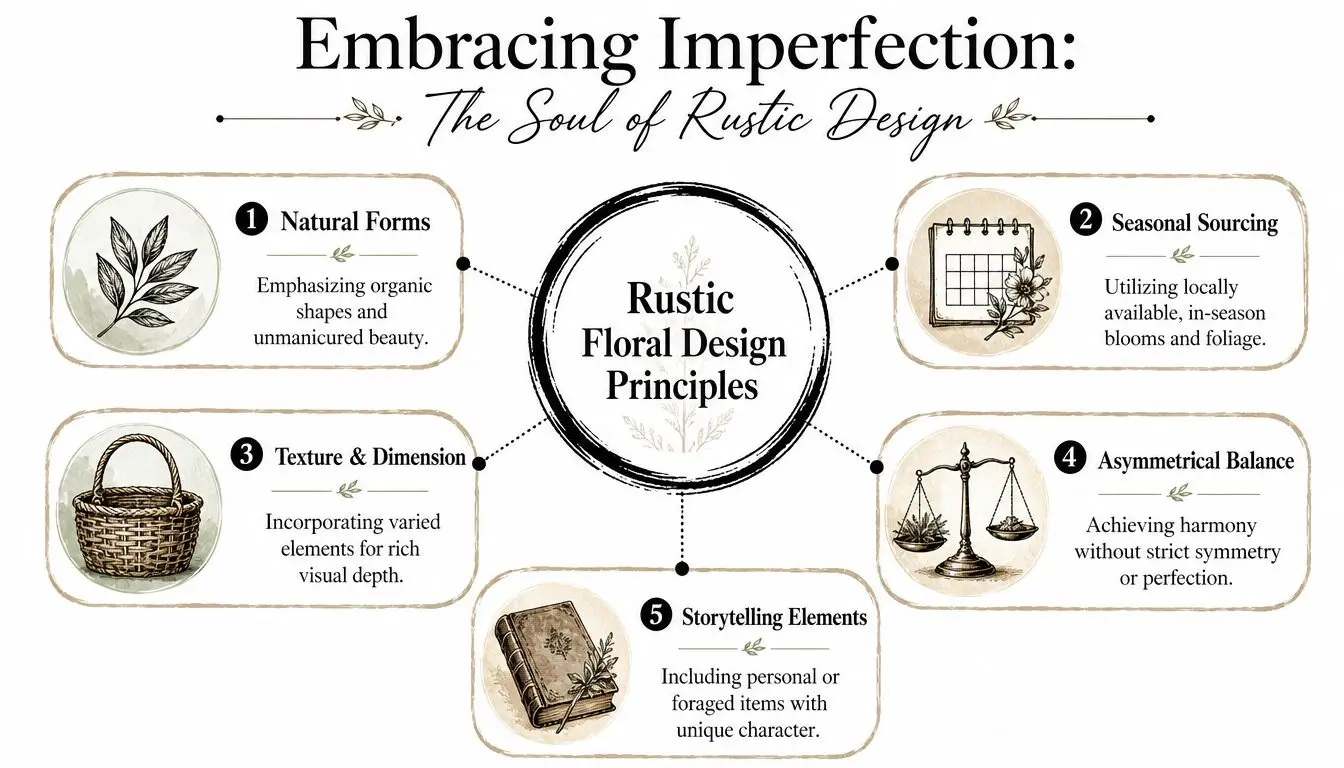
Rustic flower arrangements should feel gathered, not placed. That's the standard. If every stem sits at the same height and every bloom faces forward like a parade lineup, the design stops feeling rustic and starts feeling manufactured.
That loose look doesn't mean random. It means asymmetry with control, texture with restraint, and enough negative space that each material can keep its own character. The arrangement needs movement. A branch reaches out. A focal bloom leans slightly low. A tuft of greenery breaks the container edge instead of sitting in a tight dome.
What rustic actually means in practice
The first shift is visual. Stop trying to make every side match. Rustic design asks for balance, not symmetry. One side can carry more line, the other more weight. What matters is that the arrangement feels settled when you step back.
A natural palette helps too. Muted greens, earthy reds, golden tones, dusty creams, seed heads, pods, and branchy materials all support the style. If you want a helpful visual reference for the emotional side of floral beauty, this reflection on the timeless beauty of flowers gets close to the feeling people are usually chasing.
Rustic design works when the flowers look like they were cut at different moments from the same landscape, not selected to behave identically.
The rule set behind the looseness
Professionals often use the 3-5-8 rule. That means three types of dominant focal flowers, five greenery stems, and eight stems of an accent filler flower, paired with the rule of odd numbers for a more cohesive look, as outlined by Country Living's explanation of the 3-5-8 flower arranging rule. This is one of the easiest ways to keep rustic flower arrangements from becoming either skimpy or overcrowded.
Here's how that plays out on the table:
- Three focal varieties keep the palette interesting without turning chaotic.
- Five greenery stems create the scaffold and soften the mechanics.
- Eight filler stems carry the arrangement outward and stitch the whole thing together.
A quick planning table helps:
| Design element | What it does | What goes wrong without it |
|---|---|---|
| Focal flowers | Gives the eye a place to land | The piece feels vague |
| Greenery | Builds shape and edge movement | The flowers look dropped into a vase |
| Fillers and accents | Connects spaces between larger blooms | The design looks spotty or flat |
The secret most beginners miss is that rustic style needs room. Don't plug every hole. Small gaps let the eye travel through the arrangement, and that's what makes it feel alive instead of dense and formal.
The Perfect Palette Sourcing Seasonal Flowers and Foliage
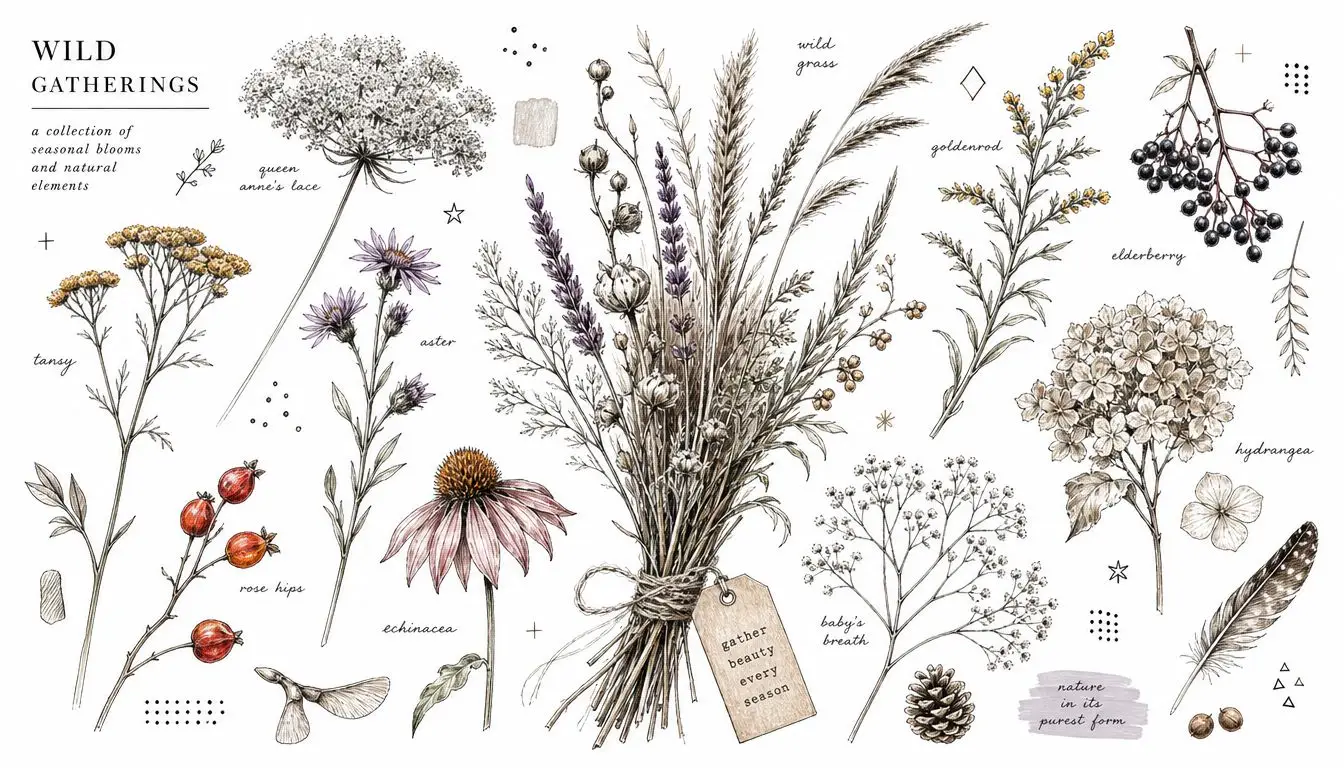
The strongest rustic flower arrangements start with stems that already have personality. Straight, identical blooms can be useful, but this style comes alive when the bunch includes bends, side shoots, buds, and varied head sizes. That's why seasonality matters so much. In-season flowers usually look less forced and more believable in a rustic composition.
Build by role, not by flower name
When shopping, sort your stems into roles before you think about color story.
- Focal flowers carry visual weight. These are the larger faces or strongest forms.
- Secondary flowers repeat the palette and bridge the jump between focal blooms and finer material.
- Fillers soften transitions, add air, and create that meadow-like spread.
- Greenery and texture give the arrangement its rustic backbone.
That approach is more useful than chasing a single recipe because online cut-flower buyers often need to adapt to what's available that week. A bunch of marigolds may act as focal flowers in a compact centerpiece but read as secondary flowers in a larger design. Zinnias can do either job depending on stem length and bloom size.
For warm-weather work, Twenty-five French Bonita Mix Marigold Stems fit the rustic palette naturally. The catalog describes 25 French Marigolds from the Bonita Mix with gold, orange, and red blooms, delicately ruffled petals, and lush green foliage, priced at $50.00. Those ruffled heads and warm tones work well when you want a sunlit, less polished look.
Why local-looking stems read more rustic
The rustic look is tied to authenticity, not perfection. Industry data shows 68% of consumers prioritize farm-to-table floral authenticity, which is why real, locally sourced, naturally imperfect stems have such pull in this style, according to the cited floral authenticity discussion. Even when you're ordering online, it helps to choose flowers that still read like something cut from a field edge or kitchen garden.
A few buying rules keep the palette believable:
- Choose a dominant season. Don't mix materials that feel like they came from different climates unless you're doing it on purpose.
- Let foliage do real work. Rustic design often looks better when greens are visible and structural.
- Keep color transitions soft. Warm blends and slightly muddied tones usually read more natural than hard color blocking.
For ongoing inspiration on stem combinations that suit the season, seasonal blooms and floral arrangements can help you think in terms of what's naturally available rather than what's trend-driven.
Curved stems, half-open blooms, and branching material aren't flaws in rustic work. They're often the part that makes the arrangement believable.
Your Essential Rustic Toolkit Mechanics and Supplies
You can't build a convincing rustic arrangement with the wrong mechanics. Most failures happen before the first bloom goes in. The container is too open, the support is too rigid, or the tools on hand don't let you reposition stems as the shape develops.
What belongs in the work kit
A practical rustic toolkit is short, but each piece has a job.
- Sharp snips or floral shears for clean cuts that don't crush stems
- Waterproof tape if you need to stabilize mechanics at the rim
- Chicken wire to create internal support with flexibility
- A vessel with character such as ceramic, vintage-look metal, wood-lined inserts, or glass
- A transport bucket for holding processed stems by category
If you're working with repurposed or purchased vessels, vase options for cut flower arranging give you a sense of the container range that can support looser work.
Some materials are chosen less for color than for shape. twenty-five celosia stems are a good example. The catalog describes 25 plumed celosia stems with feathery, textured blooms in rich, jewel-toned hues, priced at $50.00. In rustic work, texture like that can do as much structural heavy lifting as a line branch or leafy green.
Why chicken wire outperforms foam for this style
For rustic flower arrangements, chicken wire is the better mechanic than floral foam because it lets you adjust stems during the design process and supports the overflowing edge this style needs, as explained in Poppy Flowers' rustic wedding flower design guide.
A simple method works well:
- Cut a piece of chicken wire large enough to compress into a loose ball or pillow.
- Tuck it into the vessel so it grips the walls.
- Add water.
- Test a few branches first before you add flowers.
This gives you resistance without locking stems into one angle. Foam tends to make rustic work look pinned in place. Chicken wire lets you tilt, lift, remove, and reset until the arrangement loosens up.
Practical rule: If you can't move a stem after inserting it, your mechanic is too rigid for rustic design.
One more useful checkpoint: the flowers should visually cover the container edge. If the vessel reads louder than the flowers, the arrangement usually needs more greenery at the rim or a lower, wider spread.
From Stem to Centerpiece Assembly Techniques
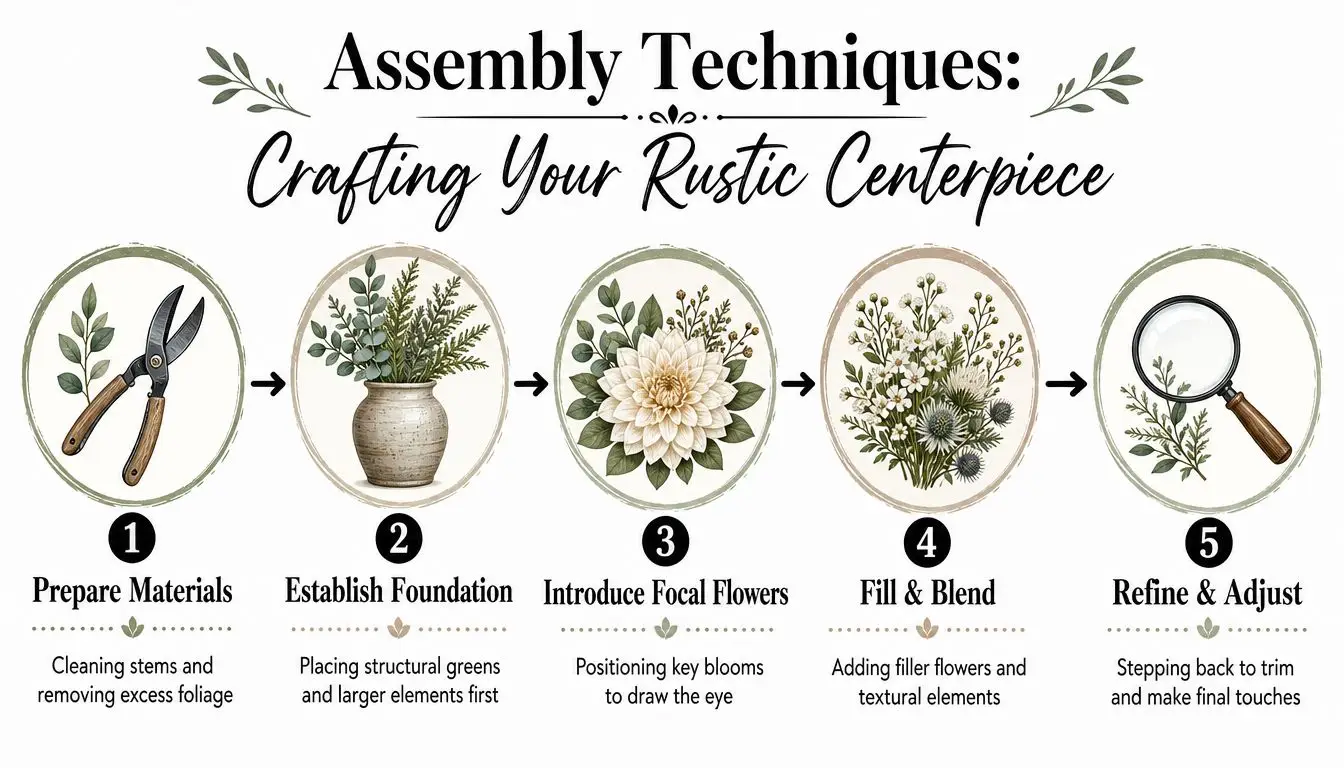
The build should happen in layers. Not because it's precious, but because rustic arrangements collapse visually when every material goes in at once. The easiest example is a low centerpiece. It teaches line, depth, and spill, all in one piece.
A clean visual walkthrough helps before your hands get wet:
A low centerpiece built in layers
The classic rustic method starts with an asymmetrical frame using woody materials, then fills pockets with substantial greens, then buries foundation flowers like a carpet, and finishes by placing focal blooms so they spill over the vase lip, following Gardenista's arranging method.
Use that in this order:
- Set the frame first. Start with the stiffest, branchiest material. Let one side reach farther. Let another stem stay lower and wider.
- Green the base. Add broader greens into the wire so they hide mechanics and create pockets.
- Place foundation flowers. These are not the stars. They're the mass that makes the arrangement feel planted.
- Add focal flowers late. Put the strongest faces where the eye naturally lands, not in a flat ring.
- Finish with airy accents. These connect gaps and keep the piece from feeling heavy.
The shape should look settled from a distance and interesting up close. If it reads like a perfect oval, pull a few stems out and re-angle them.
A video can help you study pacing and hand movement while you build:
How the method changes for bouquets and arches
A bridal bouquet uses the same logic but compresses it. You still need a frame, a green layer, and a focal moment. The difference is grip. Keep the stem spiral open enough that the bouquet has air, but tight enough that it doesn't torque in the hand.
For an arch piece, think in sections instead of one big arrangement.
- Start with branch line. It defines direction and gives the install motion.
- Cluster flowers in pockets. Rustic arches usually look stronger with grouped blooms than with even spacing.
- Let some areas stay sparse. Full coverage can flatten the shape and erase the natural look.
What works in all three formats is rhythm. High, low, forward, back. That variation is what makes the flowers feel as if they grew there.
Perfecting the Look Styling Conditioning and Care
A rustic arrangement can be beautifully designed and still fail on the table if the stems weren't conditioned properly. That's where a lot of DIY work falls apart. The flowers look good for the photo, then droop before dinner.
Conditioning is what keeps rustic from collapsing
Condition every stem before arranging. Recut the ends, remove foliage that would sit below the water line, and let the flowers drink in clean water before design work begins. Rustic pieces often use branchy, thirsty material, so rushed prep shows up fast.
A few habits make a visible difference:
- Cut with intention. Fresh cuts help stems hydrate more efficiently.
- Sort by material type. Woody stems and softer blooms don't always behave the same way.
- Keep the workspace cool. Heat speeds fatigue.
- Top up water after arranging. Rustic designs can hide a low water line until it's too late.
Variation is the difference between rustic and repetitive
Many people over-style rustic tables. They make each arrangement the same height, put every design in the same container, and use the same mix of flowers in the same order. The result is neat, but it doesn't feel gathered.
The better move is to vary the rhythm across the tables. One arrangement can lean wider. Another can sit lower and carry more greenery. A third can feature more seed heads or textural filler. That variation supports the gathered look and keeps the room from feeling mass-produced.
If every centerpiece matches exactly, the style drifts from rustic toward formal, even when the flowers themselves are casual.
For finishing touches, keep styling quiet. Trailing ribbon, aged vessels, and a few loose tendrils can help. Too many decorative add-ons can tip rustic into themed decor, which is a different look entirely.
When you photograph the work, shoot slightly from the side as well as overhead. Rustic flower arrangements often carry their best movement at the rim and just below the lip of the vessel, not only from the top.
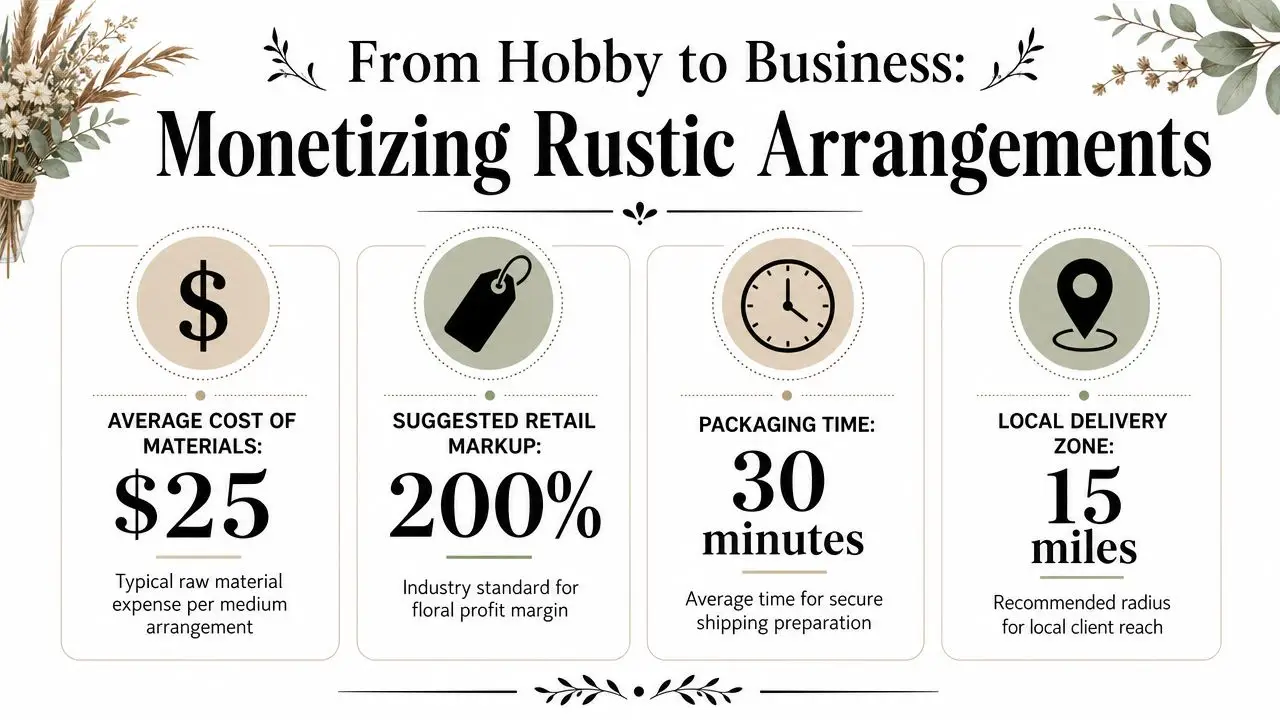
From Hobby to Business Pricing and Shipping Your Creations
Rustic work isn't a fringe style anymore. It sits right at the intersection of wedding demand, event styling, and online cut-flower purchasing. For florists and planners willing to work with real stems instead of imitation textures, there's room to build a clear offer.
The broader market supports that opportunity. The global cut flower market is projected to grow from $42.7 billion in 2026 to $60.9 billion by 2033, according to Grand View Research's cut flowers market report. That projection doesn't guarantee success, but it does tell you the category is large enough to reward specialization.
Where the opportunity is
Rustic flower arrangements sell well when you package them by use case instead of by stem count alone. Clients usually buy outcomes. They want centerpieces for farm tables, ceremony clusters that don't feel formal, or personal flowers that look soft and seasonal.
Three pricing approaches are common:
| Model | How it works | Best use |
|---|---|---|
| Cost-plus | Add labor, mechanics, and overhead on top of materials | Everyday orders and simple event work |
| Value-based | Price by design complexity and visual impact | Weddings and styled installs |
| Tiered packages | Offer small, medium, and full-service groupings | Clients who need clear choices fast |
If you're buying cut flowers online, include shipping in your math from the beginning. Don't treat it like an afterthought. For businesses such as Barbara's Flower Boutique LLC, cut flowers are shipped with FedEx and the customer pays for shipping, so your quote needs to absorb that reality rather than hide it and hope the margin survives.
How to price and pack with clear margins
The safest way to quote rustic work is to break every job into parts:
- Flowers and foliage: Your raw stems and any replacement buffer
- Mechanics and vessels: Chicken wire, tape, liners, rented or purchased containers
- Labor: Processing, design time, loading, on-site setup, strike if needed
- Transportation: Delivery time, fuel, and protective packing
- Risk: Last-minute substitutions, weather stress, breakage
For completed arrangements headed to a venue, pack low and stable. Use boxes that keep the vessel from sliding, and give protruding stems breathing room instead of cramming them under wrap. For bulk flowers, transport by category so you can design on site without bruising everything in transit.
The business side of rustic design rewards honesty. If a design needs more foliage to look right, charge for it. If a client wants every table arrangement to be different, count the extra design time. Loose, natural work often takes more judgment than formal repetition, and that judgment is part of what the client is paying for.
Barbara's Flower Boutique LLC supports florists, wedding organizers, event planners, and DIY couples who need real cut flowers shipped for hands-on design work. If you're sourcing stems for rustic flower arrangements and want to plan around online ordering, seasonal materials, and FedEx delivery with customer-paid shipping, you can explore the shop at Barbara's Flower Boutique LLC.
Discover more from Barbara's Flower Boutique
Subscribe to get the latest posts sent to your email.