
You approve a bulk gerbera order on Monday for a Saturday event. By Thursday, the actual questions are no longer about color or stem price. They are about box timing, temperature exposure, bent neck risk, bruised heads, and whether the flowers will recover fast enough to design on schedule.
That is the part new event florists often underestimate. Gerberas sell well because they photograph well and give strong color impact, but they are less forgiving than many buyers expect. A good online buy is not just a matter of choosing the right shade. It depends on how the farm packs the stems, how the carrier handles the box, and what you do in the first hours after delivery.
If you are buying wholesale cut flowers for event work, gerberas deserve extra planning. Their heads mark easily, their stems can weaken if they sit too long in poor conditions, and shipping stress often shows up before the flowers have had time to hydrate. Florists who account for those trade-offs usually get strong event performance. Florists who shop from the product photo alone tend to learn the hard way on production day.
This guide focuses on the logistics that decide whether bulk gerberas help an event run smoothly or create preventable problems.
Table of Contents
- Your Guide to Buying Bulk Gerbera Daisies Online
- Decoding Gerbera Varieties Colors and Grades
- Sizing and Budgeting Your Gerbera Order for Any Event
- Mastering Shipping and Delivery Day Expectations
- The Critical First 24 Hours Post-Delivery Care
- How to Choose a Credible Online Flower Grower
- Advanced Gerbera Tips for Florists and Planners
Your Guide to Buying Bulk Gerbera Daisies Online
At 9 a.m. on delivery day, a box of gerberas can look disappointing. Heads may be soft, stems may lean, and the color that looked clean online may seem flat after a night in transit. New event florists often read that as poor quality. In practice, the bigger question is whether the flowers arrived on a schedule you can work with and whether your team can condition them fast enough for the event timeline.
That is why experienced buyers start with logistics before they fall in love with a color. Product photos matter, but shipping method, delivery lead time, box count, weather exposure, and post-arrival handling decide whether those stems perform in bouquets, personals, or centerpieces. Gerberas are especially unforgiving when the receiving plan is loose. If no one is ready to process them on arrival, you lose time you usually cannot get back.
Practical rule: Buy gerberas like a perishable event supply, not like decor you can set aside and deal with later.
A practical buying process usually includes four checks:
- Match the flower to the job: Bouquets, personals, centerpieces, and installations do not all need the same head size, stem length, or stem strength.
- Check the arrival plan: Someone needs to receive, open, inspect, and condition the shipment as soon as it lands.
- Review your sourcing options: If you are building a full event recipe, compare gerberas with other wholesale cut flower options so your focal flowers, fillers, and greenery arrive on a workable schedule.
- Budget the full order total: Stem price is only one part of the number. Freight and box charges can change the cost per usable stem quickly.
The florists who stay steady during event week usually made these decisions early. They knew where the boxes were going, who was processing them, how much cooler space was available, and how many stems the event could absorb if a portion arrived below standard. That is the difference between buying pretty flowers online and buying flowers that hold up in production.
Decoding Gerbera Varieties Colors and Grades
A gerbera that looks perfect on a product page can still be the wrong stem for event work. The problems usually show up later, after shipping, during processing, or halfway through production when a heavy head starts bending in a design that needed cleaner stem support.
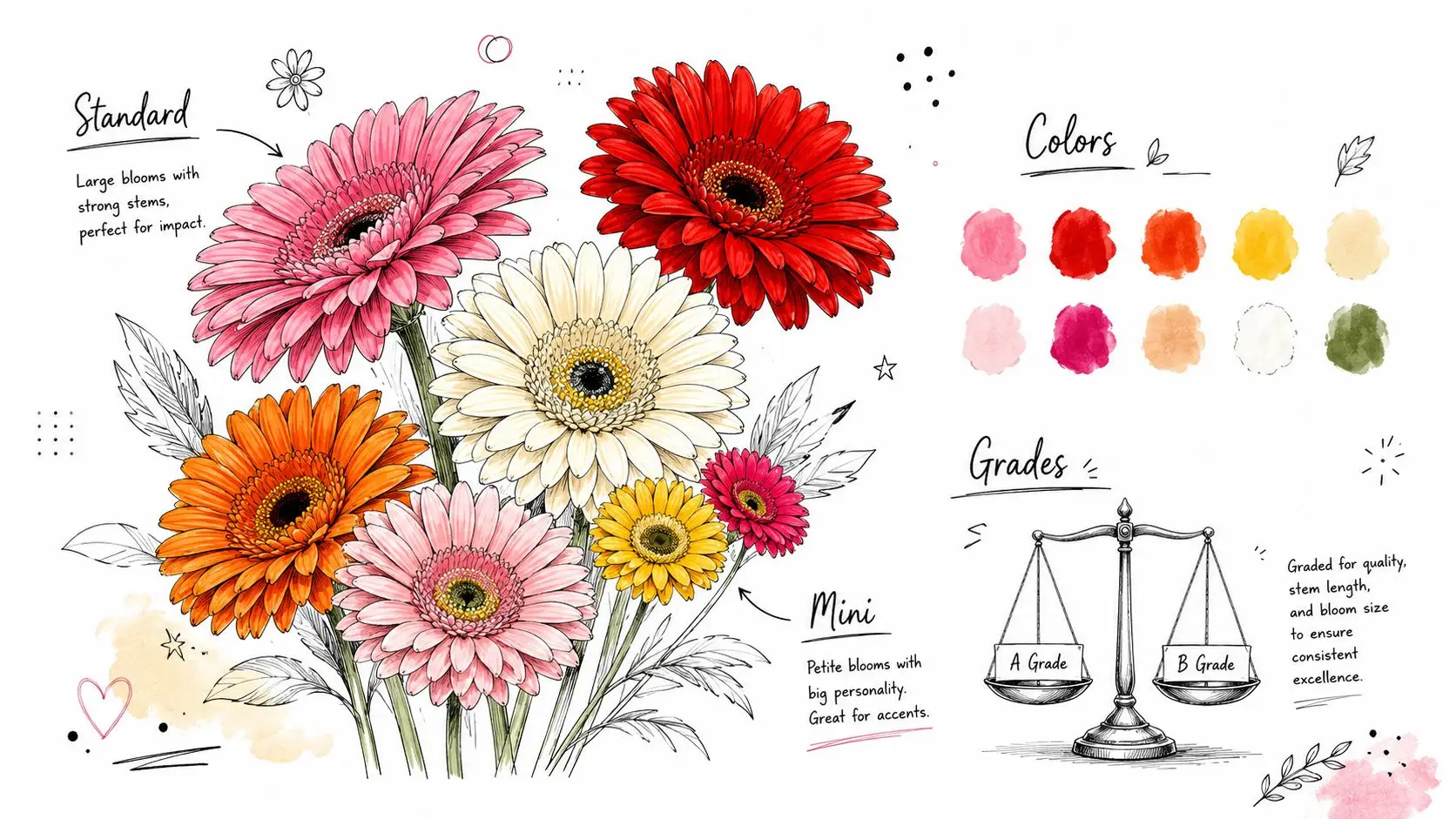
Type matters more than most buyers expect
Most commercial cut gerberas sold for events trace back to Gerbera jamesonii, and the genus includes about 30 species, according to Flower Patch's gerbera facts. What matters to a buyer is how those market types behave once the box is open.
Use the bloom form to match the job:
- Standard gerberas: Larger heads with more visual weight. Best for bouquet focal points, statement centerpieces, and any design that needs the flower to read clearly from a distance.
- Mini gerberas or germini: Better for personals, tighter recipes, and pieces where a standard head would overpower the mechanics.
- Novelty forms: Spider and other specialty petal shapes can work well, but they need space around them. In a busy palette, they often create more noise than value.
This is also where shipping reality starts to matter. Large-headed gerberas can be more vulnerable to transit stress and handling damage because there is more bloom surface to protect. Mini forms are often easier to process in volume and easier to place quickly on event week.
Florists planning their own wedding work usually benefit from reviewing broader DIY wedding flower planning advice before they commit to a gerbera type, because the right choice depends as much on production speed and conditioning capacity as on color.
What commercial grade really tells you
Grade affects labor, not just appearance.
When I review a gerbera listing, I look past the color names first and check three things:
- Head size
- Stem length
- Stem thickness and straightness
Those details tell you how the stem will behave after travel and during design work. A large flower on a soft or slightly curved stem may still be usable, but it takes more time to wire, support, or reposition. That matters if you are processing dozens or hundreds of stems on a deadline.
The right gerbera grade is a construction decision.
A smaller bloom with a cleaner, straighter stem can outperform a larger bloom in production because it drops into arrangements faster and holds its position with less correction. That trade-off gets overlooked by newer buyers who shop mainly by bloom face.
Companion flowers matter too. If your recipe includes strong texture, such as twenty-five celosia stems, a standard gerbera usually holds its place better in the mix. Mini gerberas can work there, but only if the rest of the design is scaled to support them.
Color still matters. For event work, though, scale, stem behavior, and workload at the design table are what decide whether the order performs.
Sizing and Budgeting Your Gerbera Order for Any Event
The fastest way to overspend on flowers is to shop before you've built your stem recipe. The second-fastest way is to forget shipping until checkout. Gerberas punish both mistakes because they're often ordered in meaningful volume for weddings and events.
Build the recipe before you shop
Start with the arrangement type, then decide whether mini or standard gerberas belong there. Don't build your count from a product page. Build it from the mechanics of the piece.
Here's a simple planning table to keep the count conversation grounded.
| Arrangement Type | Mini Gerbera Stems (Germini) | Standard Gerbera Stems |
|---|---|---|
| Boutonniere | 1 | 0 to 1 |
| Corsage | 1 to 2 | 0 |
| Bridesmaid bouquet | 3 to 5 | 1 to 3 |
| Bridal bouquet | 5 to 8 | 3 to 6 |
| Low centerpiece | 5 to 8 | 3 to 5 |
| Larger round centerpiece | 8 to 12 | 5 to 8 |
These aren't universal rules. They're working ranges. A tighter design with heavy greenery uses fewer stems. A flower-forward palette uses more.
If you're planning your own event flowers, it helps to look at broader DIY wedding flower ideas and logistics before locking in counts. Not because gerberas are hard to use, but because they need a little more delivery-day discipline than many first-time buyers expect.
Count shipping before you approve the order
Online flower buyers often compare one bunch price against another and think they've done the budget work. They haven't. If the flowers ship by FedEx and the customer pays shipping, that cost belongs in your stem math from the beginning.
Use this order sequence:
- List each design item: Bridal bouquet, bridesmaid bouquets, personals, centerpieces, bar pieces, cake flowers.
- Assign gerbera use: Standard, mini, or none.
- Add a handling cushion: You need room for normal design selection and replacement if some stems don't fit the exact piece.
- Request or calculate shipping before checkout: A lower stem price can lose its advantage once freight is added.
- Convert to real cost per usable stem: Total flower cost plus shipping, divided by stems you expect to design with.
Buyers who price only the bunch almost always misread the real cost of event flowers.
Gerberas can still be a smart value flower. But that's only true after you've priced the delivered order, not the photo on the screen.
Mastering Shipping and Delivery Day Expectations
The box shows up at 10:30 a.m. Design starts at 1:00. The gerberas look tight, a little bent, and less impressive than the product photo. New event florists often panic at that point. Experienced buyers check the shipping condition first, because the first question is not whether the flowers are pretty. It is whether the order arrived on time, within temperature tolerance, and with enough recovery time left in the schedule.
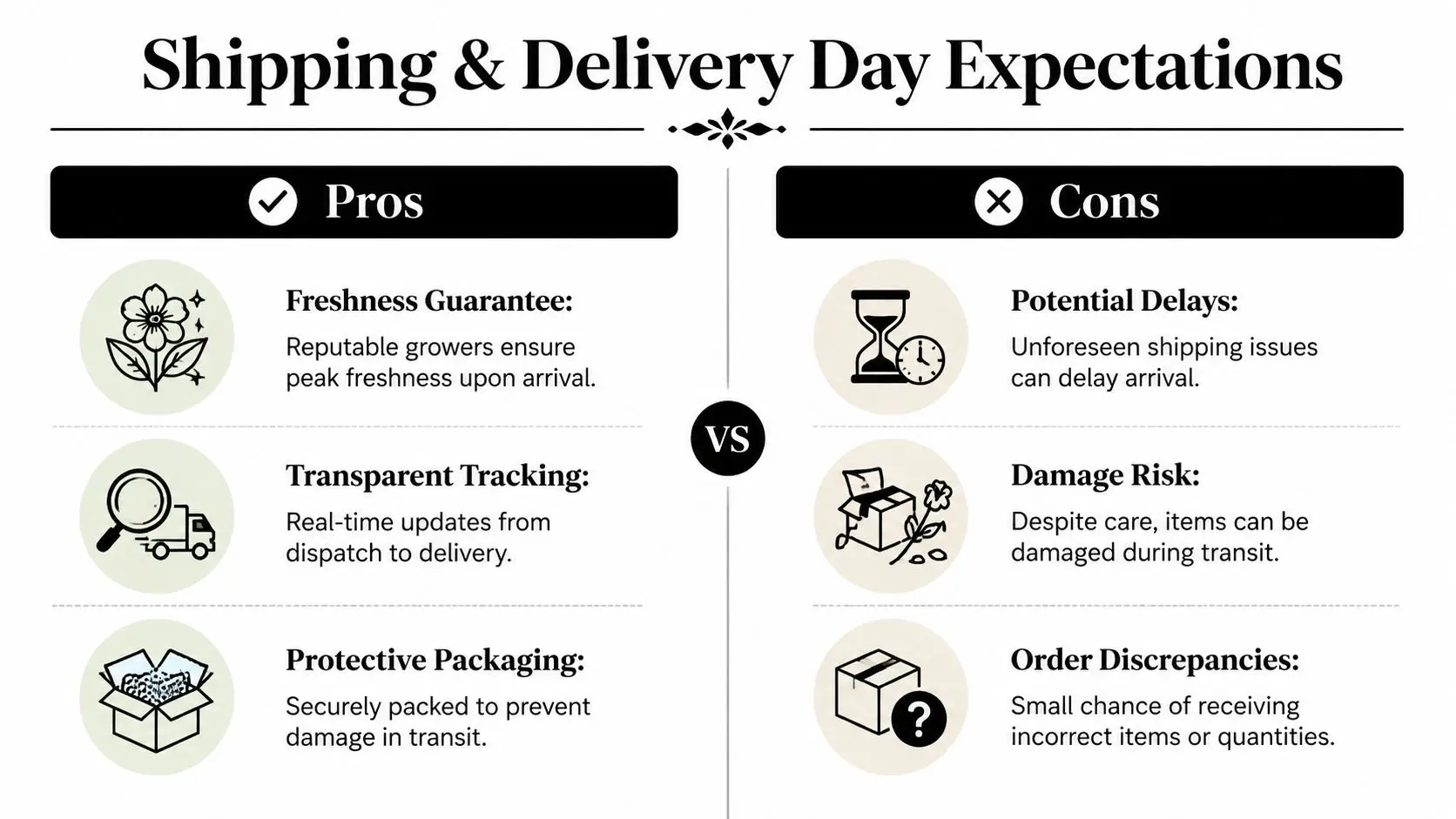
Why shipped gerberas rarely look event-ready on arrival
Gerberas are one of the flowers that can trigger false alarms. They travel packed for protection, not presentation. Heads may look compressed. Stems may curve from boxing. Blooms can arrive thirsty after transit, especially if the carton moved through heat, sat on a truck longer than expected, or landed late in the day.
That does not excuse poor shipping. It does mean appearance at unboxing is only one part of the quality check. I judge a gerbera shipment by three things first. Transit timing, box condition, and whether the stems still have enough strength to recover after proper hydration.
Good growers and importers build their process around that reality. They sleeve and pack to reduce breakage, limit head movement, and hold temperature as steadily as possible. If you expect bulk event flowers to arrive looking like retail vase arrangements, you will misread a normal shipment as a bad one.
What to inspect as soon as the carton arrives
Open the boxes right away and work through a receiving routine instead of making a fast visual judgment.
- Confirm the delivery window. A shipment that arrives on the correct day but several hours late can still disrupt your event schedule.
- Check the outer carton before you discard it. Crushed corners, punctures, moisture, or heat on the box matter if you need to report freight damage.
- Inspect stems and heads separately. A flower can look sleepy and still be usable. A snapped neck, slimy stem, or browned center is a different problem.
- Document issues immediately. Take clear photos before heavy handling if damage is serious.
- Get the flowers into a conditioning setup fast. Shipping boxes are for transit, not recovery.
This is also where scheduling discipline pays off. Gerberas are a poor choice for last-minute delivery if your design window is tight. For weddings and large installs, I prefer receiving them with enough buffer to inspect the order, flag any claim-worthy damage, and still condition the flowers without rushing. If you need a repeatable prep process, build one from a solid flower conditioning workflow for cut flowers.
The trade-off buyers overlook
Lower freight cost often means a narrower margin for error. A cheaper shipping method can be fine in mild weather and a problem in heat, holiday congestion, or remote delivery zones. Paying more for a better arrival window is often cheaper than replacing stressed stems, redesigning pieces, or explaining to a client why the flowers looked weak in photos.
On delivery day, the real product is not just the gerbera stem. It is the stem plus the shipping plan plus the recovery time you built around it.
That is the standard to use when you compare online suppliers.
The Critical First 24 Hours Post-Delivery Care
This is the stretch that decides whether your event flowers perform. If your team rushes through unboxing and starts designing too soon, you'll blame the flowers for problems the process created.
A clean conditioning setup matters more than fancy tools. You need clean buckets, fresh water, a sharp cutter, space out of direct sun, and enough time to let the flowers drink without interruption.
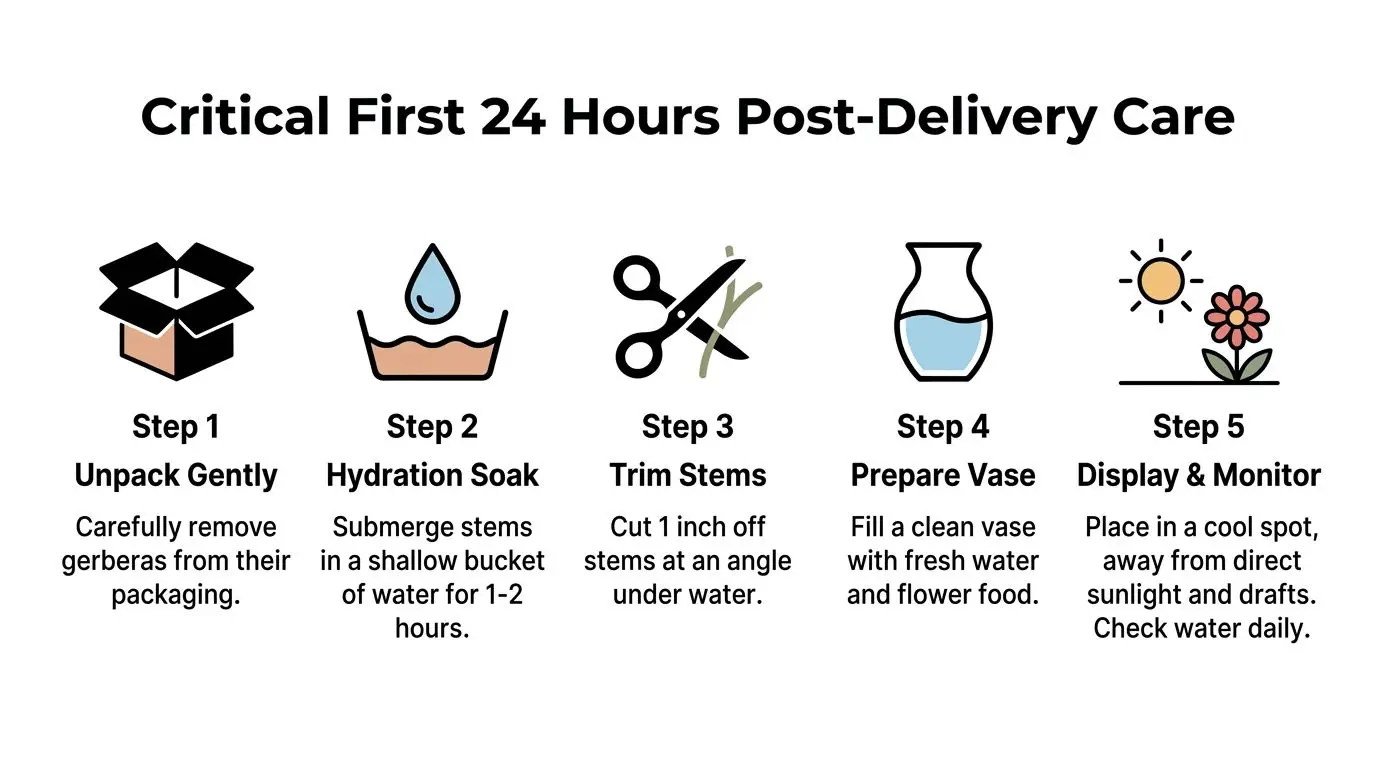
A conditioning routine that protects event quality
Use a repeatable routine every time:
- Unpack carefully. Don't yank bunches out of a tight box. Support the heads as you remove them.
- Remove packaging in stages. Protective sleeves or nets may have done their job during shipping. Take them off gently.
- Recut the stems. Give each stem a fresh cut before it goes into water.
- Use clean hydration buckets. Dirty buckets shorten vase life and create avoidable problems.
- Let them rest. Gerberas need uninterrupted hydration before design work.
The overlooked part is time. The post-arrival hydration window often needs 8 to 12 hours, as discussed in the earlier shipping section. If you schedule delivery too close to your design window, you leave no room for recovery.
For florists who want a broader workflow reference, practical notes on flower conditioning are worth reviewing before event week so the team handles every shipment consistently.
A quick visual walkthrough helps if you're training staff or a DIY client:
What works and what usually causes droop
Temperature management during hydration matters. According to Sakata's gerbera production primer, dropping temperatures 5–7°F (3–4°C) within the first few hours of hydration can reduce leaf expansion and scape elongation by 15–20%. For event florists, the practical takeaway is simple. Cooler, controlled recovery supports cleaner stems and better post-harvest behavior.
What doesn't work:
- Designing immediately after arrival
- Leaving stems boxed too long
- Using dirty buckets
- Hydrating in a hot prep room
- Judging the flowers before they've had a real drink
Give gerberas a calm first day and they usually tell you the truth about their quality.
Rush them, and they'll tell you very little except that they're stressed.
How to Choose a Credible Online Flower Grower
Price attracts attention. Reliability protects the event.

Trust signals that actually matter
A credible grower or seller doesn't just show polished bloom photos. They make the logistics visible. You should be able to tell how they ship, when they ship, what happens if the carrier misses the window, and what they expect you to do on arrival.
When I vet a seller, I look for these signs first:
- Shipping policy clarity: Delivery days, cutoff times, and claims procedures should be easy to find.
- Post-arrival care guidance: If the seller doesn't explain conditioning, they may be selling to impulse buyers instead of event professionals.
- Packing evidence: Real packing photos are more useful than styled product photography.
- Specific reviews: Look for comments about flower condition on arrival, not just “beautiful flowers.”
- Business credentials: Trade association membership and BBB accreditation tell you the company is willing to be evaluated outside its own website.
Those credentials don't guarantee a perfect shipment. They do tell you the business takes cultivation practices and customer process seriously. That matters more than a rock-bottom listed stem price.
Barbara's Flower Boutique LLC is one example of a seller operating in this space. The business ships cut flowers with FedEx, the customer pays for shipping, and the company states that it is a member of the Association of Specialty Cut Flower Growers and certified by the Better Business Bureau. Those are the kinds of factual trust markers worth checking with any online flower source.
A seller who makes logistics easy to understand is usually easier to work with when the order is time-sensitive.
Advanced Gerbera Tips for Florists and Planners
The most expensive gerbera mistakes usually don't happen at checkout. They happen when buyers make assumptions based on how other flowers behave.
Don't assume steady availability
Many sales pages make gerberas look like a simple bulk flower you can reorder on autopilot. That's not how planning should work for a sequence of events. Gerberas have a non-continuous blooming cycle and can take a two-week break to refuel, according to this rebloom note from Indianapolis Orchard.
For planners, the practical consequence is straightforward. If you need the same color story across several dates, ask availability questions early. Don't assume this week's coral or yellow will be offered in the same volume for the next event.
Use a planner's mindset:
- Confirm color windows early: Especially for weddings stacked close together.
- Keep a backup palette: Adjacent tones are easier to substitute than a completely different scheme.
- Avoid overpromising custom exactness: Gerberas are agricultural inventory, not factory stock.
Don't treat a hydrated gerbera like a thirsty rose
This is the failure point many people misread. After conditioning, some florists keep gerberas in too much water because they're afraid of droop. That can backfire. The same source notes that overwatering can lead to root rot, and drooping is often mistaken for dehydration when excess moisture is part of the problem.
Gerberas need discipline, not panic.
What tends to work better in practice:
- Shallow, clean water after initial conditioning
- Regular refreshes instead of deep standing water
- Careful monitoring of stem and crown condition
- No reflex overwatering when a bloom looks tired
A drooping gerbera isn't always asking for more water. Sometimes it's reacting to how it was held.
That's the kind of trade-off new event florists need to learn early. Gerberas are saleable, useful, and visually strong. They just reward buyers who respect timing, hydration, and crop reality.
If you're sourcing event flowers and want a seller that works in the shipped cut-flower model, Barbara's Flower Boutique LLC offers cut flowers online and ships with FedEx, with shipping paid by the customer. For planners and florists, the useful part isn't just product access. It's having clear expectations around delivery, handling, and event prep before you place the order.
Discover more from Barbara's Flower Boutique
Subscribe to get the latest posts sent to your email.