
You're probably looking at a flower order for a wedding, shower, dinner, or styled event and realizing that “just order flowers online” is terrible advice. Two websites can both promise freshness, both show beautiful photos, and both offer shipping. One will send stems that hydrate cleanly and design well. The other may leave you sorting through bruised blooms the night before setup.
That gap usually comes down to logistics, not marketing.
Event flowers move through a perishable supply chain with very little room for sloppiness. If you're ordering in bulk, you need to know how the flowers are packed, when they ship, what happens if weather shifts, whether the photos are real, and what to do the minute the box lands on your porch. Those details decide whether your flower delivery service helps your event or creates a cleanup project.
The business side of this is large and still expanding. The global flower delivery service market reached USD 7.60 billion in 2024 and is projected to reach USD 11.27 billion by 2030, with a projected 7% CAGR from 2025 to 2030, according to Grand View Research's flower delivery service market report. Growth is good news for buyers because it creates more options. It also means you have to vet those options better.
Table of Contents
- What Is a Modern Flower Delivery Service
- How Your Flowers Get From Farm to Vase
- Understanding Delivery Timelines and Costs
- How to Choose a Reliable Flower Supplier
- Best Practices for Ordering Bulk Flowers Online
- What to Do When Your Flowers Arrive
- Flower Planning Checklists and Templates
What Is a Modern Flower Delivery Service
A modern flower delivery service isn't just a local shop sending a driver across town with a vase arrangement. For planners and DIY couples, it often means a grower, studio, or online florist harvesting or sourcing stems, conditioning them, packing them for transit, and handing them to a national carrier for overnight or multi-day delivery.
That distinction matters because the buying experience looks similar on a screen, but the fulfillment model is completely different.
A traditional neighborhood florist usually designs locally and delivers locally. A shipping-based flower delivery service builds the order around packaging, transit time, stem durability, and arrival care. When you buy for an event, you're not only choosing flowers. You're choosing a logistics system.
Practical rule: If the flowers are traveling by carrier, judge the seller by their shipping process as much as their design taste.
For weddings and events, the modern model can be a great fit. It opens access to specialty stems, farm-direct material, and growers outside your immediate area. It also puts more responsibility on the buyer. You may need to hydrate flowers on arrival, process bunches yourself, and schedule delivery to leave room for recovery and design time.
Here's the simplest way to approach it:
| Model | Best for | Main trade-off |
|---|---|---|
| Local florist delivery | Fully designed personal flowers or same-area events | Less flexibility on farm-direct stem selection |
| Shipped bulk flowers | DIY work, event installations, custom stem recipes | Buyer must manage timing, hydration, and setup |
| Hybrid supplier | Some design support plus shipped product | Requires very clear communication |
If you're planning centerpieces, bud vases, aisle meadows, or welcome-table flowers, a modern flower delivery service can work beautifully. But it only works when the seller treats shipping as part of the product, not as an afterthought.
How Your Flowers Get From Farm to Vase
A shipped flower order is a relay race. Every handoff has to happen cleanly, quickly, and with temperature control in mind. If one leg goes wrong, the flowers still arrive, but they won't perform the way you expected.
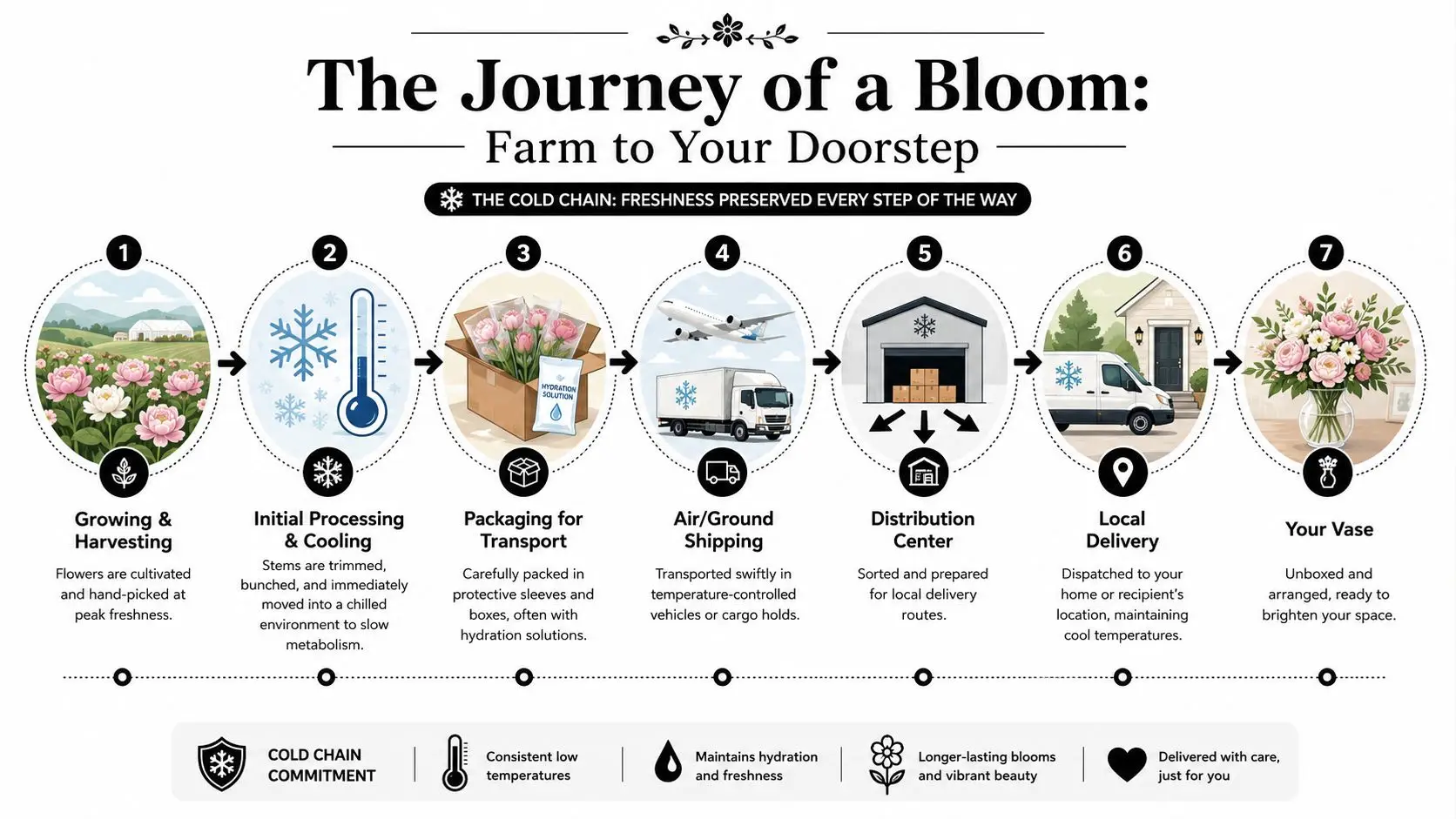
The cold chain is the whole game
Fresh-cut flowers start aging the moment they're harvested. Good growers slow that process immediately. Stems are cut at the right stage, cleaned up, bunched, and moved into a cooled environment so they can hold quality during the next steps.
After that comes conditioning and packing, a stage where many buyers underestimate the work involved. Flowers aren't tossed in a cardboard box and hoped for the best. They need sleeves, support, spacing, and packaging choices that fit the flower type. Some stems bruise easily. Others shatter if they're packed too loosely. Some can travel dry for a short period if they're properly conditioned first. Others are less forgiving.
A specialty grower shipping direct has to think like both a farmer and a freight coordinator. That's one reason I tell buyers to read beyond the homepage and look at how a supplier talks about harvest and handling. If a seller also educates buyers about specialty cut flowers, that's often a useful sign that they understand stem behavior instead of treating every bloom like generic inventory.
The handoff to the carrier is the next critical point. Once the box leaves the grower, timing gets tighter. The goal is simple. Keep the flowers protected, keep transit efficient, and avoid unnecessary delays between sort facilities and final delivery.
For example, an order like Twenty-five French Bonita Mix Marigold Stems would need packaging that protects compact ruffled blooms and foliage from crushing while keeping the bunch stable through handling.
Later in the chain, the order moves through distribution and local route delivery before you receive it. At that point, the baton passes to you. If the box sits outside in heat or remains unopened too long, the best upstream handling can only do so much.
A short visual helps buyers understand what they're paying for when they order shipped flowers:
Why inventory planning matters before shipping starts
The logistics story starts before harvest. Inventory discipline decides whether the right stems are available in the right colors and quantities when your event date arrives.
In online flower delivery, automated procurement systems integrated with AI-driven demand forecasting can reduce waste by up to 30% by aligning wholesaler orders with expected demand for specific flower types and colors in advance, according to developers.dev's article on online flower delivery services. For buyers, the practical takeaway is straightforward. Suppliers with organized forecasting usually manage bulk orders more cleanly than businesses that buy reactively.
Flowers reward planning. Last-minute substitutions and quality problems often begin as inventory problems several steps earlier.
What works is disciplined forecasting, realistic harvest planning, and product listings that reflect what a seller can ship. What doesn't work is treating perishables like shelf-stable goods.
Understanding Delivery Timelines and Costs
Most frustration around flower delivery comes from a bad assumption. Buyers think they're paying for “shipping” as a single line item, when they are instead paying for a time-sensitive transport decision with consequences for stem condition, labor timing, and event setup.
What usually affects delivery timing
Carrier cost usually changes based on box size, weight, destination, and service speed. That means your floral recipe affects freight. Large focal blooms, long branches, or bulky greenery can change the size of the carton. Mixed orders can require different packing configurations. Remote destinations can create narrower delivery windows.
The cheapest route isn't always the best route for event flowers. Faster service generally gives you a better buffer against delay and stress on the stems, but it also raises the transport cost. Slower service may work for sturdier materials or lower-pressure events, but it reduces your margin for error.
A practical way to compare options is this:
| Shipping choice | Usually makes sense when | Main risk |
|---|---|---|
| Fast service | Tight event timeline, delicate stems, warm weather concern | Higher carrier cost |
| Moderate service | Durable flowers, flexible prep schedule | Less recovery time if delayed |
| Lowest-cost service | Casual use, no hard install deadline | Too much risk for weddings and formal events |
If a seller ships with FedEx or another national carrier, the freight charge is usually a pass-through operating cost rather than a design fee. That matters for budgeting. Don't compare shipped bulk flowers to local hand-delivery pricing as if they're the same service. They aren't.
A practical event delivery window
For most events, flowers should arrive early enough to be inspected, hydrated, and organized without panic. DIY couples often underestimate how much calmer setup becomes when the flowers are on-site before design day.
A simple planning framework works well:
- Start with your event date.
- Count backward to your design day.
- Leave a buffer for hydration and opening.
- Avoid scheduling arrival so late that one delay wrecks the event.
For example, if you're making centerpieces and personal flowers yourself, you want time to process stems, let them drink, and catch any issues while support is still available. If you're hiring a planner or freelance designer to assemble arrangements, align the delivery day with their labor schedule, not just your calendar.
A good delivery date protects your workday, not just your event day.
What works is building in breathing room. What doesn't work is aiming for “the latest possible arrival” to save storage hassle. That approach leaves no cushion for transit problems, weather disruptions, or simple human delays like missing the driver at the door.
How to Choose a Reliable Flower Supplier
You usually find out whether a supplier is reliable at the worst possible moment. The boxes arrive, the event clock is running, and you need stems that match the recipe, open on schedule, and come with a claims process you can effectively use. A polished website does not answer those questions.
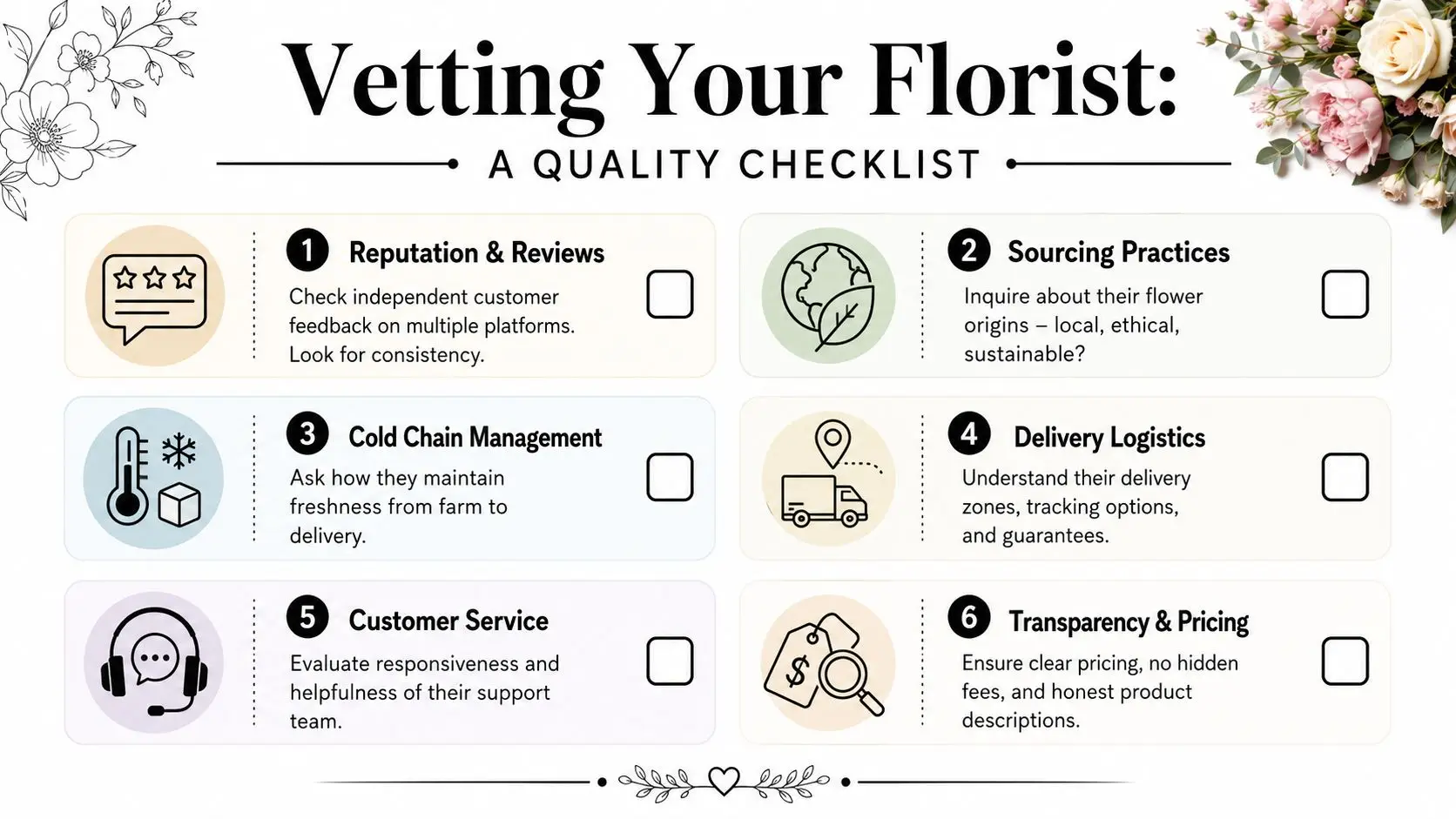
Ask whether the photos are real arrangements
Start with the gallery. For an event order, ask a direct question: Are these product photos from your own work, or are they stock images supplied by a marketplace or wholesaler?
That point comes up in Flowericon's guidance on choosing the best flower delivery service, and it matters even more for weddings, showers, and large DIY installs. If the seller cannot tell you which images are theirs, you are buying against marketing, not against proven output.
A good answer includes specifics. The supplier should be able to explain which arrangements they made, which stems may vary by season, and what changes are normal in color, bloom size, and openness. If you want another check, ask for recent event photos taken in ordinary lighting, not just styled shoots. For recipe planning, a practical reference like this guide to wholesale cut flowers for events and DIY weddings can also help you compare what is realistic versus what is purely inspirational.
Look for operational credibility
Event flowers are a logistics purchase before they become a design purchase. Reliable suppliers show that in the way they publish policies, communicate timelines, and explain post-arrival handling.
Look for clear signs that the business is set up to handle perishables well:
- Real business information: A physical business name, working phone number, email, and policy pages
- Shipping terms in plain language: Who pays freight, which carrier is used, and what happens if a box is delayed or mishandled
- Claims instructions: Exact steps for reporting damage, including how fast you need to report it
- Post-arrival care guidance: Hydration, trimming, opening time, and storage advice
- Professional affiliations: Trade memberships can help, but they matter less than clear operations and consistent follow-through
Barbara's Flower Boutique LLC is one example of that type of profile. It sells cut flowers online, ships with FedEx, states that shipping is paid by the customer, and notes membership with the Association of Specialty Cut Flower Growers along with Better Business Bureau certification.
The claims policy deserves special attention. For shipped flowers, a short reporting window is common. Six hours is not unusual. If a supplier buries that detail, or does not explain what documentation they require, you are taking on more risk than you may realize.
Test communication before you place a large order
Before placing a bulk order, send a short email with a few specific questions. This step tells you more than a homepage ever will.
Ask questions that expose how the company handles real event pressure:
- For image accuracy: “Which photos on this product page are from your own customers or your own design work?”
- For substitutions: “If a variety comes in lighter, darker, or smaller than expected, how will you notify me?”
- For claims timing: “How many hours do I have to report damage or quality issues after delivery?”
- For evidence: “Do you require photos of the box, shipping label, and stems during the claims window?”
- For support: “Who answers if there is a problem on delivery day, and during what hours?”
- For event fit: “Would you recommend these flowers for a Saturday wedding if I am designing on Friday?”
Reliable sellers answer in specifics. Vague reassurance is a warning sign. If a company avoids the hard parts before you pay, expect slower and less useful communication once the order is in transit.
The best supplier is not the one with the prettiest homepage. It is the one that shows you exactly how it handles substitutions, transit problems, photo accuracy, and time-sensitive claims before those problems land on your table.
Best Practices for Ordering Bulk Flowers Online
A bulk flower order usually succeeds or fails before the boxes ship. The difference is rarely taste. It is whether the buyer gave the farm or supplier enough usable information to pack the right product, route it correctly, and solve problems fast if something shifts.
Treat the order like event logistics, because that is what it is.
Send an order brief your supplier can act on
A good brief reduces errors, shortens back-and-forth, and gives the seller something concrete to confirm against inventory. “Garden style in soft neutrals” is a starting point. It is not enough for a shipment that has to arrive on schedule and perform well in designs.
Include the details that affect fulfillment:
- Event date and venue city
- Design use: personals, centerpieces, bud vases, ceremony pieces, cake flowers
- Color priorities: preferred shades, acceptable nearby tones, and colors to avoid
- Flower exclusions: scent sensitivities, toxic stems around pets, varieties you dislike
- Labor plan: DIY processing, planner-led setup, or florist installation
- Receiving plan: who will accept the boxes, where, and during what time window
- Flexibility level: which items must stay exact and which can change if crop conditions require it
If you need help translating recipes into bunches and stem counts, a practical guide to wholesale cut flowers can make the planning conversation much clearer.
Build your substitution rules before you pay
Substitutions are part of flower buying. Crops run early or late. A blush variety may arrive more peach than pink. A focal flower may be beautiful but smaller than the product photo suggests. Good suppliers account for that. Poorly planned orders fall apart because no one decided in advance what could change.
Set approval rules in writing:
- Exact match required for branded work, bouquets, or anything heavily photographed up close.
- Same color family is acceptable for supporting flowers.
- Open substitution allowed for accents and texture ingredients, if stem value and overall look stay consistent.
That framework protects the design and gives the supplier room to solve real farm and freight problems without waiting on a chain of texts.
Verify product photos before you rely on them
This step gets skipped far too often.
Some product pages show a mix of farm images, styled shoots, florist portfolio work, and heavily edited inspiration photos. For event work, that matters. You need to know whether the image reflects the actual grade, bunch count, opening stage, and color variation you are likely to receive.
Ask direct questions before ordering:
- Which images on this listing are your own recent shipments?
- Which photos show the product after hydration rather than straight out of the box?
- Are the photos edited for warmth, saturation, or tone?
- Can you send a current bunch photo or recent customer image for this variety?
A supplier who answers clearly is easier to trust. A supplier who avoids the question is telling you something useful.
Keep one decision-maker and one written record
Bulk orders get messy when too many people edit them. I see this often with weddings. One person emails about palette, another changes quantities, and someone else asks for an address update by text. That is how mistakes get locked into the invoice.
Use one lead contact. Put changes in one email thread. Confirm final quantities, substitutions, and delivery details in writing.
Simple systems prevent expensive confusion.
Match your order timing to your design plan
Buyers often order too early because they are afraid product will sell out, or too late because they assume overnight shipping fixes everything. Neither approach is reliable on its own. The right timing depends on the flower type, your event date, and how much processing time you have before design begins.
Ask three practical questions before you place the order:
- When should these specific varieties arrive for best performance at my event?
- How many days of hydration and opening time do they typically need?
- Which items are better sourced closer to the event because they blow open fast or bruise easily?
Roses, carnations, chrysanthemums, and many greens usually tolerate a bit more planning margin. Delphinium, stock, anemones, and some specialty blooms require tighter timing and gentler handling. A good order plan reflects those differences instead of treating every stem the same.
Put claims and problem reporting into your buying plan
Claims are not just a customer service issue. They are part of order planning.
If a supplier gives you a short reporting window, you need staff or family coverage in place to receive, inspect, and document the flowers on arrival. If you know the venue cannot accept boxes promptly, ship somewhere that can. If no one can open and review the order that day, adjust your delivery date or supplier choice before purchase.
The buyers who have the smoothest event week usually do the least improvising. They decide who receives the shipment, who has authority to approve changes, and what level of variation the design can absorb. That preparation is what keeps a bulk flower order usable under real event conditions.
What to Do When Your Flowers Arrive
A lot of buyers assume flower deliveries work like clothing or home goods. If there's a problem, they think they can look at it tomorrow, email support later, and sort it out when they have time.
Perishable flowers don't work that way.
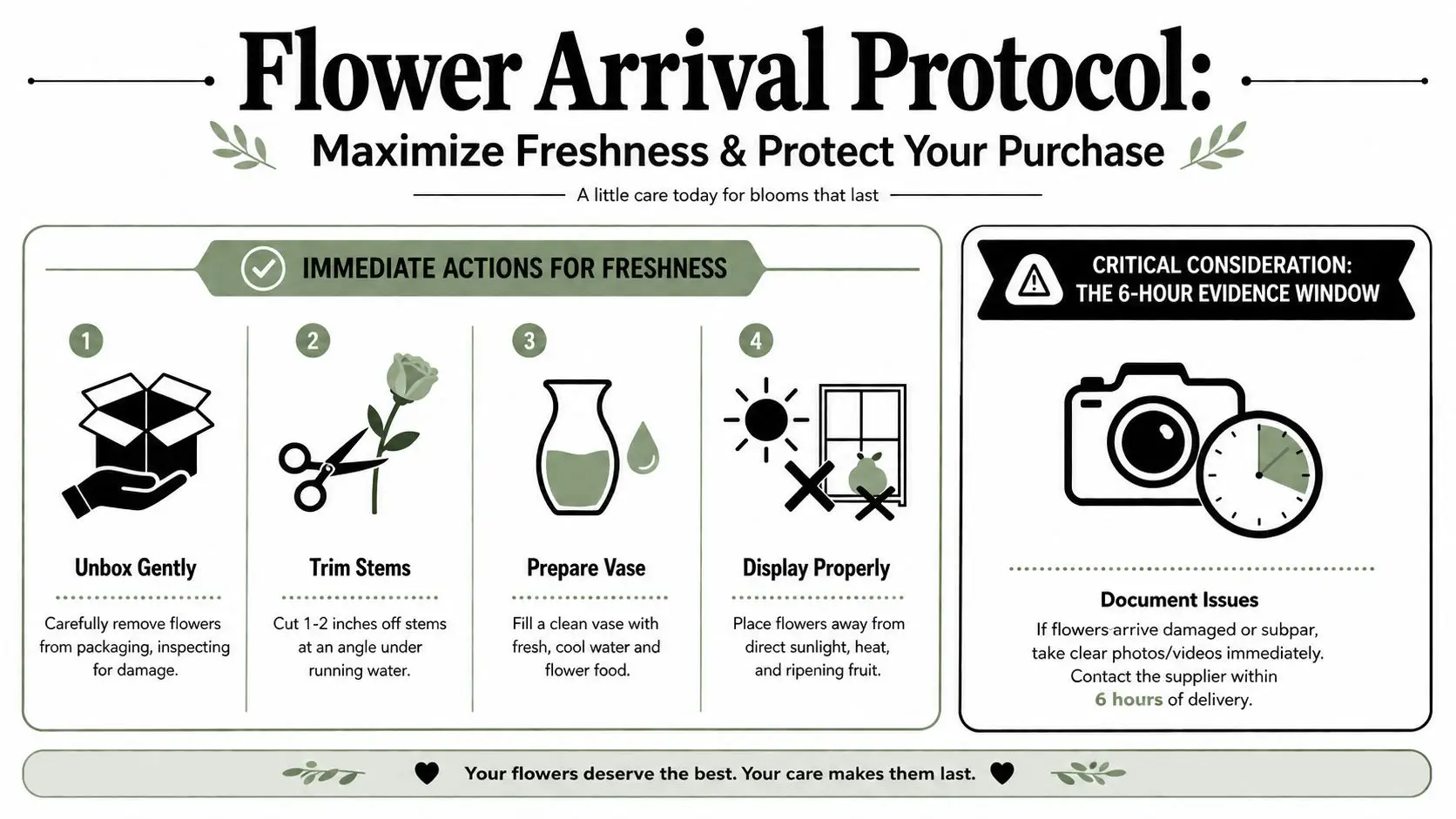
Open first, admire later
When the box arrives, treat it like a live shipment. Bring it inside promptly. Open it carefully. Check the stems, foliage, bloom heads, and packaging condition before you start styling anything.
Then move into basic processing:
- Inspect the box exterior: Look for crushing, punctures, or signs of rough handling.
- Photograph before cleanup: If anything looks off, document it before trimming or discarding sleeves.
- Check each bunch: Separate damaged stems from those that only need hydration.
- Trim and hydrate: Recut stems and place them into clean water as directed by the supplier.
- Store sensibly: Keep flowers away from heat, direct sun, and ripening fruit.
Many flowers look tired right out of the shipping box and then recover after water. That's normal. The key is knowing the difference between temporary travel stress and true damage.
The 6-hour claims rule most buyers miss
This is the detail that should be in every flower shipping guide and usually isn't. Customers must contact service within 6 hours of receiving the order, providing clear photographs of wilted blooms or broken stems and the delivery slip to request a full or partial refund, according to Easy Living Mom's guidance on bad flower delivery help.
That timeline is strict. If you wait until the next morning, you may lose the ability to make a valid claim.
Document these items immediately if there's a problem:
| What to capture | Why it matters |
|---|---|
| Shipping label and delivery slip | Confirms order identity and delivery timing |
| Outer box condition | Shows carrier-related handling issues |
| Damaged stems or wilted blooms | Establishes the quality problem clearly |
| Wide and close photos | Gives context and detail for review |
Don't throw away packaging until you know the order is sound and no claim is needed.
What works is immediate inspection, clean photos, and same-day communication. What doesn't work is waiting to see if the flowers “maybe improve” after the claims window closes.
Flower Planning Checklists and Templates
Planning flowers gets easier when you stop treating every decision as unique and start using repeatable checklists. The right template reduces missed details, duplicate purchases, and last-minute substitutions nobody approved.
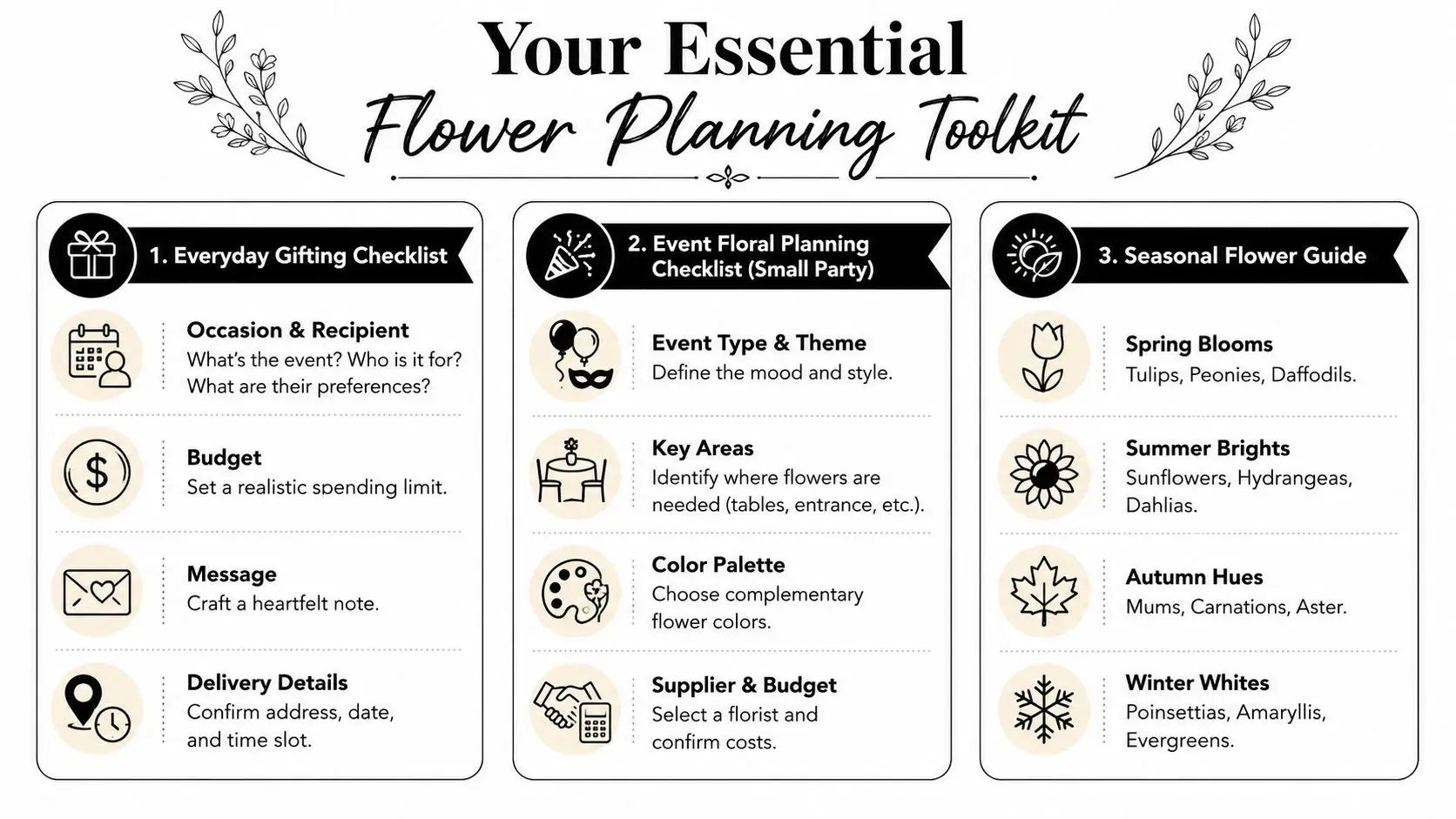
DIY wedding couple checklist
DIY couples need a system that protects both budget and sanity. A wedding flower plan usually fails at the handoff between ordering and execution.
Use this checklist before you place the order:
- Lock the event uses: List personals, ceremony flowers, table pieces, and any extra accent areas.
- Choose one color authority: One person approves palette changes.
- Match labor to ambition: If you have limited help, simplify recipes and vessel counts.
- Confirm delivery receiver: Someone must be present and ready to process flowers on arrival.
- Prepare tools in advance: Buckets, snips, water source, flower food, and workspace should be ready before boxes arrive.
- Review a wedding prep worksheet: A planning reference like this wedding flower checklist can help organize tasks by timing and use.
A good DIY flower plan is realistic. It respects setup time, not just inspiration photos.
Event planner checklist
Planners usually need a cleaner communication template than couples do. Your job is coordination, so your flower file should be readable by assistants, designers, venue staff, and the client.
Keep these fields in one shared document:
| Field | What to record |
|---|---|
| Event date and venue | Include city and on-site delivery contact |
| Floral uses | Ceremony, cocktail, dining, stage, welcome area |
| Approved palette | Include “acceptable variations” notes |
| Supplier contact | Name, email, phone, order number |
| Delivery plan | Date, location, who receives, backup contact |
| Issue protocol | Who documents damage and who contacts seller |
This kind of sheet prevents the common planner problem of having order information split between email threads, text messages, and proposal decks.
Florist sourcing checklist
Florists buying from growers need different questions than end consumers. You're not only buying a look. You're buying performance inside your own design workflow.
Ask questions that affect design behavior:
- Harvest stage: How open will the blooms be on arrival?
- Conditioning method: How were stems handled before packing?
- Stem character: Are lengths and branching patterns consistent enough for your recipe?
- Travel tolerance: Which items need immediate processing first?
- Substitution boundaries: What can change without affecting your client-facing promise?
The best sourcing conversations sound operational, not aspirational.
That's the key advantage of a disciplined flower delivery service. It turns a fragile product into a manageable process.
If you need a ship-to-door option for cut flowers, Barbara's Flower Boutique LLC offers online ordering for cut flowers and ships with FedEx. It can be a practical fit for buyers who want to work with a specialty grower and are prepared to manage delivery timing, processing, and event setup carefully.
Discover more from Barbara's Flower Boutique
Subscribe to get the latest posts sent to your email.