
You book the venue, approve the menu, and find the dress. Then the flower photos start stacking up. One saved image has a loose garden bouquet, another has a full ceremony arch, and a third has tables covered in blooms. Very quickly, the question stops being what you like and becomes what you need, in what order, and for which part of the day.
That is why a wedding flower checklist works best as a planning journey, not a shopping list.
The couples I work with get the best results when they build flowers in sequence, from the bouquet they will hold closest to the arrangements guests will see for a few hours, then to the pieces that need the earliest ordering, the most careful storage, and the clearest setup plan. That order helps with budget decisions too. Floral spending varies by style, season, and guest count, but flowers can take a meaningful share of the wedding budget, so priorities need to be set early rather than added room by room at the end.
Good flower planning is mostly about weight and timing. The bridal bouquet, ceremony focal point, and reception tables usually do most of the visual work. Accent flowers can be lighter. In many weddings, a bar, welcome table, or powder room looks finished with bud vases, candles, or greenery instead of a full arrangement.
Flower choice matters here as much as flower count. If you are still refining your palette, this guide to choosing the perfect wedding rose can help you match the bloom to the style, season, and level of formality you want.
This guide follows the day in the same order a florist plans it. Personal flowers come first. Ceremony flowers follow. Reception pieces, accents, ordering timeline, quantities, supplies, conditioning, and a printable master checklist come after that. You will also see sample checklists for small, medium, and large weddings, so the plan feels usable whether you are arranging flowers for 20 guests or 200.
Table of Contents
- 1. The Bridal Bouquet Your Signature Arrangement
- 2. Wedding Party Flowers Bouquets Boutonnieres and Corsages
- 3. Ceremony Flowers The Altar and Aisle
- 4. Reception Centerpieces Setting the Table
- 5. Accent Arrangements The Finishing Touches
- 6. The Flower Timeline When to Order and Prep
- 7. Flower Quantities Sample Checklists by Wedding Size
- 8. Essential Tools and Supplies Checklist
- 9. Storage and Conditioning Keeping Flowers Fresh
- 10. Printable Master Checklist and Template
- Wedding Flower Checklist: 10-Item Comparison
- Your Complete Floral Blueprint
1. The Bridal Bouquet Your Signature Arrangement
The bouquet gets photographed in the getting-ready suite, in the first look, in the ceremony processional, in family portraits, and on the reception tables after sunset. It is usually the first floral decision I ask couples to make because it gives the rest of the wedding a clear visual starting point.
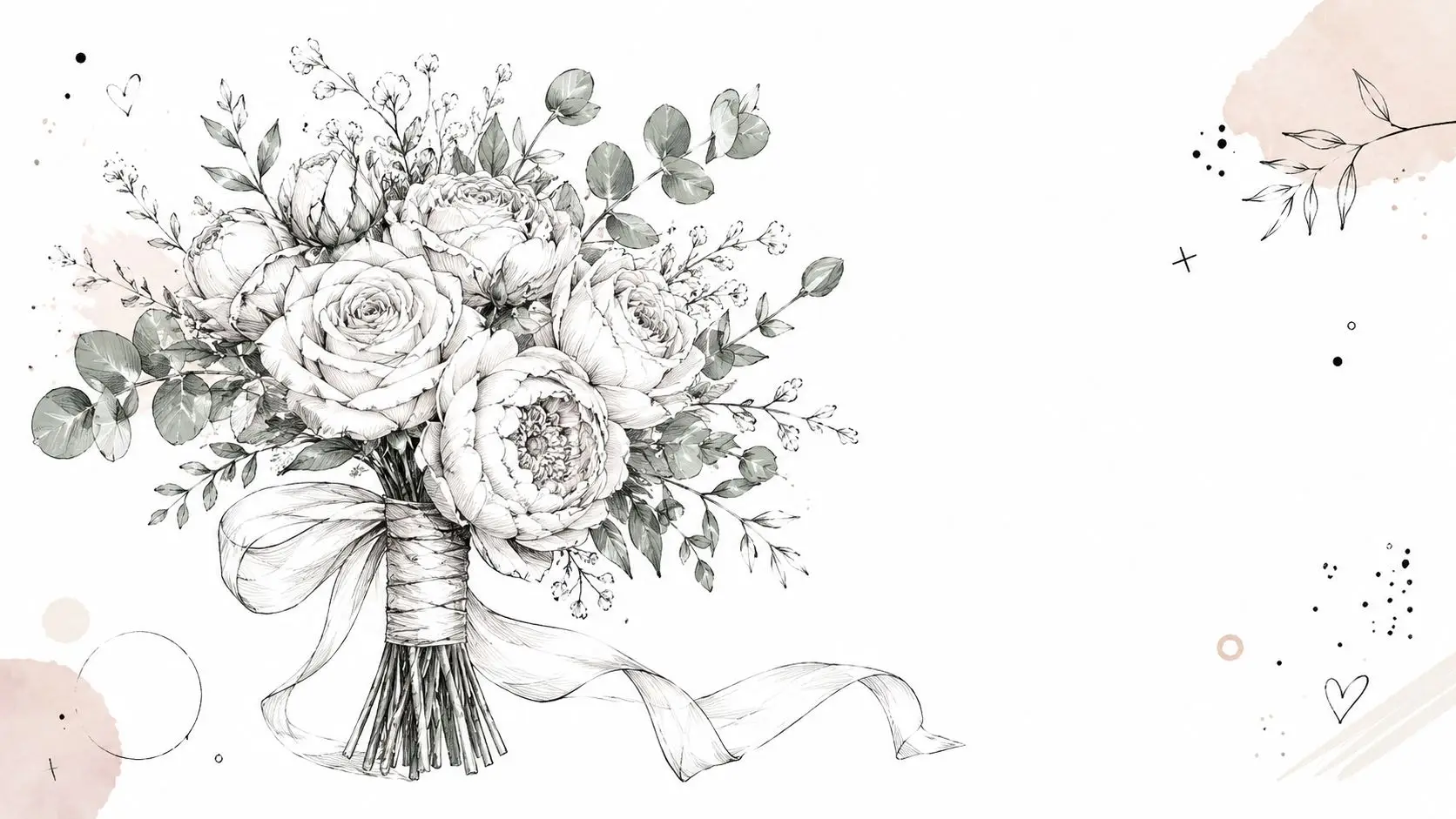
A good bridal bouquet does more than look beautiful in a close-up. It needs to suit the dress, feel balanced in the hand, and hold its shape through a long day. A fitted satin gown usually pairs better with a cleaner outline. A soft tulle or lace dress can carry more movement and looseness. Scale matters too. A bouquet that looks generous on a worktable can read bulky on a petite frame and disappear into the bodice on a taller bride if the proportions are off.
Start by choosing the shape. Round, airy, cascading, and sculptural each create a different mood in photos and a different handling experience in real life. Then set the priority for the design. As noted earlier, Fiore Designs suggests deciding whether the main focus is flower variety, color, shape, or overall feeling. That choice helps with substitutions later, especially if a specific bloom arrives smaller than expected or is unavailable in the right quality.
Here is what to lock in before you price anything else:
- Shape: Round, gathered, asymmetrical, cascade, or arm sheaf
- Scale: Petite, medium, or statement-sized based on body frame and dress silhouette
- Palette: One tight color story usually photographs better than too many competing tones
- Texture level: Sleek and polished, garden-style and layered, or something more architectural
- Priority flowers: Save your favorite blooms for the bouquet before placing them in lower-visibility designs
- Handle finish: Ribbon wrap, exposed stems, or a softer trailing ribbon for movement in photos
Weight deserves more attention than couples expect. If the bouquet is heavy by the end of the trial, it will feel heavier halfway through portraits. Large-headed flowers, water-retentive stems, and oversized cascade work all add weight fast. The prettier option on paper is not always the better one to carry for hours.
I also recommend treating the bouquet as the first checkpoint in your wedding flower checklist timeline. Once this recipe is approved, the rest of the floral plan becomes easier to scale for a small, medium, or large wedding. For a small wedding, the bridal bouquet may carry the premium flowers while attendants use simpler stems or no bouquets at all. For a medium guest count, the bouquet often sets the palette and texture recipe for the party and centerpieces. For a large wedding, it becomes the control sample that keeps many floral pieces consistent across the day.
Practical rule: Spend where the camera comes closest. The bridal bouquet earns that budget before cake flowers or bar accents do.
If roses are the lead flower, bloom form changes the whole look. Standard roses feel cleaner and more structured. Garden roses read fuller and more romantic. Reflexed roses give a more styled, fashion-led finish but need experienced handling. This guide on how to pick the perfect wedding rose can help narrow the look before you build the rest of the checklist around it.
2. Wedding Party Flowers Bouquets Boutonnieres and Corsages
Once the bouquet is set, the wedding party flowers become much easier. They shouldn’t compete with the bridal bouquet. They should echo it.
That usually means bridesmaids’ bouquets carry the same palette with fewer premium blooms or a simpler recipe. Boutonnieres and corsages should look related, but they need to be built for wearability first. Lapels shift. Wrists move. Pin-on pieces get crushed in hugs.
Who needs flowers and who doesn’t
A lot of stress comes from ordering flowers by habit instead of by role. Not every person in formalwear needs a floral piece. Keep the list intentional.
A practical wedding flower checklist for personal flowers usually includes:
- Bride: Bouquet, and possibly hair flowers if they’re part of the look
- Bridesmaids or attendants: Bouquets or an alternate carry piece
- Groom: Boutonniere
- Groomsmen, fathers, grandfathers, ushers, officiant: Boutonnieres if desired
- Mothers and grandmothers: Corsages or a small handheld nosegay
- Flower girl or junior attendant: Petals, a mini bouquet, or a floral crown
The mistake I see most often is making every boutonniere too large. A boutonniere should read clearly from a few feet away, but it shouldn’t droop, spin, or stain a jacket. Smaller almost always wears better.
Matching without cloning
Give each category a slightly different scale. Bridesmaids can carry one focal bloom type with supportive foliage. The groom’s boutonniere can tie directly to the bridal bouquet. Mothers’ corsages need to be light, secure, and comfortable against clothing.
Industry guidance gathered in The Knot’s average wedding flower cost overview puts the average cost of wedding flowers at $2,800, with a broader typical range of $2,500 to $8,000, and notes flowers often represent 8 to 10% of total wedding spending. That’s why personal flowers benefit from a clean list. Small pieces add up fast when the headcount expands.
Keep a written name-by-name list. “We’ll remember family flowers later” is how corsages get forgotten.
3. Ceremony Flowers The Altar and Aisle
Guests take their seats. The music starts. From that moment on, the ceremony flowers need to read clearly from the back row, in photos, and in the actual space, not just on a Pinterest board.
Ceremony florals are the midpoint of the wedding flower checklist. Personal flowers have already done their job. Reception flowers are still ahead. That makes this section a planning hinge. The best ceremony designs are beautiful in the moment and smart enough to reuse later.
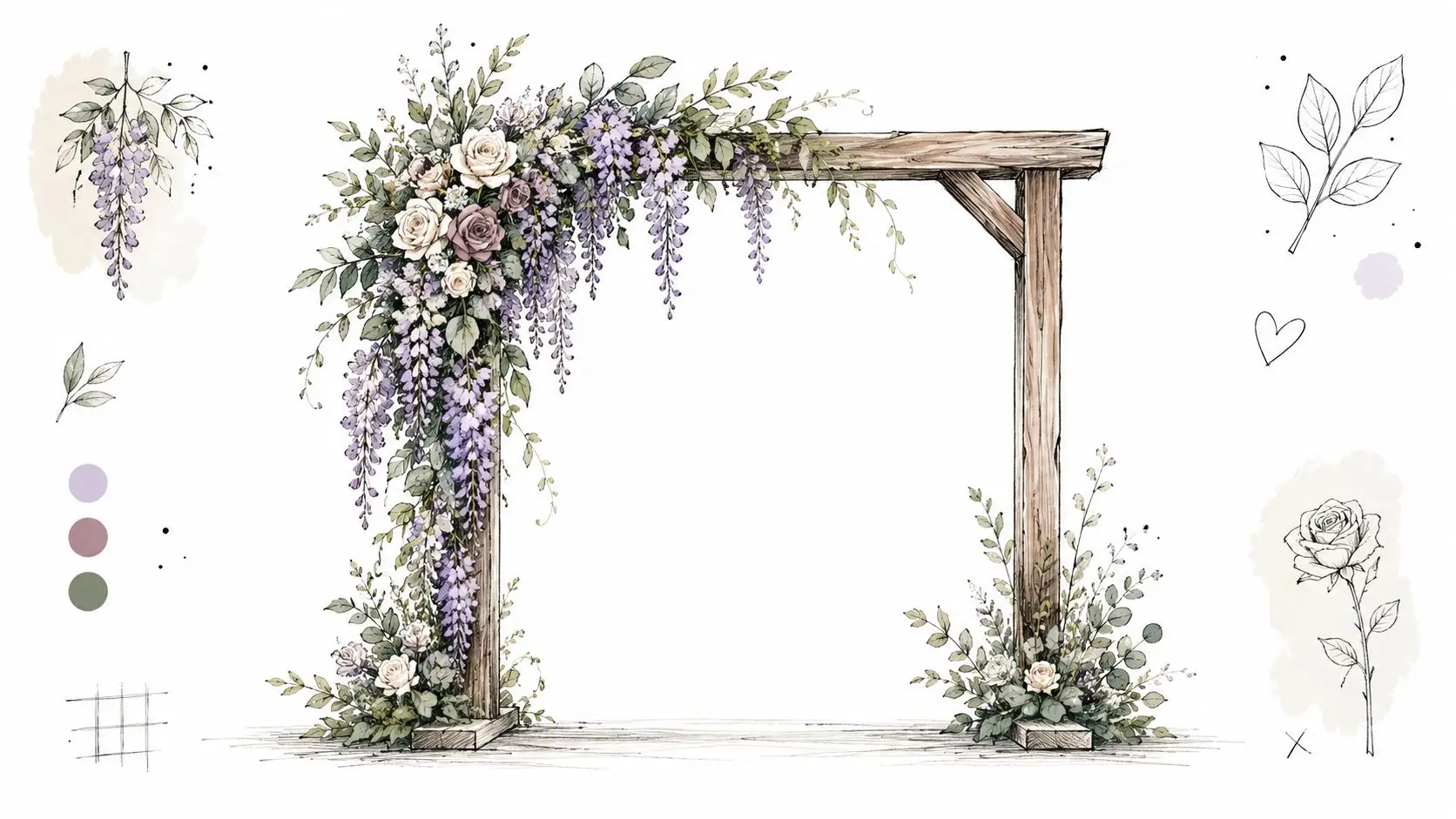
Start with what guests will actually see
Walk the room or site from the first guest chair, then from the aisle, then from the couple’s standing position. Those three angles usually settle the design faster than any inspiration gallery. A dramatic stone altar may need only two grounded arrangements. A hotel ballroom with a plain wall behind the couple usually needs more height, width, or both.
Season matters here too. Outdoor summer ceremonies can dry out delicate flowers fast, while windy locations punish lightweight aisle pieces and loose mechanics. Choosing seasonal blooms for wedding floral arrangements is often the difference between flowers that hold their shape and flowers that look tired before the vows are over.
Choose one ceremony priority
Couples often try to split the budget across an arch, aisle markers, entry flowers, welcome sign flowers, and chair accents. In practice, one strong focal area almost always looks better.
Usually, that priority is one of these:
- Altar focus: Two large grounded pieces, one altar cluster, or a partial arch
- Aisle focus: Front-row markers or floor arrangements that frame the processional
- Entry focus: Flowers at the welcome area if that is where guests gather and take photos
- Reuse focus: Freestanding pieces that can move to the bar, escort card table, or sweetheart table after the ceremony
I usually advise couples to decide what matters most in this order: backdrop for vows, processional view, then guest arrival area. That sequence keeps the spending tied to the parts of the day people remember most.
Match the design to wedding size
A small wedding can look finished with two altar arrangements and no aisle flowers at all. A medium wedding often benefits from a clear focal point plus a few front-row aisle pieces. A large wedding usually needs more width and repetition so the design does not disappear in a wide room or long aisle.
Here is a practical ceremony checklist by size:
Small wedding
- 1 altar moment, such as a partial arch or 2 grounded arrangements
- 0 to 4 aisle accents
- 1 welcome table or sign arrangement if desired
- Reuse plan for every movable piece
Medium wedding
- 1 larger altar installation or 2 substantial focal arrangements
- 4 to 8 aisle accents, usually concentrated near the front
- 1 to 2 entry arrangements
- Clear transport plan from ceremony to reception
Large wedding
- 1 full visual anchor at the altar
- Repeated aisle elements so the layout reads from a distance
- Entry flowers scaled to the room
- Extra staff time for setup, pinning, and post-ceremony moves
That progression matters. The flower checklist works best when each section answers the next part of the day.
Build for movement, not just the ceremony
Ceremony flowers are some of the best candidates for reuse, but only if they are designed that way from the start. Grounded meadows, freestanding urns, and floor arrangements move well. Pew markers tied one by one with delicate ribbon usually do not. Large arches can be beautiful, but they also bring higher labor, transport complexity, and limited reuse unless the design breaks into sections.
A good ceremony plan saves money by putting volume where it will be seen twice.
If the flowers only look balanced from ten feet away at the altar, check how they read from the last row before signing off on the design.
4. Reception Centerpieces Setting the Table
Guests settle in at the reception, find their seats, and spend the next few hours looking at one floral piece more than any other. That is why centerpieces need to do more than photograph well. They have to fit the table, leave room for food and glassware, and let people talk across the arrangement without feeling like they are peeking around it.
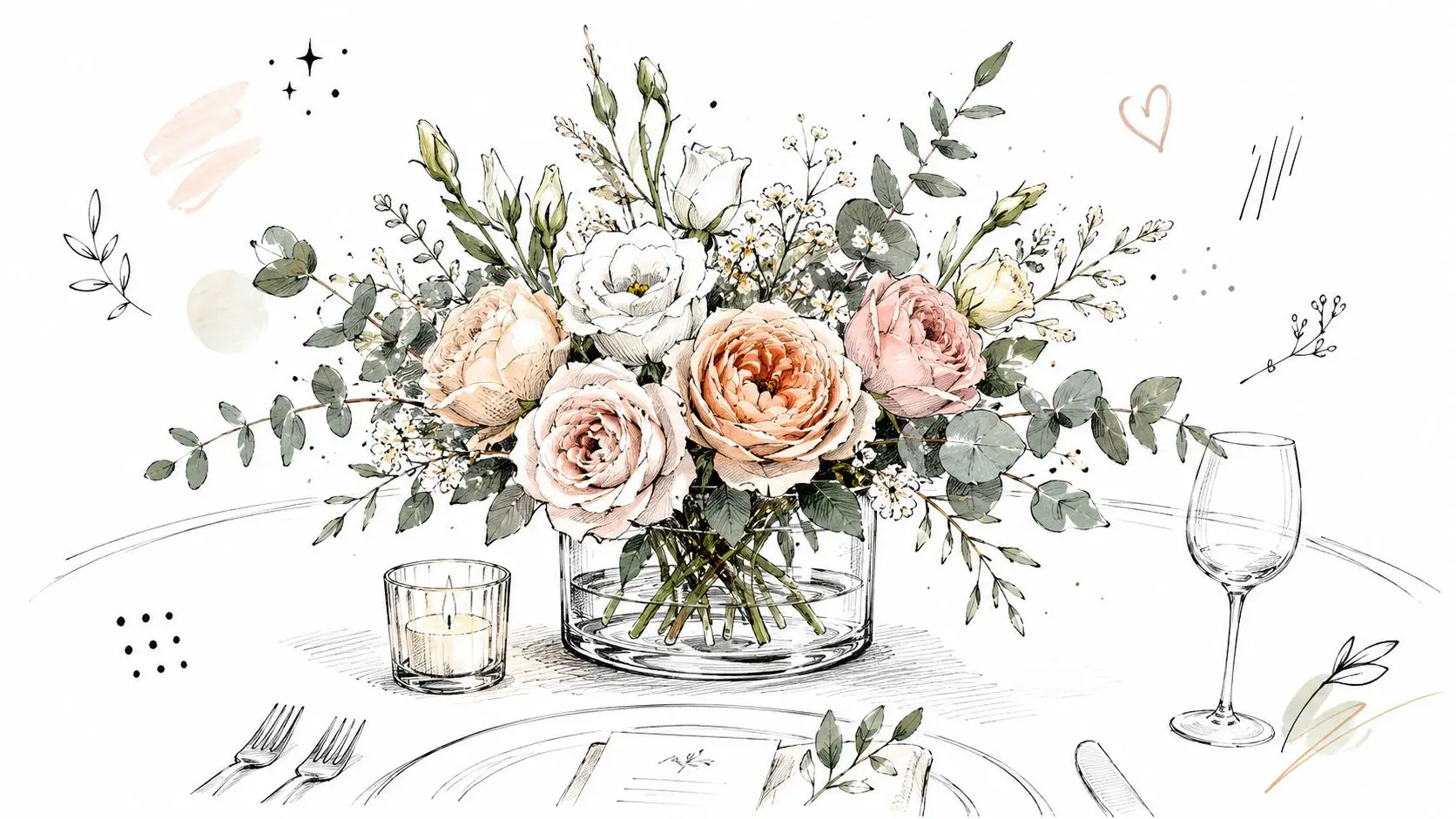
A good centerpiece starts with the tabletop, not the flower recipe. Round tables usually suit compact low designs or properly scaled tall arrangements with clear space underneath. Long banquet and farmhouse tables often look better with repeated moments, such as bud vases, compotes, or a garland broken by candles, because one small arrangement in the middle gets lost fast.
Low, tall, or mixed
Low centerpieces work well for conversation-heavy receptions and family-style service. Tall designs bring shape and visibility in a ballroom, but they need sturdy mechanics, weighted vessels, and enough clearance that guests are not looking through dense foliage. Mixed heights usually give the room the best rhythm, especially if every table does not have the same footprint or sightline.
The best planning choice for many weddings is one dependable guest-table design, then a stronger floral recipe for the head table, sweetheart table, or any table that will be photographed repeatedly. That keeps labor and flower counts under control while still giving the room a focal hierarchy.
For DIY and hybrid weddings, use stem counts as a working estimate, not a promise. A loose garden arrangement in a wide bowl can take far more product than a tighter design in a compote. Vessel opening, flower variety, and design style change the math.
Where seasonal design saves money without looking sparse
Reception flowers multiply quickly. One expensive bloom in a bouquet feels manageable. That same bloom across 14 guest tables becomes a budget decision.
Seasonal flowers usually do the most work here because centerpieces repeat. Use premium blooms where guests and cameras will notice them most, then build the rest of the table recipe with flowers that hold shape and add volume. If you are comparing seasonal blooms for floral arrangements, focus on varieties that give you coverage, movement, and reliable vase life rather than chasing one signature flower for every table.
Here is a practical centerpiece checklist by wedding size:
Small wedding
- 4 to 6 guest table centerpieces, or 1 long-table layout
- 1 upgraded head table or sweetheart arrangement if needed
- Candles or bud vases to widen the visual footprint without adding full arrangements everywhere
Medium wedding
- 8 to 15 guest table centerpieces
- 1 to 2 feature tables with a fuller recipe
- A clear plan for mixing low and tall pieces if the room needs variation
Large wedding
- Repeated centerpiece recipes that can be produced efficiently
- Stronger designs for head table and priority photo areas
- Extra vessels, candles, and setup time so large rooms do not read flat
A few practical checks prevent expensive mistakes:
- Use premium blooms selectively: Put them on the head table, sweetheart table, or priority family tables
- Let support flowers carry volume: Spray roses, stock, mums, greens, and textured fillers often do more visual work per table
- Match the arrangement to the vessel opening: Wide vessels need more product, and narrow-necked vases need cleaner line and structure
- Measure around place settings: The centerpiece has to share space with chargers, bread plates, wine glasses, and candles
Centerpieces should feel like part of the guest experience, not an obstacle sitting in the middle of it. If the room is on the small side, lower and fuller often wins. If the ceiling is high and the tables are spread out, height can earn its keep.
5. Accent Arrangements The Finishing Touches
Guests usually notice accent flowers in motion, not in isolation. They arrive, find their place card, order a drink, sign the guest book, visit the cake, and step into the powder room. If those touchpoints feel cared for, the whole wedding reads as finished.
That is why I plan accents in event order, not as a random add-on list.
Start with the entrance. A floral detail at the welcome sign or entry table sets the first impression and gives photographers a clean opening shot. Next comes the escort card or seating chart area, where a compact arrangement helps frame the display without blocking names or traffic. After that, focus on the cake table, bar, guest book, lounge, and cocktail tables in that order. Powder room flowers come last. They are lovely, but they should never outrank the spaces guests and cameras use all night.
How to prioritize accent flowers without wasting budget
Accent pieces work best when each one has a clear job. Some direct attention. Some soften hard furniture or signage. Some fill dead visual space in a room that otherwise feels underdressed.
The expensive mistake is treating every surface like it needs a full arrangement. It rarely does.
Use this rule. Put fuller flowers where guests stop and where photos happen. Use lighter touches where people pass through quickly.
A practical setup often looks like this:
- Welcome sign or entrance: 1 grounded arrangement or 2 small floor pieces
- Escort card or seating display: 1 low arrangement that frames, not covers
- Cake table: flowers that connect visually to the cake design and photo angle
- Cocktail tables: bud vases or candles, not full centerpieces
- Bar: one statement piece if the bar is a focal point, otherwise keep it minimal
- Guest book or memory table: 1 small arrangement
- Lounge area: a compote, bud vase cluster, or repurposed ceremony flowers
- Powder room: 1 bud vase or a single stem arrangement
As noted earlier in the article, couples usually get better value by putting premium blooms into bouquets, ceremony moments, and reception tables first. Accent areas are where carnations, spray roses, mums, stock, greenery, candles, and bud vases often do the most useful work per dollar.
What gets cut first, and what should stay
If the floral budget tightens, reduce quantity before you remove every accent piece. One strong entrance moment and one polished cake setup usually do more for the event than scattering five weak arrangements around the room.
Cocktail tables are the first place I simplify. Bars are next unless the bar is custom-built or heavily featured in the room design. Food stations usually need restraint because flowers can compete with platters, signage, and service access. Powder rooms are nice to have, but only after the core guest-facing areas are handled.
Reusable or artificial floral decor can also make sense here. The Business Research Insights artificial flower market report notes growing use of those products in weddings and events. In practice, they tend to work best in signage pieces, backdrops, and decor guests see from a few feet away, not in personal flowers that get photographed up close.
Accent checklist by wedding size
A chronological checklist keeps accents from multiplying late in the process.
Small wedding
- Entrance or welcome sign flowers
- Escort card table, if used
- Cake flowers
- 2 to 4 cocktail table bud vases, only if needed
- 1 guest book or memory table arrangement
Medium wedding
- Entrance flowers
- Escort card or seating chart flowers
- Cake table flowers
- 6 to 10 cocktail table bud vases or candle clusters
- 1 bar arrangement
- 1 lounge or guest book arrangement
- 1 powder room bud vase if budget allows
Large wedding
- Entrance installation or paired accent pieces
- Escort display flowers scaled to the footprint
- Cake table flowers with styling for photo coverage
- Cocktail table accents throughout
- Bar flowers at each major service point
- Lounge florals in key seating clusters
- Guest book, memory table, and powder room touches
- A repurposing plan so ceremony flowers can be moved into these zones efficiently
The goal is not more flowers everywhere. The goal is a wedding that feels finished from arrival to last call.
6. The Flower Timeline When to Order and Prep
Two weeks before the wedding is a bad time to discover the venue only allows a 90-minute setup window, the aisle markers need weights for wind, and the cousin who offered to help with centerpieces is also supposed to get ready for photos. Flower planning runs smoothly when those decisions are made in order, early enough to solve problems while options are still open.
A good floral timeline follows the day itself. Start with what has to be ready first, then build backward. Personal flowers need exact counts. Ceremony flowers depend on the floor plan. Reception flowers depend on table numbers, room turns, and whether anything will be repurposed after the vows.
The planning sequence that prevents problems
Set the venue, date, and guest count first. Those three choices shape flower availability, delivery timing, room access, and labor more than any inspiration board does.
Then use this sequence:
- Book your florist or flower supplier once the date and venue are confirmed
- Lock in wedding party and family personal flower counts early
- Confirm ceremony layout before pricing arches, aisles, or grounded pieces
- Confirm reception table counts, table sizes, and room turn timing
- Review delivery windows, setup access, candles policy, and who handles breakdown
- Share inspiration photos with notes about color, shape, and scale, not just “I love this”
This order saves money because it cuts revisions. It also prevents one of the most common planning errors I see: couples approving floral designs before anyone has measured the room.
A practical timeline, from booking to wedding week
3 to 6 months out
Book the florist, or book your bulk supplier if you are arranging flowers yourself. Finalize the overall floral scope at this stage: personals, ceremony, reception, and any accent pieces you know you want.
8 to 10 weeks out
Refine the palette and flower priorities. This is the right time to say, “Garden roses matter to me, but I’m flexible on the rest,” or “I care more about a full ceremony focal point than large centerpieces.” Clear priorities make substitutions easier if a variety comes in weak.
4 to 6 weeks out
Confirm counts. This includes attendants, family personals, guest tables, cocktail tables, bars, and statement pieces. Small weddings can usually finalize quickly. Medium and large weddings need more discipline here because one late seating change can ripple into linen, rental, and floral updates.
2 to 3 weeks out
Review logistics in detail. Confirm delivery addresses, contact names, setup access times, refrigeration if needed, and who is responsible for moving any repurposed flowers from ceremony to reception.
Wedding week
Florists place final flower orders and start processing product as it arrives. DIY couples should already have vessels, tools, recipes, transport bins, and a placement plan finished before fresh flowers show up.
DIY timing versus professional timing
DIY can work well for bud vases, simple centerpieces, and loose accent flowers. It gets risky once the plan includes personals, large installs, delicate varieties, or multiple delivery points.
Professional florist pricing usually includes flowers, vessels and mechanics, labor, transportation, setup, and some margin for breakage or substitution. A florist pricing discussion on Reddit gives a useful look at how working florists think about markups, hard goods, and labor. The exact formula varies by market and design style, but the takeaway is consistent. DIY only saves money when you can replace paid labor with organized, reliable help.
If you are doing your own flowers, assign jobs before wedding week:
- One person to pick up or receive flowers
- One person to process and hydrate everything
- One person to arrange or oversee recipes
- One person to transport finished pieces
- One person to place flowers on site with the checklist in hand
That staffing reality changes by wedding size. A small wedding may be manageable with a tight plan and a few capable helpers. A medium wedding usually needs a longer prep window than couples expect. A large wedding rarely stays calm without professional production support, especially if there are installations, room turns, or strict venue access times.
The strongest timeline is the one that matches the scale of the event. Build it in the same order the wedding unfolds, and flower decisions stay clear instead of piling up at the end.
7. Flower Quantities Sample Checklists by Wedding Size
Quantities feel intimidating until you break them into event parts. Start with people. Then ceremony. Then tables. Then accent areas. That’s the cleanest way to build a wedding flower checklist that won’t unravel later.
The biggest quantity mistake is guessing from photos. A reference image doesn’t tell you how many tables there are, whether an arch is full or partial, or whether florals are fresh, dried, or mixed with candles and fabric.
Small wedding sample checklist
For an intimate wedding, the floral plan usually works best when it stays concentrated.
- Personal flowers: Bridal bouquet, partner boutonniere, attendant flowers as needed, family personals only if they’re important to you
- Ceremony: One focal installation or two grounded pieces, plus light aisle treatment
- Reception: Centerpieces for guest tables, cake flowers, welcome or escort table flowers, a few bud vases in lounge or powder room spaces
Small weddings often benefit from micro-scaled florals. A compact room doesn’t need oversized arrangements to feel finished.
Medium wedding sample checklist
Count discipline is paramount. You may have enough tables and attendants for floral costs to rise quickly, but not enough room scale to justify oversized installations.
A medium-size list usually includes full personals, a stronger ceremony focal point, centerpieces for all guest tables, and selective accents at the bar, cake table, and welcome display. For DIY planning, Flower Lab STL’s checklist article notes that digital calculators and budget guides help couples plan more accurately, and reports that most couples using those tools stay within the $2,000 to $5,000 range.
Large wedding sample checklist
Large weddings need repetition with restraint. Not every zone should be equally floral. Put energy where guests gather longest and where photographs happen most.
For larger events, I’d usually map:
- All personal flowers
- A defined ceremony backdrop
- Head table or sweetheart statement
- Centerpieces across guest tables
- Selective accents at entry, bar, cake, and lounge
- A repurposing plan for any movable ceremony pieces
If you can’t count it, you can’t quote it, order it, transport it, or delegate it.
8. Essential Tools and Supplies Checklist
Flowers fail fast when the tools aren’t ready. Not because the blooms are bad, but because the workflow breaks down. Someone can’t find snips. Buckets aren’t cleaned. Ribbon is missing. Water source is too far away. Then everything takes twice as long.
This matters for florists and DIY couples alike. The arrangement recipe is only half the job. The prep station determines whether stems stay usable and whether designs hold up through transport.
Core tools that belong in every prep area
A basic working kit should include sharp floral clippers, extra buckets, floral tape, waterproof tape, ribbon, pins, boutonniere magnets or mechanics if you use them, floral wire, scissors, towels, trash bags, zip ties, vessels, and a way to label what goes where. If you’re building centerpieces, pre-labeling by table number saves time during setup.
Bulk flower pricing also affects how tightly you need to manage waste. Growing for Market’s wedding flower profitability article notes that bulk 10-stem bunches can range from $6.50 to $9.50 for standard varieties and $15 to $17.50 for premium lilies, callas, and roses. Once you see flowers in bunch pricing instead of single stems, over-ordering and careless trimming get expensive quickly.
Don’t skip the planning tools
Tools aren’t only physical. Tracking tools matter too. Team Flower’s florist metrics guide points to wedding flower calculator breakdowns as a way to determine stem requirements more accurately and reduce over-ordering and waste. For florists, that same article highlights Google Analytics demographic and location reports, bounce rate, and inquiry-to-close ratios as useful business metrics.
Even if you’re not running a floral business, the lesson applies. Count stems, count vessels, count tables, and label every piece.
9. Storage and Conditioning Keeping Flowers Fresh
Good flowers can still look tired by ceremony time if they’re conditioned badly. Freshness depends less on wishful thinking and more on water, temperature, airflow, and timing.
The handling of flowers can make or break DIY plans. Flowers need a clean processing area, clean buckets, fresh water, stem recutting, and enough time to hydrate before being designed or transported.
Conditioning before design
Cut flowers need to drink first. Process them as soon as they arrive. Remove foliage below the water line, recut stems, and place them in clean buckets with hydration space. Keep them away from direct sun, heat sources, and crowded rooms.
Heat changes everything. If you’re planning for a warm-weather event or any venue with outdoor loading, photo time, or delayed setup, choosing tougher flower varieties matters. This guide to heat-tolerant cut flowers for Bulverde gardens is useful for understanding which flowers are more likely to hold up when temperatures rise.
Storage and transport rules
Store finished work in the coolest practical indoor space available. Don’t crush arrangements together in a vehicle. Protect bouquets from direct blasting air and from being laid flat if they weren’t designed for it.
The broader wedding flowers market was valued at USD 10.74 billion in 2024 and is projected to reach USD 14.01 billion by 2032, with a CAGR of 3.37%, according to Wise Guy Reports’ wedding flowers market report. North America holds over 35% of that market. To me, that scale reinforces how important operational basics are. The flowers may be romantic, but handling them is technical.
Cool, clean, and hydrated beats expensive every time.
10. Printable Master Checklist and Template
On wedding week, flower plans often break down in predictable places. A bridesmaid asks who gets corsages. The venue asks which pieces stay after the ceremony. Someone loads the car and leaves behind the cake flowers because they were listed in a text thread instead of the master plan.
A printable checklist prevents that. It gives the couple, planner, florist, and setup team one working document with the same language, the same counts, and the same assignments. If flowers are being repurposed from ceremony to reception, the checklist should show who moves them, where they go, and when that handoff happens.
Build the template in wedding-day order so it reads like the event itself, not like a random supply sheet. That makes it faster to use under pressure.
What your printable checklist should include
Use these sections in sequence:
- Personal flowers: Name, role, item, quantity, delivery or handoff note
- Pre-ceremony placement: Welcome table flowers, entrance arrangements, sign flowers, restroom bud vases
- Ceremony flowers: Piece name, quantity, installation location, setup time, reuse plan
- Cocktail hour and reception flowers: Table count, centerpiece style, bar flowers, cake flowers, accent arrangements
- Repurposed designs: Original location, new location, assigned mover, move time
- Supplies and backup items: Buckets, vessels, ribbon, tape, pins, labels, extra stems, cleanup kit
- Logistics: Delivery window, venue contact, setup lead, vehicle assignments, breakdown instructions
- Approvals and notes: Color palette, approved substitutions, flower allergies, contract reminders
The reuse column matters. Couples save real money when ceremony pieces do double duty, but only if the move is planned early and assigned clearly.
Sample checklist snapshots by wedding size
A small wedding might need one bridal bouquet, two attendants’ bouquets, three boutonnieres, two corsages, one ceremony focal piece, and five to seven table arrangements.
A medium wedding usually adds layered needs. Personal flowers for a larger wedding party, aisle markers, welcome table flowers, bar pieces, cake flowers, and enough reception work to cover guest tables plus a sweetheart or head table.
A large wedding needs more than higher counts. It needs cleaner tracking. Separate columns for installation crew, strike plan, room flip timing, and repurposed flowers become necessary once multiple spaces and teams are involved.
Printable master template
Copy this into a spreadsheet or print it as a worksheet:
| Category | Item | Quantity | Person or Table | Location | Delivery or Setup Time | Reuse Plan | Assigned To | Notes |
|---|---|---|---|---|---|---|---|---|
| Personal flowers | Bridal bouquet | 1 | Bride | Suite | 11:30 AM | No | Florist | Keep in water until photos |
| Personal flowers | Boutonniere | 6 | Wedding party | Venue entry | 1:00 PM | No | Planner | Pinning assistance needed |
| Ceremony | Ground arrangement | 2 | Altar | Ceremony site | 2:00 PM | Move to sweetheart table | Setup team | Mark left and right |
| Reception | Centerpiece | 12 | Guest tables | Ballroom | 4:00 PM | No | Florist | Alternate low and compote style |
| Accent | Cake flowers | 1 set | Cake table | Ballroom | After cake arrives | No | Florist | Keep chilled until placement |
A good template helps couples make better trade-offs. I use it to spot weak spending fast. Six scattered bud vases may matter less than one strong ceremony arrangement, or a large welcome display may be better repurposed into reception accents if the budget is tight.
Print one copy for setup. Keep one digital version for edits. That simple habit prevents a lot of wedding-day confusion.
Wedding Flower Checklist: 10-Item Comparison
| Item | 🔄 Implementation Complexity | ⚡ Resource Requirements | ⭐ Expected Quality / 📊 Impact | Ideal Use Cases | 💡 Key Advantages / Tips |
|---|---|---|---|---|---|
| The Bridal Bouquet: Your Signature Arrangement | Medium, requires design skill and comfort testing | Premium blooms, ribbon, possible preservation supplies | ⭐⭐⭐ High focal impact; very photogenic | Bride’s main accessory; feature favorite/premium flowers | Order flowers 2–3 days ahead; assemble day before; balance with dress silhouette |
| Wedding Party Flowers: Bouquets, Boutonnieres & Corsages | Low–Medium, multiple small pieces to coordinate | Multiple small arrangements, pins, wire; extras recommended | ⭐⭐ Consistent, cohesive party look | Bridesmaids, groomsmen, parents, flower children | Make 1–2 extra boutonnieres/corsages as backups |
| Ceremony Flowers: The Altar & Aisle | High, large installations and on-site setup | Large quantities, structures/arches, installation crew | ⭐⭐⭐ Dramatic backdrop; defines ceremony photos | Altar/arch framing, aisle markers, welcome areas | Design pieces to be repurposed at reception to save cost |
| Reception Centerpieces: Setting the Table | Medium–High, many tables and height considerations | Multiple vases, candles, turntables, mixed blooms | ⭐⭐⭐ Room-wide atmosphere; guest experience driver | Guest tables, sweetheart/head table, varying table sizes | Mix tall and low styles to manage cost and visual interest |
| Accent Arrangements: The Finishing Touches | Low, small, dispersed placements | Bud vases, single stems, garlands for bar/cake | ⭐⭐ Subtle impact; elevates guest spaces | Bars, cocktail tables, cake, guest book, powder room | Use delicate or secondary blooms; single-stem bud vases are cost-effective |
| The Flower Timeline: When to Order & Prep | Low, requires scheduling and adherence | Lead time for vendors, calendar milestones | ⭐⭐ Better timing; fewer surprises on the day | Planning phase and DIY order coordination | Prepare a processing station for arrivals (buckets, snips, food) |
| Flower Quantities: Sample Checklists by Wedding Size | Medium, estimation and adjustments needed | Buffer stems (recommend +10–15%) | ⭐⭐ Accurate orders reduce waste and last-minute buys | Determining total order for your wedding size | Always add ~10–15% extra stems to cover damage/mistakes |
| Essential Tools & Supplies Checklist | Low, one-time procurement for DIY | Snips, thorn stripper, buckets, tape, wire, vases | ⭐⭐ Improves speed and finish of arrangements | DIY workflows or assisting florists | A turntable is a simple game-changer for centerpieces |
| Storage & Conditioning: Keeping Flowers Fresh | Medium, ongoing care and temperature control | Cool, dark storage space, buckets, flower food | ⭐⭐⭐ Extends longevity; preserves look through the day | Day-of storage and transport of finished arrangements | Never store with fruit (ethylene); keep arrangements hydrated and cool |
| Printable Master Checklist & Template | Low, fillable and distributable | Printouts, shared copies for team/helpers | ⭐⭐ Streamlines coordination and task delegation | Day-of execution and vendor coordination | Share with coordinator/maid of honor to ensure smooth setup |
Your Complete Floral Blueprint
Wedding flowers get much easier once you stop treating them like one giant decision. They’re a series of smaller decisions, made in the right order. Start with the bouquet because it sets the tone. Then define the wedding party flowers so the people closest to you are covered. Build the ceremony around the sightline, not around a vague idea of “more.” Shape the reception around guest experience, especially the tables people will sit at for hours. Finish with accents only after the major pieces are accounted for.
That sequence protects both the design and the budget. It also keeps your wedding flower checklist grounded in reality. Flowers are one of the most emotional parts of the day, but they’re also physical product with shelf life, transport needs, labor requirements, and setup constraints. The couples who have the smoothest experience usually aren’t the ones with the biggest floral budget. They’re the ones with the clearest priorities.
If you’re hiring a florist, bring a focused reference set, a clean count of your wedding party, your venue details, and an honest budget range. Ask how substitutions are handled. Ask what is included in setup and strike. Ask which pieces can be repurposed. Those conversations save stress later because they turn “I assumed” into an actual plan.
If you’re doing any part of the flowers yourself, be especially disciplined about quantities, tools, and processing. Don’t let inspiration photos trick you into skipping mechanics. Buckets, clean water, stem counts, work tables, transport crates, labels, and a cool storage area matter just as much as flower choice. DIY can be beautiful, but only when the logistics are built with the same care as the design.
A printable master list is what keeps all of this usable. It should live somewhere easy to share and easy to print. Once you have names, counts, delivery notes, and repurposing instructions in one place, you stop reinventing the plan every time someone asks a question. That alone lowers stress.
The final piece is being realistic about what creates impact. Most weddings don’t need florals in every corner. They need flowers in the right places. A strong bouquet. Personal flowers that feel cohesive. A ceremony backdrop that frames the vows. Centerpieces scaled to the room. A few polished accents where guests notice them. That mix nearly always feels better than trying to decorate every surface evenly.
You don’t need a more complicated floral plan. You need a clearer one. Once your wedding flower checklist reflects the actual flow of the day, the rest becomes much easier to order, build, transport, and enjoy.
Barbara’s Flower Boutique LLC offers cut flowers online for weddings, events, florists, and DIY couples who want fresh product shipped by FedEx. If you’re ready to turn your wedding flower checklist into an order plan, browse Barbara’s Flower Boutique LLC for seasonal stems, bulk wedding flowers, and practical guidance that helps you choose blooms you can use well.
Crafted with Outrank
Discover more from Barbara's Flower Boutique
Subscribe to get the latest posts sent to your email.