
The box is finally on the worktable. Inside are white Phalaenopsis orchids for a wedding weekend, a corporate dinner, or the one event where every table will be photographed from three angles. They look serene in the carton. You probably don't feel serene.
That tension is normal. White Phalaenopsis orchids are beautiful, expensive-looking, and unforgiving of sloppy handling. They can make a bouquet look editorial and a centerpiece look architectural. They can also show every bruise, every hydration mistake, and every bad transport decision.
Most care advice online is written for someone keeping a potted orchid on a windowsill. Event work is different. You're handling shipped stems, narrow timing, venue constraints, and the reality that the flowers must look flawless when the doors open, not just healthy in theory.
Table of Contents
- The Unmatched Elegance of White Phalaenopsis Orchids
- Sourcing and Inspecting Your Orchid Shipment
- Conditioning Cut Orchids for Maximum Vase Life
- Design Techniques for Bouquets and Centerpieces
- Storing and Transporting Finished Orchid Arrangements
- Troubleshooting Common White Orchid Issues
The Unmatched Elegance of White Phalaenopsis Orchids
A florist opens the shipment, lifts out the first stem, and immediately changes the plan. That happens a lot with white Phalaenopsis orchids. They don't read like filler or supporting flowers. They read like the reason the design exists.
Their appeal is broad for a reason. White Phalaenopsis orchids sit comfortably in a clean modern palette, but they also soften romantic work when you need movement without visual clutter. A single stem can carry a bridal bouquet. Several stems can give a long dinner table that floating, quiet luxury clients keep asking for.
This isn't a niche flower type. Phalaenopsis orchids accounted for 80% of all potted orchid sales globally in 2023, which helps explain why clients already associate the form with refinement and why designers keep returning to it for premium work (global potted orchid sales data).
White Phalaenopsis orchids don't need much around them. They need room, restraint, and clean mechanics.
Where they earn their keep
They're useful when you need one of three things:
- A focal line: A graceful stem can pull the eye through a bouquet or across a tablescape.
- A polished white: Their white reads crisp rather than flat, which matters in all-white event palettes.
- A luxury signal: Even non-floral clients recognize them as special.
They're also versatile in ways people underestimate. Use intact stems for height and sweep. Remove individual blooms for hair flowers, personal flowers, cake accents, or tightly controlled bouquet work.
The real trade-off
The same features that make them spectacular also make them demanding. Petals bruise easily. Buds can react badly to stress. A stem that looked perfect in tissue can reveal trouble after it warms up and drinks. That's why the workflow matters more with orchids than with sturdier event flowers.
If you handle them like a standard cut flower, you'll lose quality fast. If you treat them as a specialty product from box to install, they reward you with presence very few blooms can match.
Sourcing and Inspecting Your Orchid Shipment
Buying orchids well is half the job. Rescue work on damaged stems is slow, frustrating, and usually visible in the final design. The strongest event pieces start with strict sourcing and an inspection routine done the minute the shipment lands.
What to confirm before you order
Supplier conversations should be practical, not vague. Ask how the stems are packed, whether blooms are supported individually, and what condition the buds should be in on arrival. If you're arranging delivery timing around a wedding week, build in a buffer day whenever possible so the stems can settle before design work starts.
If you're comparing fulfillment options, it helps to understand how a specialty cut-flower shipper structures timing and transit expectations. A general overview of that workflow appears in this flower delivery service guide.
One useful mental check is to compare flower categories, not because they behave the same, but because they don't. A product like 12 Cut-and-Come-Again Zinnias in Glass Vase is cheerful, mixed in color, and designed to read lively and garden-fresh. White Phalaenopsis orchids live at the opposite end of the handling spectrum. They need cleaner presentation, gentler unpacking, and more caution around bruising and transit stress.
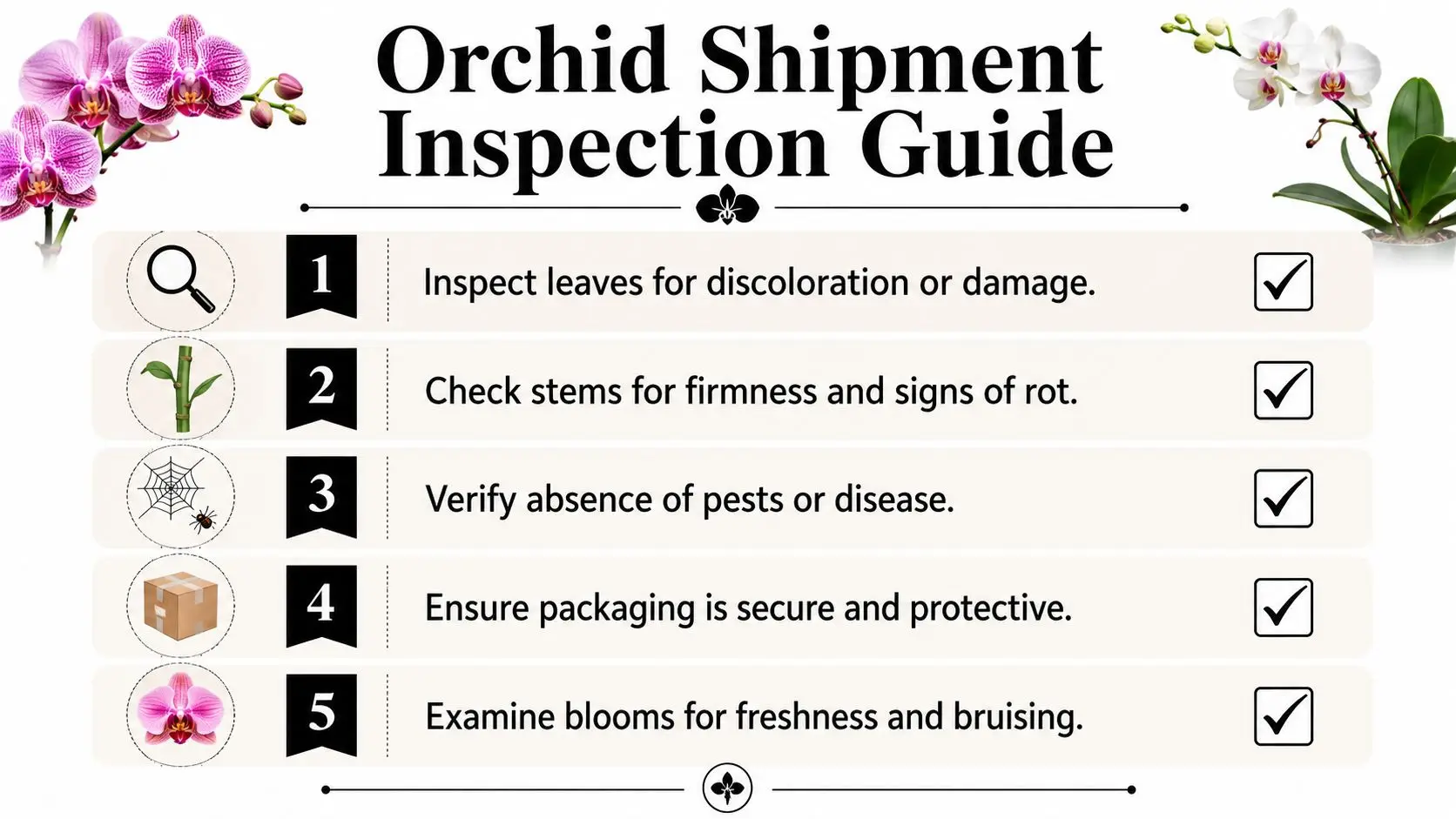
Use a written receiving checklist. Don't rely on memory when the box arrives during a busy prep day.
The arrival inspection that saves arguments later
Recent data indicates that 60 to 70% of orchid returns are due to “sick imports” involving problems such as hidden root rot or bud necrosis that may not show up until days after shipping, which is why delivery-day inspection needs to be methodical (orchid return issue discussion).
Here's the sequence that works in a shop or kitchen prep space:
- Photograph the box first. Get the exterior, the label, and any crushed corners before opening. If there's a claim later, you'll want a time-stamped record.
- Open carefully and keep all wrap in place at first. Don't yank sleeves or tissue off fast. Orchids often arrive with delicate support placement that prevents pressure marks.
- Check stem firmness. The stem should feel hydrated and structurally sound, not slimy or collapsing at any point.
- Read the blooms closely. Look for browning at the bud tips, translucent patches, bruised edges, or petals that look wet when they shouldn't.
- Inspect hidden trouble spots. Where there are roots present on shipped material, healthy roots should read silvery-white rather than decayed brown. On cut material, examine attachment points and lower stem tissue for dark, compromised areas.
Practical rule: If a problem is visible on arrival, document it before the flowers drink. Hydration can change the appearance enough to muddy the timeline.
A fast inspection table keeps everyone consistent:
| Checkpoint | Healthy sign | Warning sign |
|---|---|---|
| Outer packaging | Secure, protective, dry | Crushed, torn, wet, or overheated |
| Stem condition | Firm and clean | Softness, odor, darkened tissue |
| Open blooms | Crisp surface, no bruising | Creases, browning, translucence |
| Buds | Plump, stable, evenly colored | Bud necrosis, yellowing, shrivel |
| Attached roots if present | Silvery-white appearance | Brown decay or mushiness |
Rejecting every imperfect stem isn't realistic. Event work is about deciding what can be salvaged, what can be hidden, and what should never go into a bridal piece. If the damage sits on the back side of a bloom destined for a large arrangement, that may be usable. If the front petal of the hero bloom is marked, it won't improve.
Conditioning Cut Orchids for Maximum Vase Life
The biggest orchid mistake in event work is treating cut stems like potted plants. Those are different jobs. Your orchid isn't trying to grow. It's trying to stay beautiful long enough to survive prep, installation, and the event itself.
A common error is fertilizing a blooming orchid as though you were caring for a potted specimen. For cut white Phalaenopsis orchids, that can shorten vase life and trigger bud blast, which matters when you need the design to hold for 7 to 10 days across delivery, setup, and event use (University of Maryland orchid care guidance).
What cut stems need and potted plants do not
The first hours after unboxing matter. Cut stems need clean water, gentle handling, and stable conditions. They do not need fertilizer. They also don't benefit from being fussed over constantly.
One useful comparison is how growers and home plant owners think about orchids versus how florists must think about them. This short piece on whether poppies are good cut flowers is a good example of that cut-flower mindset. The same shift applies here. Longevity in a vase depends on post-harvest handling, not on growing advice.
Later in the process, visual instruction helps. This demonstration is worth watching before a large design day:
A conditioning routine that works
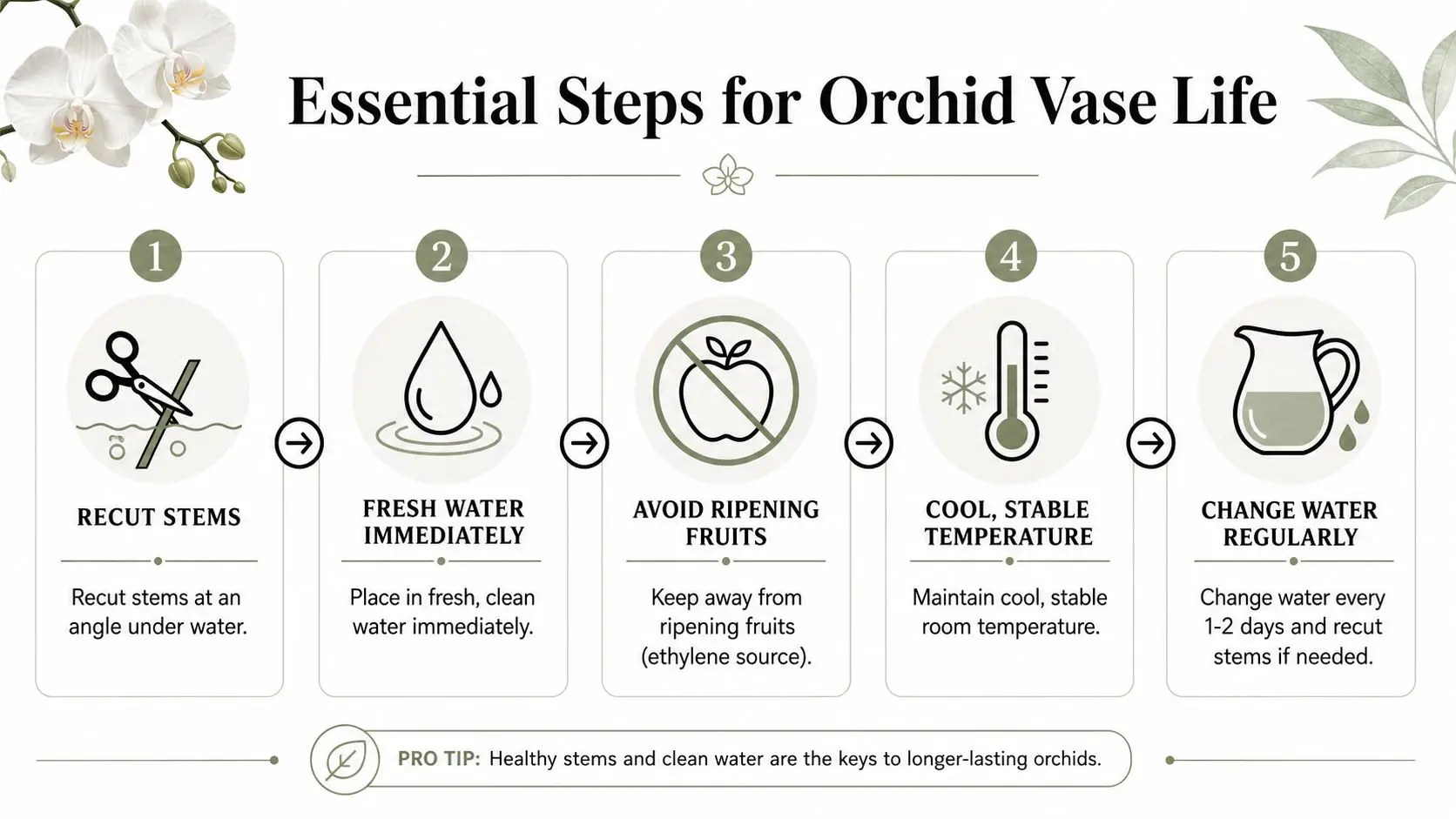
Use a quiet table, sharp snips, clean buckets, and patience. Then follow a routine like this:
- Unwrap slowly: Support the bloom stem with one hand while removing tissue or sleeves with the other. Twisting the packaging off is how petals get marked before you even start.
- Recut cleanly: Make the first cut at an angle, preferably while the stem end is in water or immediately before it goes into water. The point is speed and cleanliness.
- Hydrate at once: Don't let cut ends sit dry on the table while you sort the rest of the box.
- Choose placement carefully: Keep the bucket in a cool, stable room away from ripening fruit and direct heat sources.
- Refresh water often: Clean water matters more than additives people can't verify.
Keep your conditioning area boring. Stable temperature, clean tools, plain workflow. Orchids last longer when nobody improvises.
What doesn't work? Crowding stems into one bucket so blooms rub together. Leaving them near a sunny window because the room feels bright and cheerful. Misting petals to “freshen” them when the actual issue is hydration at the stem. Adding fertilizer because somebody remembers that orchids “like feeding.”
Use plain discipline instead. Recut if a stem starts to lag. Separate bruised blooms before they affect the look of the whole batch. Give the flowers time to drink before design work, especially if they arrived cool from transit.
Design Techniques for Bouquets and Centerpieces
A critical test comes after conditioning, when the orchids have to hold their shape through design, delivery, setup, and hours on display. White Phalaenopsis can look polished in the studio and tired by the first guest arrival if the mechanics are too aggressive or the placement ignores how people move around an event.
Orchid work rewards restraint and punishes heavy hands. Clean technique shows. So do shortcuts.
Handling blooms without marking them
The first rule is simple. Touch the stem more than the petal. White orchids record every mistake. Finger pressure, scraped edges, and bloom-on-bloom rubbing all show up under event lighting.
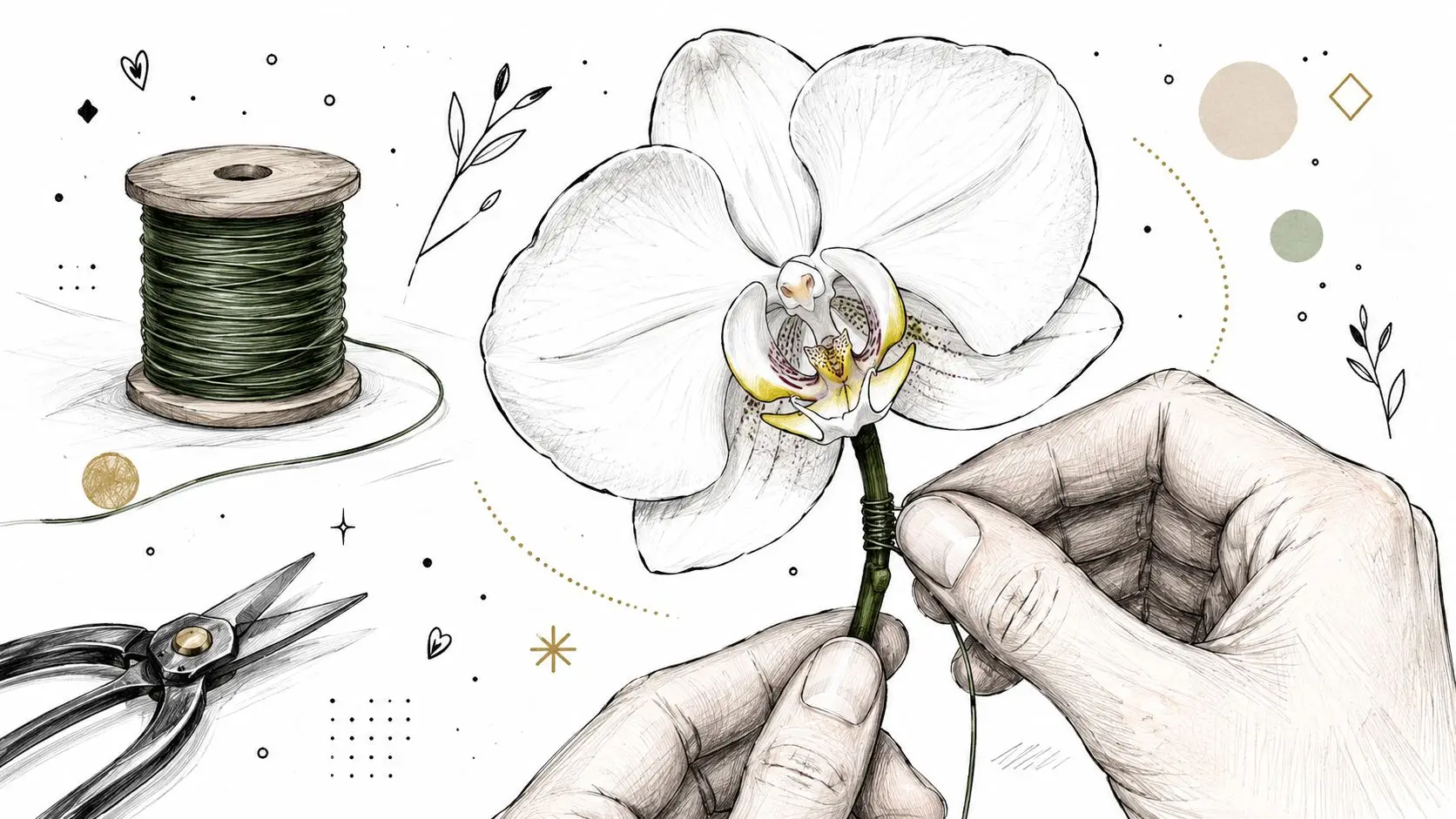
For personal flowers and bouquet detailing, use the natural stem whenever it can carry the design. Wiring has its place, especially for a specific bloom angle or a detached flower in a tight composition, but every mechanical intervention creates another failure point during transport. If I can avoid altering the bloom, I do.
A few habits protect quality:
- For wiring: Place the wire once, with a clear purpose. Repeated adjustments bruise the column and weaken the presentation.
- For water tubes: Use them for detached blooms, short stem segments, or installation work where a full stem would fight the design. Conceal them neatly so the mechanics do not distract from the flower.
- For bouquet faces: Keep orchids slightly above or outside denser flowers. Roses, ranunculus, and lisianthus can press into the petals and leave marks before the ceremony starts.
- For cascade work: Follow the line the stem already gives you. Forcing a sharp change in direction usually looks stiff and stresses the bloom.
Clients pay for the flower, not the mechanics. The mechanics need to do their job quietly.
Using orchids in bouquets and larger work
White Phalaenopsis earns its place in event work because the form does a lot without needing mass. A single well-placed bloom can carry the front of a bridal bouquet. A short succession of blooms can create movement in a cascade or a ceremony piece without making the design feel crowded.
Placement matters more than quantity. In hand-tied bouquets, keep orchids away from the grip and ribbon collar, where pressure builds as the bouquet is carried, photographed, set down, and picked up again. In compote or bowl centerpieces, avoid pushing the bloom face into foliage or the rim of the vessel. Petals need clearance.
For centerpieces, make an early decision. Use the orchid as line or use it as focal emphasis. Trying to make it do both often produces a piece that feels confused. If the arrangement needs height, secure the stem so it reads as intentional rather than loose. If the arrangement is low and guest-facing, set the blooms where they can be seen from multiple seats without sitting in the path of sleeves, menus, and glassware.
Designers working on smaller reception pieces can borrow proportion and viewing-angle ideas from these cocktail table centrepieces. The same design logic applies to orchids, but the margin for contact damage is much smaller.
Here is the practical version:
| Use | Best orchid approach | Common mistake |
|---|---|---|
| Bridal bouquet | Accent placement or controlled cascade | Compressing blooms into a tight face |
| Low centerpiece | Guest-facing focal placement with breathing room | Letting petals press into glass, greenery, or neighboring flowers |
| Tall arrangement | Supported stem movement with a clear line | Leaving long stems visually loose or physically unstable |
| Personal flowers | Minimal mechanics and careful bloom angle | Overwiring and building more structure than the flower needs |
The strongest orchid designs feel edited. Leave space around the bloom. Let the white read cleanly. If a flower is expensive to source and unforgiving to handle, give it room to do its job.
Storing and Transporting Finished Orchid Arrangements
A finished orchid design can look perfect in the studio and tired at the venue if storage and transport are sloppy. In these instances, many otherwise strong event teams lose quality. The flowers aren't weak. The process is.
Storage that protects bloom quality
Phalaenopsis orchids are epiphytic, which means they naturally grow on other plants in humid tropical environments and react badly to abrupt environmental shifts. Storage works best when you mimic that stability as much as event logistics allow (Brooklyn Botanic Garden on Phalaenopsis).
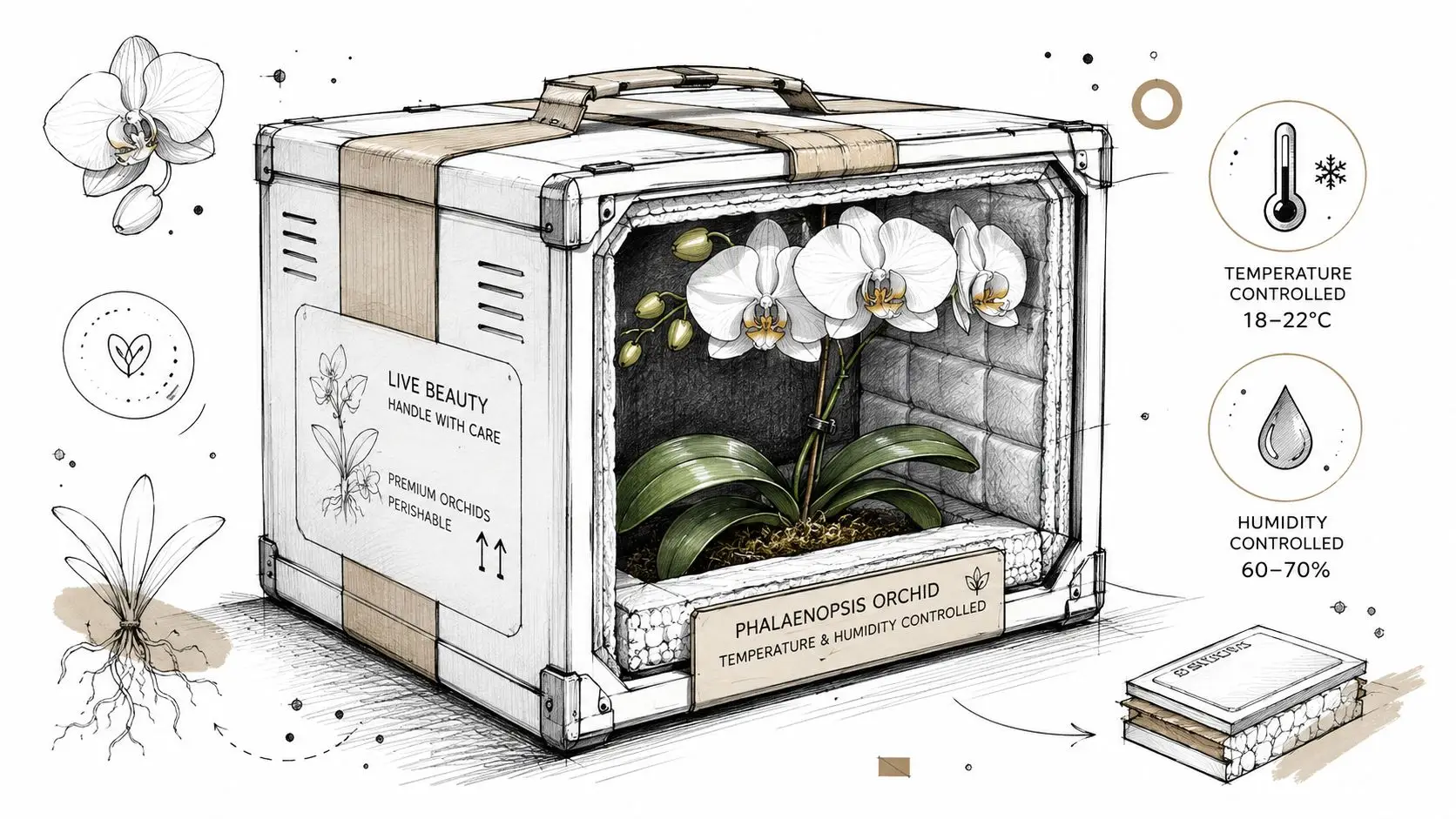
What that means in practice is consistency. Don't move finished orchid work in and out of radically different spaces just because you're short on room. Don't park them under aggressive airflow. Don't leave them in a bright loading area while you finish other tasks.
Use this storage checklist:
- Keep conditions steady: Sudden swings in warmth, cold, or dryness stress blooms fast.
- Protect air movement: Gentle circulation is helpful. Harsh direct airflow is not.
- Avoid crowding: Give arrangements enough room that petals don't touch sleeves, walls, or neighboring pieces.
- Check water sources: Vases and hidden hydration points should be topped up before they leave.
Transport strategy for event day
Transport is about immobilizing the container and protecting the bloom path. The vase, bowl, or bouquet carrier must stay put. The orchid stem and petals must stay clear.
A few rules save a lot of heartache:
- Brace the base first. Most orchid damage in transit starts because the vessel shifts.
- Protect the silhouette. Tall stems need overhead clearance. Cascades need side clearance. Measure that before loading.
- Load orchids last when possible. They shouldn't sit under everyone else's timeline pressure.
- Carry a repair kit. Extra water tubes, clean snips, floral tape, discreet support wire, soft cloths, and backup blooms if you have them.
If a piece can slide one inch in the van, it will. Build transport around restraint, not optimism.
For large installations, split the job into phases. Transport structural elements separately from the most delicate orchid details when the design allows it. Finish the vulnerable placements on site. That adds labor, but it usually protects the work better than hauling a fully completed fragile piece across town.
Troubleshooting Common White Orchid Issues
White orchids are honest flowers. When something is wrong, they show you quickly. The trick is reading the symptom correctly so you don't apply the wrong fix under pressure.
Bud problems petal damage and stress signals
If buds yellow, shrivel, or drop, suspect stress first. Sudden environmental change, rough handling, and inappropriate post-harvest care are common culprits. If someone fed the stems as though they were potted plants, that can also contribute to bud blast, as noted earlier.
If petals turn dull, translucent, or slightly collapsed, start with hydration and age. A fresh stem that isn't drinking may need a recut and cleaner water. An older bloom may be passing its useful stage, and hiding or replacing it is better than trying to revive it cosmetically.
Airflow matters more than people think. The Royal Horticultural Society notes that “snow mold” becomes a problem in orchid media when humidity is high without enough air movement, and that same principle helps explain why stored cut arrangements can develop petal and bud issues in stagnant conditions (RHS Phalaenopsis growing guide).
A fast diagnosis list helps on event week:
- Buds failing before opening: Review stress, handling, and environment.
- Petals bruised or browned on edges: Usually mechanical damage from packing, rubbing, or overhandling.
- Blooms looking wet or translucent: Check hydration pathway and holding conditions.
- General tiredness in finished work: Look at water, airflow, and whether the design was completed too far ahead.
Fast fixes when you are already on site
Some problems can be solved. Some should be disguised. Knowing the difference saves time.
Minor bruising on a rear-facing petal can often be turned away from view. A compromised bloom in a centerpiece may be removed entirely if the line of the design still holds. A bouquet hero bloom with obvious damage usually needs replacement, not persuasion.
If a stem looks weak in an installation, reduce its burden. Shorten the visual line, add hidden support, or move the stem into a less exposed position. If a water tube has warmed up or emptied, refresh it immediately and check every other concealed hydration point while you're there.
Keep your judgment unsentimental. White Phalaenopsis orchids reward careful work, but they don't hide mistakes. The best rescue strategy is still prevention from the moment the box hits the table.
If you need shipped cut flowers for event work, Barbara's Flower Boutique LLC is one option to review. The shop sells cut flowers online and ships with FedEx, with shipping paid by the customer.
Discover more from Barbara's Flower Boutique
Subscribe to get the latest posts sent to your email.