You may be pricing centerpieces in peony season, only to watch the market jump a week before the final invoice. Or you may be trying to design for an outdoor ceremony where heat, wind, transport time, and setup access make fresh florals a risky choice. In both cases, alternatives are not a fallback. They are a planning tool.
Fresh flowers still earn their place in weddings. They bring scent, softness, and a fleeting quality that many couples want. But dried materials, faux stems, foliage, paper work, preserved product, herbs, and living plants solve different problems, and they do not all solve the same ones equally well.
The key is choosing the right substitute for the job. Some options photograph beautifully but read stiff in hand-tied bouquets. Some hold up well on arches and aisle markers but feel flat on reception tables. Some reduce waste or storage pressure, while others add labor in styling, conditioning, or installation.
This guide treats wedding flower alternatives as real design categories with specific strengths, weaknesses, sourcing questions, and budget implications. Florists, planners, and couples need more than inspiration boards. They need to know what each option looks like in person, where it performs well, where it fails, and how to use it without ending up with a wedding that feels like a compromise.
Table of Contents
- 1. Dried Flower Arrangements
- 2. Silk and Faux Flower Arrangements
- 3. Greenery-Forward and Foliage Design
- 4. Wildflower and Native Plant Arrangements
- 5. Paper Flower Installations and Bouquets
- 6. Succulent and Unusual Plant Arrangements
- 7. Preserved Flowers and Freeze-Dried Flowers
- 8. Edible Flowers and Herb Décor
- Wedding Flower Alternatives: 8-Option Comparison
- Choosing Your Perfect Floral Alternative
1. Dried Flower Arrangements
A couple wants the bouquets finished a week before the wedding because their venue has a tight load-in, the ceremony is outdoors, and no one wants to spend the morning conditioning fresh stems in a hotel room. Dried flowers are often the right answer for that kind of event. They hold their shape, they travel well, and they give planners and florists more control over timing.
Why dried flowers work so well for weddings
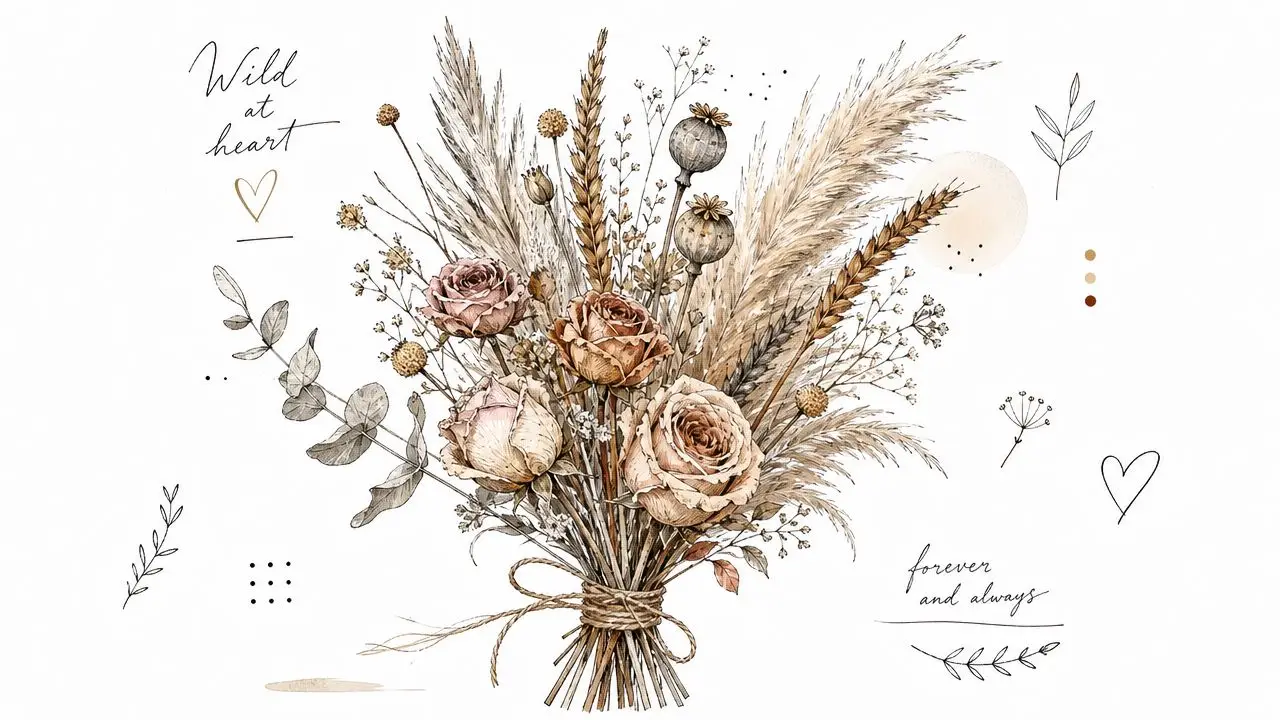
Dried flowers suit weddings that need warmth, texture, and a slightly collected look rather than a polished fresh-cut finish. They fit desert, boho, vintage, editorial, and softly rustic designs especially well. They can also be built earlier than fresh work, which matters when labor is tight or setup windows are short.
That planning advantage is usually the primary selling point.
For couples, dried flowers also make sense when the bouquet is meant to last after the event. For florists and planners, they reduce some of the usual wedding-week pressure. The trade-off is aesthetic and mechanical. Dried work is less flexible than fresh product, more fragile in handling, and less forgiving if the color palette is overbuilt.
Practical rule: Keep the palette tight. Dried flowers read as layered and intentional when tones are edited. Too many unrelated shades can make the design look dusty and unfocused.
Best uses and common mistakes
Dried flowers perform best in personal flowers and lower-touch décor. Bouquets, boutonnières, aisle clusters, bud-vase moments, place setting accents, and grounded ceremony pieces are strong applications. They are less dependable for any design that needs lush volume, active hydration, or repeated movement during setup.
Large installs can work, but mechanics matter more than couples expect. Dried stems are lighter than fresh stems in some categories, but they can also be brittle, top-heavy, or awkwardly branched. If an installation will hang overhead or sit in direct sun and wind, test the structure first and plan extra material for breakage.
A hybrid recipe usually gives the best result. Mix structured dried material such as bunny tails, oats, strawflower, palm spears, seed pods, and preserved grasses with a smaller amount of softer supporting product so the arrangement does not feel flat. If you want a warm marigold-driven palette as a reference point, Barbara's Flower Boutique LLC lists Twenty-five French Bonita Mix Marigold Stems. Use that as color inspiration only, not as a dried product specification.
Problems show up quickly when teams skip the practical side:
- Overhandling the stems: Dried material sheds, cracks, and snaps more easily than fresh flowers.
- Poor storage: Finished pieces need a dry holding area, protection from crushing, and distance from humidity.
- Too little texture contrast: One material repeated at scale often looks unfinished. Pampas by itself rarely carries a wedding design.
- Ignoring the venue: Dried flowers can disappear in dark ballrooms and read much better in natural light, plaster interiors, wood spaces, and outdoor settings.
For planners, the main question is not whether dried flowers are trendy. It is whether the event needs early production, easy transport, and a design style that benefits from texture over bloom count. For florists, success usually comes down to recipe discipline, careful storage, and honest conversations about fragility before the proposal is approved.
2. Silk and Faux Flower Arrangements
A couple approves a dramatic ceremony arch in January for a July wedding. The venue has a long setup window, the ceremony is outdoors, and the planner wants the install loaded in the day before without worrying about wilt, water, or midday heat. That is a strong case for silk and faux flowers.
Faux work succeeds when it is chosen for a specific job, not as a blanket substitute for every fresh stem in the event. I recommend it most often for destination weddings, hanging installs, entry pieces, aisle markers, and any design that has to survive transport, storage, and a long production schedule. It also helps couples who want to keep a bouquet afterward without paying for preservation.
Where faux flowers earn their place
Distance matters.
Large-scale pieces usually carry faux flowers better than personals because guests read them for silhouette, color blocking, and movement first. Ceremony backdrops, suspended meadows, staircase garlands, bar fronts, and welcome displays can all look convincing if the mechanics are clean and the recipe is restrained. Bouquets are less forgiving. The bridal bouquet is handled, photographed close up, and seen in motion, so material quality and finishing have to be much tighter there.
For florists and planners building a proposal, the practical question is where realism needs to hold up. If the answer is "from six feet away," faux opens useful options. If the answer is "in close-up editorial photos and in the couple's hands for hours," fresh or mixed-media design is usually the safer choice.
What makes faux flowers look artificial
The biggest giveaways are easy to spot in person. Plastic shine under reception lighting. Petals with identical edges. Colors that are too dense or too clean compared with natural plant material. Stems are another problem area. Factory stems often have the wrong thickness, finish, or bend, and that reads instantly in bouquets and bud-vase work.
Good faux design starts with editing. Use fewer bloom varieties. Stay inside a believable seasonal palette. Avoid perfectly open roses in every stem. Shape each branch by hand before it goes into the arrangement. I also test sample stems under the venue lighting plan whenever possible, because candles, warm LEDs, flash, and colored uplights can all change the surface finish.
A few sourcing habits help:
- Buy by sample first: Order individual stems before committing to case quantities.
- Prioritize touch points: Spend more on the bridal bouquet and any install at eye level.
- Use mixed recipes carefully: Faux focal flowers paired with fresh or preserved greenery often read better than fully synthetic recipes.
- Rework the stems: Tape, paint, or sleeve exposed stems when the factory finish looks artificial.
- Plan transport around volume: Faux pieces are lighter than water-packed fresh work, but they can crush or tangle easily in transit.
For teams comparing supply options, a wholesale cut flower sourcing guide is still useful because it helps benchmark stem shapes, scale, and color against real product.
The trade-offs clients should understand before booking
Faux flowers solve timing problems. They do not replace everything people love about fresh flowers.
They have no natural scent, and they rarely match the texture variation of premium fresh product at close range. Budget is also less straightforward than couples expect. Cheap faux flowers usually stay obvious. High-grade faux stems, plus labor to reshape, wire, and install them well, can cost more than a client expects, especially for bouquets and flower-dense centerpieces. Reuse can offset that, but only if the designs are built with storage, repurposing, and strike in mind from the start.
My rule is simple. Use faux where durability, repeat use, and schedule control matter more than botanical authenticity. Use fresh where touch, fragrance, and close photography matter most. That split usually gives planners, florists, and couples a cleaner result and fewer surprises on the wedding day.
3. Greenery-Forward and Foliage Design
A couple walks into a candlelit stone venue and asks for something natural, sculptural, and less flower-heavy than a classic rose wedding. Greenery-forward design is often the right answer, but only if it is planned with the same discipline as a flower-led brief. Good foliage work creates shape, movement, and texture. Weak foliage work reads sparse, repetitive, or unfinished.
This option performs best in spaces that already have strong architecture or a clear setting. Industrial lofts, estates, garden venues, tented receptions, and modern barns usually carry greenery well because the foliage supports the room instead of fighting it. Couples who like an organic, understated look also tend to respond well to this style, especially when they want designs that feel relaxed but still intentional.
Budget can improve here, but only when the recipe is built carefully. Foliage often lowers stem cost compared with flower-dense arrangements, yet labor does not disappear. Large installations still need mechanics, branch work, transport planning, and time on site. A key advantage is flexibility. Florists can create volume with fewer premium focal stems, and planners can often repurpose ceremony foliage into bars, escort displays, or reception pieces more easily than delicate flower-heavy designs.
For teams shaping the visual direction, rustic greenery and flower arrangement ideas can help clarify whether the target look is airy, garden-style, architectural, or venue-driven.
What makes foliage design look finished
The fastest way to flatten a greenery design is to rely on one texture. Silver dollar eucalyptus alone rarely carries an entire event well. Strong foliage recipes usually mix at least three roles: a structural green, a moving or trailing green, and a detail element that changes the silhouette.
I usually build greenery work by asking four practical questions. What creates the outline? What softens the edges? What adds depth near the center? What catches light differently from the rest? Once those answers are clear, the arrangement starts to look designed rather than merely filled.
Useful combinations often include broad leaf foliage, something wispy or draping, and one branching element with tension. Seeded eucalyptus, Italian ruscus, smilax, olive, salal, tree fern, huckleberry, podded branches, and berrying material can all earn a place, but not every mix belongs together. Leaf size, finish, and color temperature matter. Matte greens and glossy greens read very differently in person and in photos.
- Start with structure: Set the line and footprint first, especially for arches, urns, and long tables.
- Use contrast on purpose: Mix rounded, narrow, and branching forms so the eye keeps moving.
- Protect negative space: Air pockets keep foliage from turning into a dense green mass.
- Choose one accent family: Pods, herbs, berries, or a small floral note can sharpen the design without shifting it into a mixed-flower look.
Where greenery works best, and where it needs support
Greenery excels in overhead installs, ceremony frames, stair rails, aisle meadows, runners, and venue accents where scale matters more than close-up petal detail. It can also work beautifully for bouquets and personals, but that is where I usually get more selective. Bridesmaids can often carry foliage-led bouquets successfully. A bridal bouquet usually needs at least one stronger focal ingredient unless the client wants a textural, botanical statement.
There are also sourcing and conditioning trade-offs. Some greens travel well and hold for days. Others dehydrate fast under heat, direct sun, or low humidity. Smilax can be beautiful but inconsistent. Eucalyptus is useful, but some varieties bruise and curl if handled roughly. Olive is elegant, though it can read thin unless the design has enough branch quantity. Greenery looks forgiving from a distance, yet poor quality shows quickly once guests are close.
The best greenery-forward weddings succeed because every foliage choice has a job. That is the difference between a cost-conscious substitute and a design strategy that feels fully resolved.
4. Wildflower and Native Plant Arrangements
Wildflower and native plant work looks effortless only when somebody has planned it carefully. That's the appeal and the challenge. A good native-forward design feels tied to place, season, and weather. A bad one looks like roadside picking bundled in ribbon.
What makes native designs feel intentional
The strongest native arrangements usually borrow the looseness of meadow flowers but keep the discipline of professional composition. There's still a palette. There's still a clear shape. And there's usually one repeated botanical thread that carries through bouquets, tables, and ceremony pieces.
This style is a natural fit for farm weddings, vineyard celebrations, countryside ceremonies, and regional venues where local character matters. It's also one of the easiest ways to make a wedding feel specific rather than generic.
A rustic design language often overlaps well with this category, especially in outdoor or barn settings. For visual direction, rustic flower arrangements can help couples and planners refine what “wild” should look like.
Where planners need to be careful
Seasonality matters more here than in almost any other category. Native material can be stunning one month and unavailable the next. If a couple says they want “wildflowers,” the first planning move is to translate that into local, seasonal stems with acceptable substitutions.
Native-inspired doesn't have to mean messy. The best versions still have rhythm, restraint, and repeat elements.
A few implementation notes keep this style from drifting:
- Work from the region first: Local growers often know what performs well in your season.
- Design for movement: Native material often has lighter heads and finer stems, so mechanics must support that looseness.
- Avoid overmixing: Too many species in one bouquet can look accidental.
This option suits couples who care about a sense of place. It's less ideal for anyone who wants exact bloom replication months in advance.
5. Paper Flower Installations and Bouquets
A couple approves a floral concept in January, but the wedding is in August, outdoors, with a tight setup window and a palette that has to match the stationery exactly. Paper is often the practical answer in that situation. It gives planners and florists more control over color, timing, and transport than fresh flowers ever will.
Where paper flowers shine
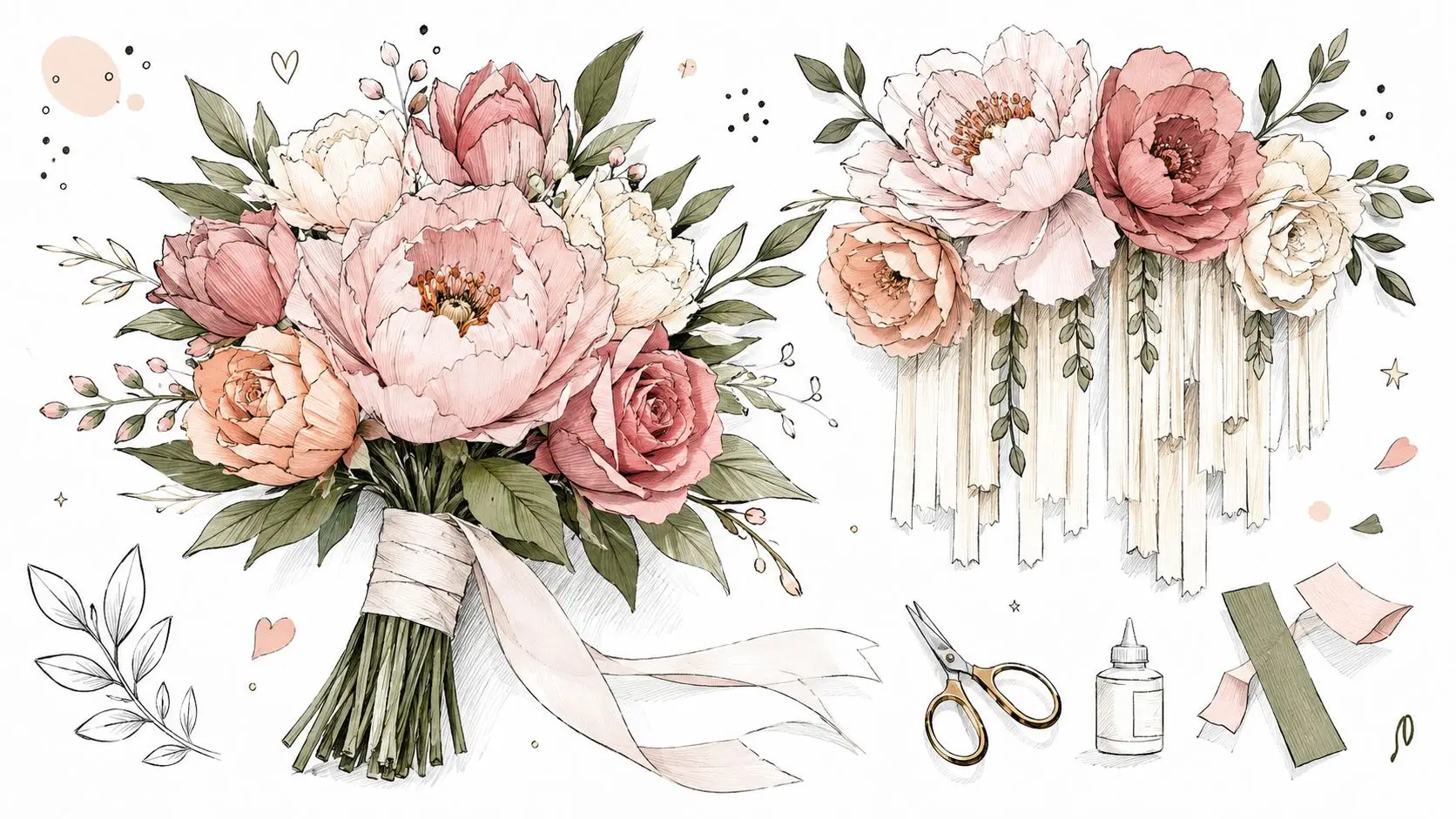
Paper flowers work best when the design treats them as crafted decor, not as a substitute trying to pass for fresh product. They are especially strong in ceremony backdrops, escort card walls, hanging installations, oversized statement blooms, cake meadow surrounds, and bouquets meant to be kept after the wedding.
The biggest advantage is predictability. Colors can be matched closely, pieces can be finished well before the event, and installers can build in modules instead of racing against stem hydration and bloom timing. For destination weddings and long-haul transport, that matters.
Cost needs honest framing. Paper is not automatically the budget option. Once hand cutting, petal shaping, wiring, dye work, and assembly are added up, custom paper florals can land surprisingly close to fresh flower pricing. The value is in permanence, lower spoilage risk, and the ability to produce complex work ahead of time.
For couples considering a hands-on approach, our guide to DIY wedding flowers is a useful starting point.
Where paper can go wrong
Paper has clear limits, and planning experience is key. Cheap stock, flat shaping, visible adhesive, and inconsistent scale will read as craft project rather than event design. Large installs also need proper mechanics. Paper may be lighter than fresh product, but grouped in volume it still creates load, wind resistance, and setup complexity.
Bouquets deserve extra scrutiny. They photograph well and last indefinitely, but they do not have natural stem movement, moisture, or fragrance. Some couples love that sculpted look. Others miss the softness and irregularity of fresh flowers once they hold the bouquet in person.
A quick visual tutorial can help couples judge whether they want to make these themselves:
Before approving paper for a full wedding, test the material in real conditions:
- Check scale from a distance: A flower that looks detailed up close can disappear in a ceremony space.
- Check paper weight and memory: Lightweight papers crush easily. Heavy papers can look stiff and overbuilt.
- Check color in venue light: Some papers shift noticeably under warm indoor lighting or direct sun.
- Check installation method: Hanging pieces, arches, and walls need clean mechanics and a firm mounting plan.
- Check who is making what: DIY is realistic for favors or small personal flowers. It gets much harder once the order includes dozens of centerpieces or a full backdrop.
Paper is a strong fit for couples who want keepsakes, exact color control, or statement installations built well in advance. It is a weaker fit for anyone who wants fragrance, organic movement, or the layered texture that only fresh product gives.
6. Succulent and Unusual Plant Arrangements
A couple asks for something living, modern, and less expected than standard wedding florals. Succulents, air plants, herbs, cacti, and other plant-driven elements can do that well, but only if the design respects what these materials are good at.
The strongest use is usually structural, not romantic. Succulents give shape, pattern, and staying power. Air plants add movement and a slightly wild edge. Herbs bring scent and a softer texture. Cacti make a statement, but they also introduce safety and handling concerns, so they belong in controlled areas rather than guest-touch pieces.
These materials perform best in designs built around vessels, clusters, and planted moments. Centerpieces, escort-card displays, cocktail-table groupings, bar accents, and favors are usually more successful than trying to force a full bouquet to behave like peonies or garden roses. For florists and planners, that distinction matters early. The labor, mechanics, transport plan, and strike are different.
They also pair well with other non-floral ingredients already showing up in wedding design, including fruit and potted herbs, as noted earlier. That mix can look fresh and intentional in desert, Mediterranean, contemporary garden, and minimalist events. It is a harder fit for soft ballroom work where the brief calls for airy movement and a petal-heavy finish.
Where succulent work succeeds, and where it causes problems
Succulents are often treated as easy because they are hardy plants. In event work, "hardy" does not mean low-effort.
Cut succulents need time to callus if they are being wired or glued into personal flowers. Freshly cut pieces can break down or leak if handled too soon. Living planted centerpieces need stable soil, top dressing, and containers that will not tip during delivery. Air plants need clean placement and protection from heat buildup in direct sun or near candles.
Weight is another real trade-off. A bouquet with several echeveria heads can get heavy fast, especially once you add ribbon, mechanics, and supporting foliage. It may photograph beautifully and still feel tiring halfway through portraits.
A practical approach helps:
- Use succulents as focal ingredients: One striking rosette often reads better than six smaller ones fighting for space.
- Choose containers over wiring when possible: Planted designs usually travel better and need less last-minute repair.
- Check guest interaction: Spiny cacti, loose gravel, and delicate air plants are poor choices for crowded dining tables or family-style seating.
- Plan the afterlife: If guests can replant favors or take home centerpieces, say that upfront and package them properly.
- Price labor fairly: These designs can look simple, but prep time adds up fast.
Use succulents for form and character. Do not use them as filler.
For couples, the appeal is clear. The designs feel alive, sculptural, and different from standard wedding flowers. For planners and florists, the success of this category comes down to mechanics and placement. Put these botanicals where their structure can shine, protect them from rough handling, and let the design look like plants on purpose.
7. Preserved Flowers and Freeze-Dried Flowers
A couple falls in love with soft garden roses in January for an August wedding. Fresh versions from the same farm may be unavailable, overpriced, or too open by the event date. Preserved and freeze-dried flowers solve that planning problem, but only if everyone treats them as their own category instead of as fresh flowers with a longer shelf life.
These materials work best for weddings that need advance production, shipping, or keepsake value. They hold color and shape better than standard dried product, and they usually photograph closer to fresh flowers. That makes them useful for bridal bouquets, hair pieces, ceremony details, and small statement arrangements where finish matters.
The trade-off is handling.
Preserved roses, hydrangea, and foliage can bruise, shed, or absorb moisture from the air. Freeze-dried flowers often keep a more natural bloom shape, but they can be brittle and less forgiving during transport. In humid venues, both categories can lose their best qualities fast. I would not use them for aisle meadows, guest-touch installations, or any design that needs to survive repeated moves by different crews.
Where they make sense, and where they do not
Use preserved or freeze-dried flowers when the design benefits from early prep and careful presentation. Bouquets for destination weddings are a strong fit. So are styled elopements, editorial work, welcome table arrangements, and keepsake pieces a couple wants to display after the wedding.
Skip them for high-traffic tables, outdoor summer ceremonies, and foam-free installations that depend on constant hydration and quick on-site adjustment. Fresh product is easier to manipulate under pressure. Preserved product asks for decisions earlier and gentler hands all the way through setup.
A few planning standards keep this category from becoming expensive disappointment:
- Order samples before promising a palette: “Blush” preserved roses can read peach, mauve, or dusty pink depending on the supplier.
- Build in protective packaging: Boxes, tissue, and compartmentalized transport matter more here than with hardy fresh stems.
- Use fresh ingredients only with intent: A little fresh foliage can help the arrangement feel current, but mixed designs need humidity control and a clear recipe.
- Assign placement carefully: Keep these pieces away from misting systems, direct sun, open windows, and crowded cocktail surfaces.
- Price labor for prep and protection: The stem may last longer, but the design still takes skilled handling and more packing time.
For florists and planners, sourcing is half the job. Vendor consistency varies. One preserved garden rose may feel velvety and refined, while the next shipment from another wholesaler looks waxy or too uniform for a wedding client expecting natural texture. Ask for current photos, confirm lot color, and test how the product behaves in your mechanics before you commit it to a large install.
For couples, the appeal is straightforward. You get a floral look that can be made earlier, travel more predictably than fresh flowers in some situations, and last well beyond the wedding day. You also give up some flexibility, some softness, and some tolerance for rough conditions. Used in the right places, preserved and freeze-dried flowers are a practical design choice, not just a keepsake trend.
8. Edible Flowers and Herb Décor
A couple loves the idea of guests plucking mint from the table for cocktails and seeing fresh herbs woven through the reception. It can be beautiful. It also demands tighter coordination than nearly any other flower alternative, because the design now affects food service, guest safety, and event timing.
Edible flowers and herbs work best when they are treated as a shared plan between florist, planner, caterer, and bar team. Used well, they connect the bouquet, tablescape, drinks, and menu into one clear story. Used casually, they create confusion fast. Guests should never have to guess what can be eaten, what is only decorative, or which pieces have been handled during setup.
This style fits naturally at vineyard weddings, outdoor dinners, garden celebrations, and receptions built around a strong culinary point of view. It is less effective in formal ballroom settings unless the herb and flower details are restrained and repeated consistently. A few thoughtful touches usually outperform trying to make every arrangement edible.
There are real design and operations trade-offs here:
- Herbs usually outperform edible blooms: Rosemary, thyme, sage, mint, and basil hold structure, fragrance, and color better through a long event.
- Tender flowers need controlled placement: Use them on desserts, escort displays, or late-set cocktail details rather than exposed centerpieces sitting out for hours.
- Food-safe sourcing matters: Product grown for decoration is not the same as product intended for culinary use.
- Labor often increases: Teams need separate handling, cleaner staging, and closer communication with catering than they would for standard floral décor.
For florists and planners, the practical question is not just whether something is edible. It is whether it is stable, clearly labeled, and placed in the right service zone. Herb bundles tied to napkins, small compotes near the bar, and floral garnish added by the catering team at the last minute are usually the most reliable applications. Large mixed centerpieces with “some edible elements” are where mistakes happen.
For couples, this option can feel personal and memorable, especially if the menu already features garden ingredients, signature cocktails, or family-style dining. The payoff is strongest when the edible décor supports the hospitality experience instead of trying to replace traditional flowers outright.
Wedding Flower Alternatives: 8-Option Comparison
| Item | Implementation Complexity 🔄 | Resource Requirements 💡 | Expected Outcomes ⭐📊 | Ideal Use Cases ⚡ | Key Advantages ⭐ |
|---|---|---|---|---|---|
| Dried Flower Arrangements | Low–Medium: simple assembly; careful handling to avoid brittleness | Low–Moderate: dried stock, sealing spray, cool dry storage | Long-lasting keepsakes with vintage/boho texture; moderate color vibrancy | Boho/sustainable weddings, destination events, preplanned builds | Durable, cost-effective, ships easily, eco-friendly |
| Silk and Faux Flower Arrangements | Low: straightforward assembly; sourcing premium stems requires care | Moderate: high-quality silk stems, storage, upfront cost per stem | Consistent, photo-ready look year-round when premium; fully customizable | Destination or large-scale events, allergy-friendly or reusable décor | Unlimited colors, reusable, no spoilage, predictable results |
| Greenery-Forward and Foliage Design | Medium: requires design skill to avoid sparse or monotonous results | Low–Moderate: abundant foliage, seasonal sourcing or foraging | Architectural, modern aesthetic; cost savings and durable performance | Minimalist, modern, eco-conscious weddings; venues with botanical backdrops | Cost-effective, hardy, sustainable, forgiving logistics |
| Wildflower and Native Plant Arrangements | Medium–High: needs regional research and grower coordination | Low–Moderate: local growers, seasonal sourcing, lead time | Authentic, region-specific look; highly sustainable and memorable | Local farm, countryside, or season-driven weddings | Supports local growers, low transport footprint, unique aesthetic |
| Paper Flower Installations and Bouquets | Medium–High: time-intensive DIY or skilled fabrication for polished results | Low: specialty papers, tools, time; ships well via standard parcels | Permanent keepsakes; limitless customization; variable perceived elegance | Budget weddings, DIY couples, long-lead decorative installations | Extremely budget-friendly, customizable, durable, no wilting |
| Succulent and Unusual Plant Arrangements | Medium: potting and securing living elements; careful packing for transport | Moderate: live plants, pots, planting instructions, possible repotting supplies | Living, long-lasting favors with architectural texture; limited color range | Desert or modern weddings, eco-conscious couples, guest favors | Living keepsakes, low maintenance, durable, sustainable |
| Preserved and Freeze-Dried Flowers | High: requires specialized preservation vendors and delicate handling | High: certified processors, higher per-stem cost, careful packaging | Fresh-looking, long-lasting arrangements (6–12+ months); excellent photo quality | Luxury weddings, bridal keepsakes, destination events needing realism | Photorealistic appearance, long lifespan, lighter shipping weight than fresh |
| Edible Flowers and Herb Décor | Medium–High: coordination with catering and food-safety protocols | Moderate: certified organic growers, storage, chef/caterer collaboration | Dual-purpose sensory décor that enhances menu storytelling; shorter lifespan | Farm-to-table, culinary-focused weddings, vineyard/farm venues | Functional décor, sustainable, interactive guest experience, photo-worthy |
Choosing Your Perfect Floral Alternative
The right floral direction usually comes down to three questions. What do you want the wedding to feel like, what level of maintenance can your team realistically handle, and where do you want the design dollars to work hardest. Once those answers are clear, the alternatives become much easier to sort.
If you want keepsakes and advance prep, dried, preserved, and paper designs all make sense. If you need logistics-friendly décor for heat, travel, or long setup windows, faux flowers and greenery-forward work tend to be more forgiving. If you care most about locality and atmosphere, native plant design and herb-based décor can create something that feels intrinsically tied to place.
The trade-offs matter. Dried flowers can shed. Faux flowers can look artificial in close photography if quality slips. Greenery can feel flat without layering. Wildflower palettes can get chaotic without discipline. Paper flowers can become labor-heavy fast. Succulents can be heavier and more structural than couples expect. Preserved flowers need careful handling. Edible décor requires close coordination with the food team.
That's why the best weddings rarely treat these as strict either-or choices. Hybrid design is often the smartest answer. A bride might carry a preserved bouquet, bridesmaids might use dried posies, the ceremony might rely on greenery mechanics, and the tables might bring in herbs or fruit. That kind of mix usually gives couples better control over budget, timing, and visual impact.
There's also a broader market reason these conversations matter now. The global wedding flower market is projected at $4.19 billion in 2025 and forecast to reach $5.2 billion by 2035 at a 2.1% CAGR, with North America holding over 35% of global market share in 2024, according to Wise Guy Reports' wedding flowers market forecast. At the same time, alternative categories continue to grow. The global artificial flowers market is projected to grow from $3.09 billion in 2024 to $4.49 billion by 2030 at a 6.7% CAGR, with online stores accounting for 34.6% of revenue and Europe holding over 35% of market share in 2024, according to Grand View Research's artificial flowers market report. The practical takeaway is simple. Couples have more viable choices than they used to, and suppliers need to be ready for that.
Wedding flower alternatives aren't a compromise by default. They're a design category with their own strengths, weaknesses, and visual language. If you choose them intentionally, they can produce weddings that feel personal, workable, and memorable.
If you're sourcing stems or exploring ideas for a wedding design, Barbara's Flower Boutique LLC sells cut flowers online and ships with FedEx, with shipping paid by the customer. The shop serves florists, planners, and DIY couples, and the business notes membership in the Association of Specialty Cut Flower Growers and Better Business Bureau certification.
Discover more from Barbara's Flower Boutique
Subscribe to get the latest posts sent to your email.