
You're usually standing in one of two places when a pumpkin vase with flowers starts to sound like a good idea. Either you're designing a fall wedding or dinner and want something that feels seasonal without looking kitschy, or you've seen enough basic tutorials to know they leave out the part that matters most: how to keep the arrangement alive, upright, and presentable through setup, transport, and the event itself.
That gap is where most pumpkin arrangements fail. They look beautiful on a worktable, then slump in the car, sour inside the vessel, or start breaking down before guests even sit down. A real pumpkin is an organic container, not a neutral vase. It holds moisture differently, shifts weight differently, and punishes lazy mechanics.
Handled well, though, it's one of the most effective fall design pieces you can use. It reads rustic in one room, crisp in another, and sculptural in a more modern space. If your style leans natural and textural, rustic flower arrangements pair especially well with pumpkin vessels because the container already carries so much seasonal character.
Table of Contents
- The Allure of the Autumnal Centerpiece
- Selecting and Prepping Your Pumpkin Vessel
- Mastering the Mechanics Inside the Pumpkin
- Choosing Flowers and Building Your Palette
- Arrangement Techniques for Breathtaking Results
- Longevity Care and Professional Transport
The Allure of the Autumnal Centerpiece
A pumpkin centerpiece works because it solves two design problems at once. It gives the table a strong seasonal cue, and it gives the flowers a form that already feels grounded. You don't have to force autumn into the palette when the vessel has already done part of that work for you.
For weddings, I like pumpkin vessels when a client wants warmth without heavy themed decor. A low white pumpkin with garden roses and airy foliage feels refined. A ribbed orange one with textured stems and berry tones feels harvest-driven and generous. A muted green pumpkin can carry a darker, moodier palette without looking heavy.
Why it reads as more than a novelty
The pumpkin has cultural staying power because it sits inside a long decorative tradition. Pumpkin-inspired floral vessels connect to the older use of gourds for lanterns and containers in Ireland, England, and Scotland, a lineage that later fed into the American jack-o'-lantern tradition, as described in National Geographic's history of the jack-o'-lantern.
That history matters in design, even if clients never say it out loud. People already understand the shape. It signals harvest, gathering, and light. That makes it easy to style across very different event formats, from a corporate dinner to a backyard wedding.
A pumpkin vase with flowers works best when the flowers don't compete with the vessel. Let the pumpkin establish the season, then let the flowers establish the mood.
The strongest arrangements also avoid the obvious. Not every pumpkin piece needs orange mums and wheat. Soft blush, burgundy, green, plum, copper, cream, and near-black foliage can all sit beautifully in a pumpkin form if the proportions are disciplined and the mechanics are clean.
Selecting and Prepping Your Pumpkin Vessel
A pumpkin arrangement usually fails on the ride to the event or on day two, not at the moment it is designed. The weak points start here. A poor shell, a sloppy cut, or moisture left inside the cavity will shorten vase life and make transport harder than it needs to be.
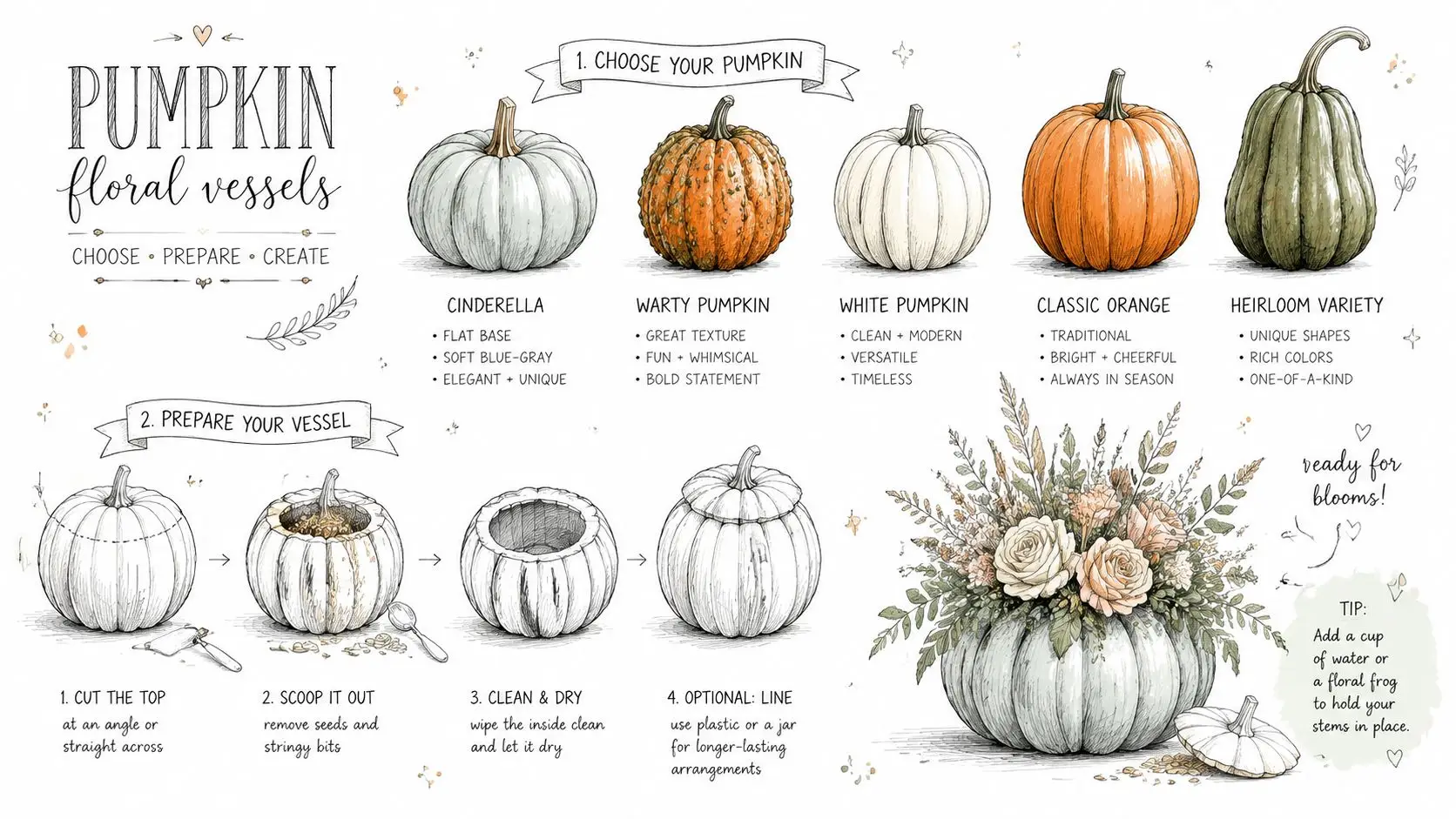
What to look for before you cut
Choose shape before color. A low, wide pumpkin with a full shoulder gives better support, hides the inner container more cleanly, and keeps the center of gravity lower once flowers and water are added. Tall, narrow pumpkins can be beautiful, but they tip more easily and leave less room for secure mechanics.
Check the pumpkin like a florist, not like a shopper buying porch decor.
- Base stability. Set it on a hard, flat surface. If it rocks now, it will be worse after design and transport.
- Skin condition. Skip pumpkins with soft spots, splits, mold, or deep wounds. Those areas break down fast once cut.
- Wall thickness. A shell with some substance holds its shape longer after hollowing.
- Top profile. Look for a lid area that can take a clean opening without collapsing the shoulder.
- Scale. Dining tables, buffets, and entry pieces each need a different footprint and height.
The stem is mostly visual. It can add character, but it does not make a weak pumpkin usable.
Prep that protects the design
Keep the opening tighter than your first instinct. A smaller cut preserves strength around the shoulder and gives you better cover for the inner container. That matters once the piece is moved, because the less empty space you expose, the less chance the arrangement has to shift and show its mechanics.
After cutting, remove every bit of pulp and stringy fiber. Any residue left behind holds moisture, clouds the interior, and speeds decay. I scrape until the inside feels firm and clean, then dry it well before anything else goes in.
One step gets skipped often. Level the base if needed by shaving off a very thin slice from the bottom. Do not flatten it aggressively. You only need enough correction to stop the wobble.
The preservation routine is simple and worth the extra few minutes. As described in Appleyard Flowers' pumpkin vase guide, soak the carved pumpkin in a bleach bath of 1 teaspoon bleach per gallon of water for 20 to 30 minutes, dry it thoroughly, then coat the interior with Vaseline as a moisture barrier. The same guide notes that using a separate glass vessel inside the pumpkin can keep the arrangement presentable for 5 to 7 days, compared with a much shorter life when water sits directly against the flesh.
That last point matters in professional work.
Rule for clean mechanics and better longevity: Never use the pumpkin cavity itself as the water reservoir.
Use a glass or plastic liner that fits snugly inside the shell. It keeps the flowers drinking from clean water, protects the pumpkin from constant saturation, and makes the whole piece easier to lift, reset, and transport without sloshing liquid through the vessel.
A pumpkin centerpiece should behave like a proper container arrangement. Good prep is what gets you there.
Mastering the Mechanics Inside the Pumpkin
The mechanics decide whether the arrangement behaves like a professional centerpiece or a one-hour craft project. This is the hidden engineering. Guests won't notice it directly, but they'll see the result in the line of the flowers, the cleanliness of the water, and whether the piece still looks composed halfway through the event.
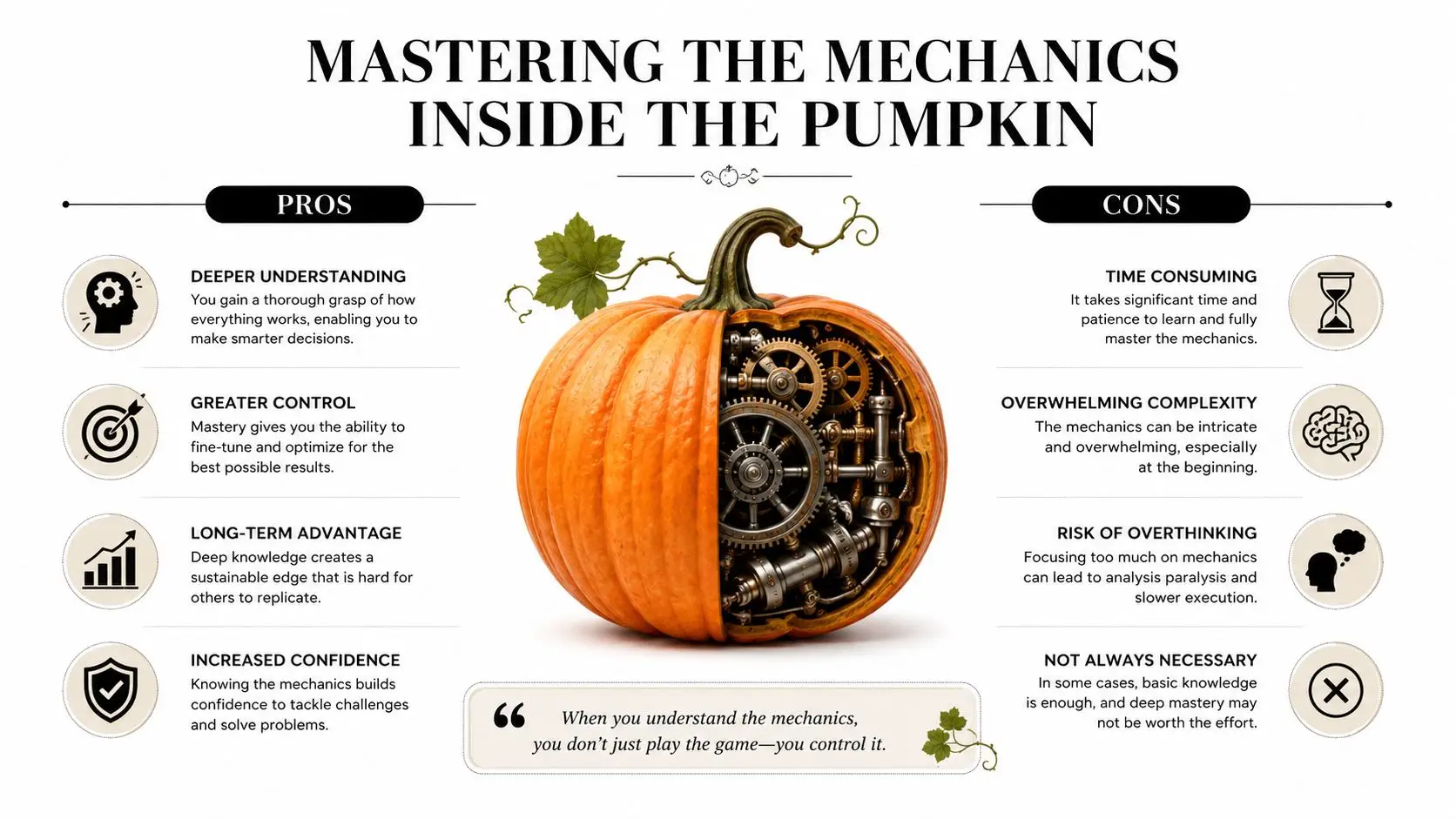
Why foam causes trouble in an organic vessel
Foam gets recommended because it feels easy. It gives fast control, especially to beginners. In a pumpkin, though, easy up front can mean unstable later.
According to First Day of Home's discussion of pumpkin flower arrangements, recent industry data from specialty cut flower growers indicates that foam-based arrangements in organic vessels degrade 30% faster because of bacterial growth from pumpkin residue. That matches what florists see in practice: cloudy water, a sour interior, and stems that stop drinking well.
Foam isn't unusable. It's just riskier in this specific container. If you choose it, you're accepting a narrower freshness window and more sensitivity to internal moisture.
A better mechanics decision chart
For most real pumpkins, I prefer a separate glass insert paired with one of two support methods: chicken wire or a tape grid.
| Mechanics option | What it does well | Where it falls short | Best use |
|---|---|---|---|
| Chicken wire ball | Supports varied stem sizes, allows easy reworking, reusable | Needs practice to size and seat properly | Medium to large pumpkins |
| Tape grid over insert | Fast, clean, good for smaller designs | Limited support for heavy focal flowers | Small pumpkins and low centerpieces |
| Floral foam | Quick placement and precise stem control | More vulnerable in organic vessels | Short-duration designs where replacement is possible |
A few working notes matter more than brand preferences:
- Chicken wire gives you forgiveness. You can move stems, adjust the face of the design, and still maintain support.
- Tape grid works when the flower recipe is lighter and the shape is compact.
- Foam may look neat early, but once the vessel environment turns against it, the whole design can weaken fast.
If I'm designing for transport, I want mechanics that stay coherent even if the arrangement shifts slightly. Wire does that better than foam in a pumpkin because it doesn't rely on a constantly clean, stable organic surface.
If you expect the piece to ride in a vehicle, don't choose mechanics only for studio convenience. Choose mechanics that can survive one hard brake.
Seat the internal glass container snugly. Then fit the wire so it grips the mouth of the insert rather than floating loosely inside it. The arrangement should feel anchored before the first premium stem goes in. If the mechanics are rattling at this stage, the design is already compromised.
Choosing Flowers and Building Your Palette
A pumpkin vessel gives you strong shape and seasonality from the start. That means flower selection should respond to the vessel, not overpower it. The best combinations create contrast in texture and tone while keeping a clear visual hierarchy.
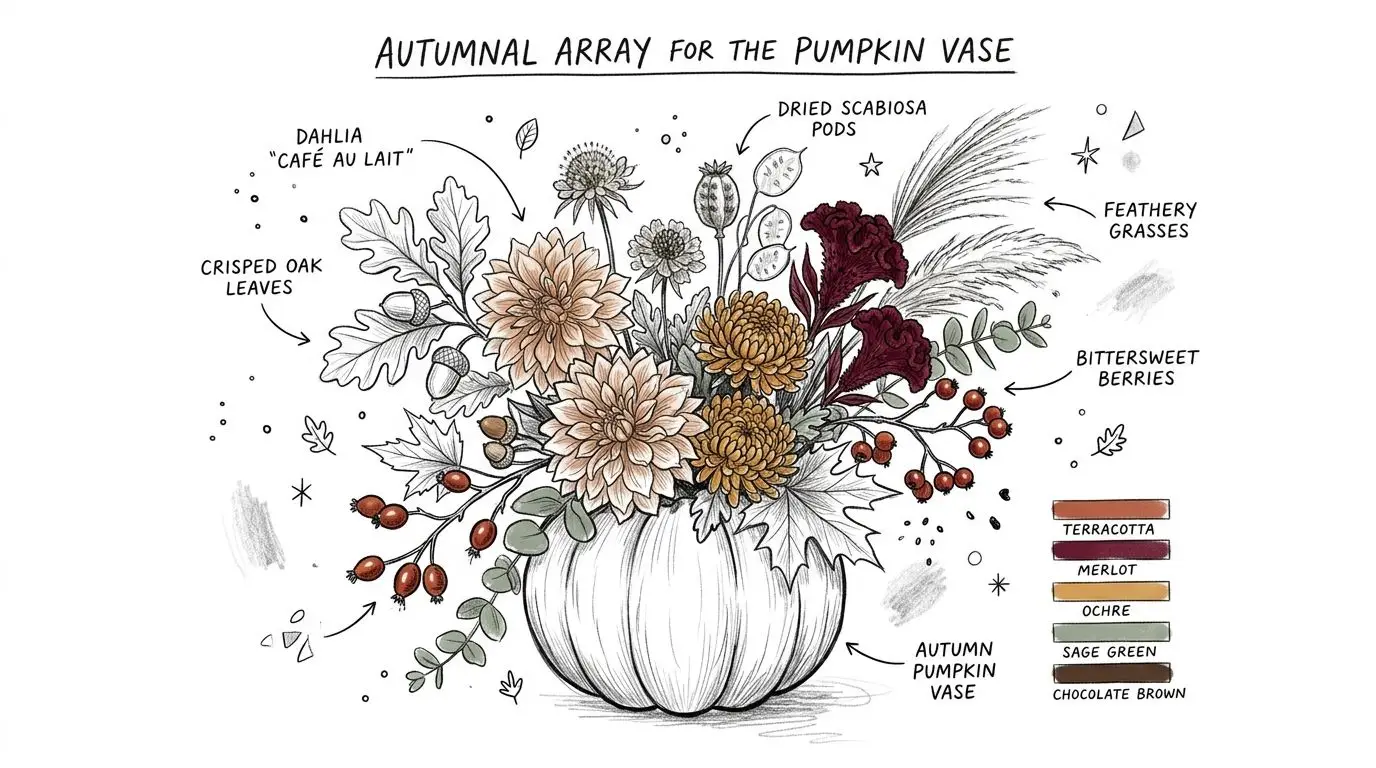
Pumpkins occupy a huge decorative role in the U.S. market. Harry & David's pumpkin facts article cites USDA Economic Research Service data showing that 1.2 billion pounds of pumpkins were produced in 2022, and 80 to 85% were grown specifically for ornamental use. That matters because it explains why pumpkin forms feel so natural in event work. They're already part of the decorative language people expect in fall.
Design the palette from the vessel outward
Start by reading the pumpkin's color temperature.
- Orange pumpkins already carry warmth. Pair them with rust, wine, saffron, plum, or soft cream.
- White pumpkins let you push more elegant pairings such as blush, burgundy, mauve, or green-black foliage.
- Green or gray-green pumpkins are useful when you want jewel tones, copper notes, or darker botanical textures.
One mistake I see often is forcing “fall” by making every component brown, orange, or red. That flattens the arrangement. Better pumpkin work usually includes one dominant seasonal note, one contrasting flower color, and one neutral or leafy buffer.
If you're considering airy garden material, are poppies good cut flowers is a useful question to ask early because not every flower with beautiful movement has the same reliability in event conditions.
A simple recipe that keeps the arrangement readable
Think in three roles: focal, connective, and trailing.
- Focal flowers carry the eye. Use them sparingly and place them with intention.
- Connective flowers soften gaps and move color through the arrangement.
- Trailing or directional elements help the design sit naturally in the pumpkin rather than looking like a bouquet stuffed into a hole.
Zinnias are especially useful when you want color that feels lively instead of formal. The product snapshot for 12 Cut-and-Come-Again Zinnias in Glass Vase describes a lively mix of colors and playful blooms in a clear glass vase. That's a good reminder of what zinnias contribute in a pumpkin arrangement too: bounce, garden energy, and an unfussy feel that suits relaxed fall tables.
Don't match every flower to the pumpkin. Match the overall mood to the event.
A moody reception needs different flowers than a lunch shower, even if both use the same vessel. Let the pumpkin establish the season. Let the flowers establish the atmosphere.
Arrangement Techniques for Breathtaking Results
A good pumpkin arrangement isn't built by filling holes. It's built by controlling line, water access, and internal support from the first stem. Without such control, many attractive ingredient lists still turn into awkward centerpieces. The flowers may be good, but the structure isn't.
A visual walkthrough can help with the flow of the build:
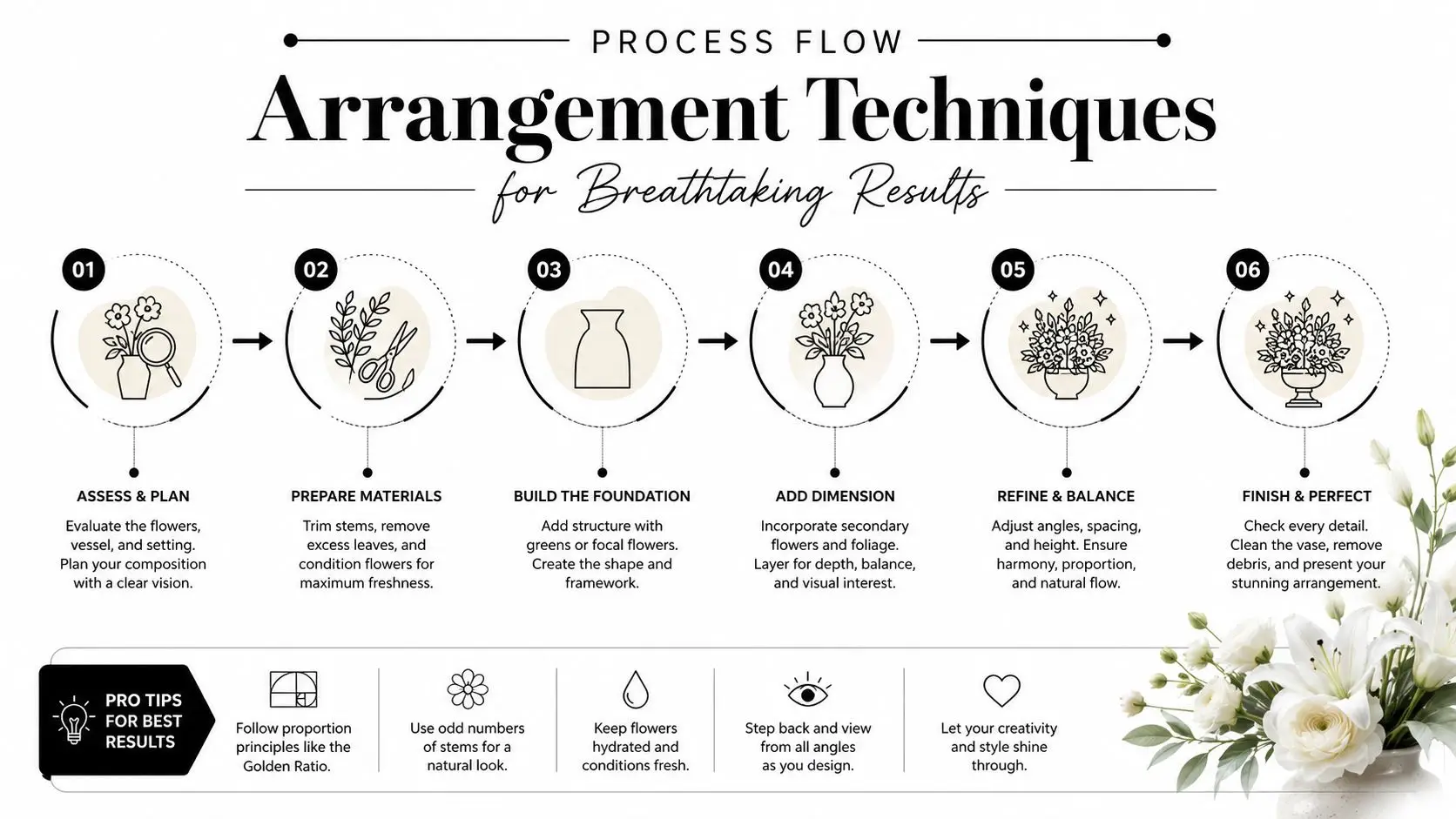
Build shape before you chase detail
Start with foliage or branching material that defines the outer silhouette. This first layer tells you where the arrangement will breathe and where it will stop. If you skip that framework, you'll keep adding flowers to solve a shape problem that greenery should have handled first.
Then process every stem properly. The floral benchmark that matters here comes from the arranging method shown in this pumpkin vase floral tutorial on YouTube: cut stems at a 45-degree angle to maximize water uptake, and build them in a crisscross pattern from the center outward so the stems support one another.
Below the waterline, everything unnecessary comes off. Leaves left in the water are one of the fastest ways to foul the container environment.
The video is worth watching before you build a large piece:
Place stems so the arrangement supports itself
That crisscross method matters because it creates what florists often call a tumble structure. The stems lean on one another instead of standing isolated and vertical. The arrangement looks more natural, and the mechanics don't have to do all the work.
Use this order:
- Set the line with greens or branching stems.
- Place focal blooms in the strongest visual positions, usually not at identical heights.
- Bridge with secondary flowers to connect the focal points.
- Finish with light detail so the arrangement reads as layered, not packed.
Here's the part newer designers miss. Don't put all the best flowers on top. Bring some attention lower and nearer the rim so the arrangement feels integrated with the pumpkin. Otherwise the vessel and flowers read as two separate objects.
Keep turning the piece as you work. Pumpkin arrangements often look finished from the front and unfinished from every other angle.
Scale changes everything
A compact centerpiece and a statement piece use the same principles, but not the same proportions.
For smaller centerpieces:
- Keep the mound low so guests can see across the table.
- Use fewer focal varieties so the composition stays legible.
- Let texture do the work instead of chasing height.
For larger event arrangements:
- Widen the shoulder first before extending upward.
- Anchor heavy blooms lower into the design so transport is safer.
- Create one dominant direction if the arrangement is meant for a buffet, escort table, or entry moment.
If stems start springing back, don't force them straighter. Recut and reposition them so they work with the design's natural movement. A pumpkin vase with flowers looks best when the flowers seem to emerge from the vessel, not when they look pinned into submission.
Longevity Care and Professional Transport
The arrangement isn't finished when the last bloom goes in. Event work lives or dies in the quiet period after design, during holding, loading, transport, unload, and placement. That's where all your prep choices either protect the piece or expose weaknesses.
Keep it fresh without disturbing the design
Use the internal glass vessel for watering, not the pumpkin shell. Add water carefully and avoid splashing the pumpkin interior or saturating any external decorative finish. If stems need refreshing, recut only the ones you can access without tearing apart the structure.
Hold the piece in a cool location and keep it out of direct sun. Organic vessels warm up faster than standard containers, and once heat builds inside the arrangement, everything starts deteriorating sooner.
If you're sourcing event stems in volume, it helps to think like a production florist early in the process. That includes timing, conditioning space, backup material, and replacement stems. For planners and designers working at event scale, wholesale cut flowers become part of the conversation because consistency matters as much as creativity.
Move the piece like a florist not like a host
Transport starts with stabilization, not careful driving alone. A pumpkin arrangement needs a flat crate, box, or tray with enough side support to stop sliding. Pad around the vessel base, not against the flower heads. If the arrangement is broad, leave empty air around the flowers and secure the container zone.
Run this checklist before loading:
- Check the base. Make sure the pumpkin still sits flat after design is complete.
- Test the mechanics. Hold the vessel gently and confirm the internal insert doesn't shift.
- Protect the rim. The cut opening is vulnerable when the piece is jostled.
- Load low and level. Seat the arrangement on a flat surface in the vehicle.
- Finish on site when needed. Save delicate trailing pieces or the most breakable stems for final placement.
This style of design resonates because it blends old material culture with current event aesthetics. Pumpkin-inspired vessels descend from long-standing decorative uses of gourds in Ireland, England, and Scotland before those traditions evolved into the American jack-o'-lantern, as noted earlier from National Geographic. That lineage is part of why the form still feels familiar and celebratory without needing explanation.
A few restrained styling additions can enhance the piece. Soft metallic paint on the exterior can sharpen a formal tablescape. Dried textures can toughen up a garden-heavy recipe. Battery lights can help an evening display read from a distance, as long as they don't interfere with water access or stem placement.
Barbara's Flower Boutique LLC offers cut flowers online with FedEx shipping, with shipping paid by the customer. If you're planning wedding work, event centerpieces, or seasonal designs that call for fresh stems, Barbara's Flower Boutique LLC is one practical source to compare alongside your local wholesalers and farm-direct options.
Discover more from Barbara's Flower Boutique
Subscribe to get the latest posts sent to your email.