You're probably looking at inspiration photos right now and noticing the same problem over and over. The flowers are pretty, but they don't feel personal. They're tight when you want loose, polished when you want alive, and so styled that they stop feeling like flowers gathered for a real celebration.
Whimsical flower arrangements solve that, but only when they're built with intention. A whimsical design isn't just a handful of airy stems dropped into a vase. It needs movement, negative space, sturdy mechanics, and flowers that can handle the timeline from harvest to event setup to the trip home, or to a FedEx box if you're shipping. That balance matters whether you're a florist designing for a client, a planner building tablescape recipes, or a couple taking on wedding flowers yourselves.
The style has deep roots. The earliest known milestone in flower arranging dates back to 2,500 BCE in ancient Egypt, where cut flowers were used in vases and stylized arrangements for burials, processions, and tables, later evolving through traditions such as Han-era Chinese compositions with accessories and eventually into the freer expressive movements that took hold in America during the 1950s and 1960s in this historical overview of flower arrangement. Today's whimsical look grows out of that shift toward movement, texture, and artistic freedom.
Table of Contents
- 1. Enchanted Garden Mixed Wildflower Arrangement
- 2. Whimsical Teacup and Tiny Bud Vase Arrangements
- 3. Moonlit Enchantment Purple and Silvery Blue Palette
- 4. Rainbow Confetti Pop Bright Multi-Color Cheerful Design
- 5. Enchanted Forest Deep Green and Burgundy Moody Arrangement
- 6. Sunburst Happiness Golden Yellow and Coral Warmth
- 7. Delicate Whimsy Soft Peach, Pink, and Ivory Romance
- 8. Celestial Dream White, Silver, and Iridescent Ethereal Design
- 8 Whimsical Flower Arrangements, Side-by-Side Comparison
- Your Blueprint for Whimsical Floral Design
1. Enchanted Garden Mixed Wildflower Arrangement
This is the arrangement people ask for when they say they want flowers to look as if they were gathered that morning. The best versions feel open and relaxed, but they aren't random. They borrow from the free-form tradition that made floral design more expressive and movement-driven, rather than locked into rigid geometry.
Garden weddings, backyard dinners, and bohemian receptions all suit this look. It also works well for mixed centerpieces because the style welcomes natural variation instead of fighting it.
Build the loose framework first
Start with greenery or branchy foliage that gives you a soft scaffold. Then place your larger focal blooms, and only after that add smaller flowers and airy accents around the perimeter. If every stem lands at the same height, the arrangement loses its wild charm and starts reading like a dome.
For a bright, sunlit variation, Twenty-five French Bonita Mix Marigold Stems can bring gold, orange, and red tones with compact ruffled blooms and green foliage. They fit especially well when you want a rustic palette with cheerful density near the base.
A few mechanics keep this style from collapsing into visual mess:
- Use uneven stem lines: Let some flowers sit higher and some dip lower so the silhouette feels gathered, not trimmed.
- Group by character: Place textural flowers in small pockets instead of scattering every variety evenly.
- Keep the edge soft: Small fillers belong around the outside and in transitional gaps, not packed into the center.
Practical rule: Loose doesn't mean unsupported. If the greenery frame is weak, the whole arrangement reads droopy instead of whimsical.
Shipping is a key trade-off. Wild, airy designs don't ship well when fully arranged, so it's usually better to ship stems well conditioned, include flower food and clear care notes, and let the final styling happen on site. If your event leans barn, field, or countryside rather than garden-romantic, it's worth comparing this look with rustic flower arrangements for more grounded styling cues.
2. Whimsical Teacup and Tiny Bud Vase Arrangements
Small arrangements can look effortless and expensive, or they can look like leftover stems dropped into random vessels. The difference comes down to scale discipline. Teacups, bud vases, and petite ceramics demand restraint because every stem shows.
They're especially useful when one flower order needs to stretch across many touchpoints. Think bridal shower tables, welcome drinks, dessert bars, and scattered guest tables where you want intimacy instead of one large centerpiece.
Right at the start, here's the reference image for the mood: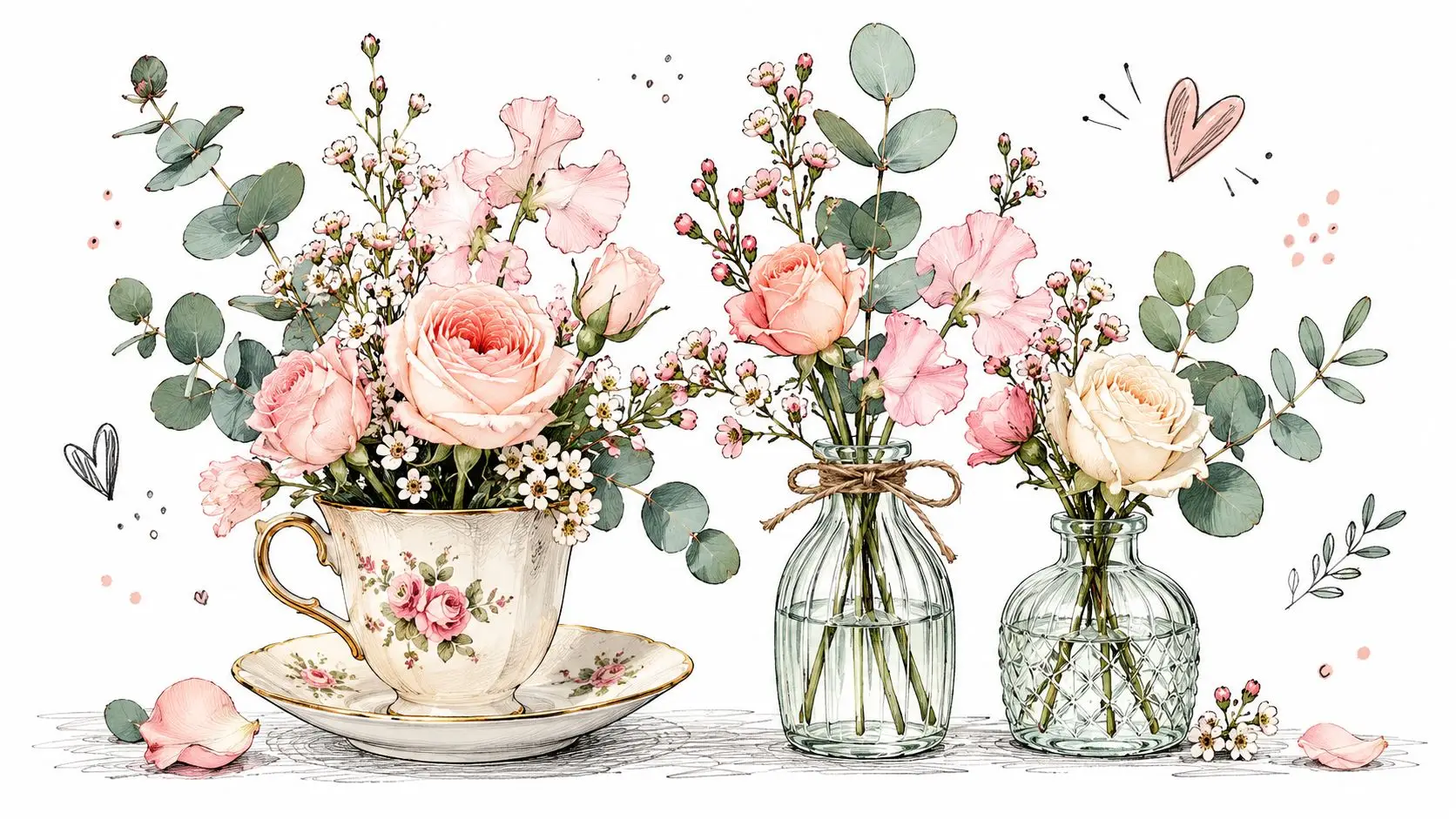
How to make small vessels look intentional
Thin-stemmed flowers and petite branching accents work better than bulky focal flowers. A tiny vessel has almost no room to hide mechanics, so stems need to be trimmed with precision and placed with a clear front, side, and top in mind. If you're using floral foam, cut it tightly so it doesn't lift when stems go in.
The most common mistake is underestimating water management. Small containers dry out fast, and that matters even more during summer events or heated indoor receptions. Give clients or DIY helpers simple assembly cards and direct instructions for daily water changes.
A few practical habits save headaches:
- Ship vessels separately: Flowers can travel in protective wraps. Vintage cups and glass should travel on their own to avoid breakage.
- Repeat one flower across all pieces: That repetition makes a mixed collection feel curated.
- Source local vessels when possible: Antique shops and thrifted ceramics often make more sense than shipping fragile décor.
For hosts who want a seasonal vessel with similar charm but a different mood, a pumpkin vase with flowers can create the same small-scale storytelling effect in autumn.
Small arrangements don't forgive indecision. Every stem either adds charm or creates clutter.
3. Moonlit Enchantment Purple and Silvery Blue Palette
Purple and silvery blue arrangements can become flat very quickly. If every flower lands in the same tone, the design loses depth and starts looking heavy. The fix is tonal layering. Deep purple, smoky blue, cool lavender, and crisp white need to appear in distinct pockets.
This palette shines at evening weddings, moody editorials, and fantasy-inspired events. It's elegant, but it still leaves room for whimsy when the flower shapes contrast well.
Here's the visual direction: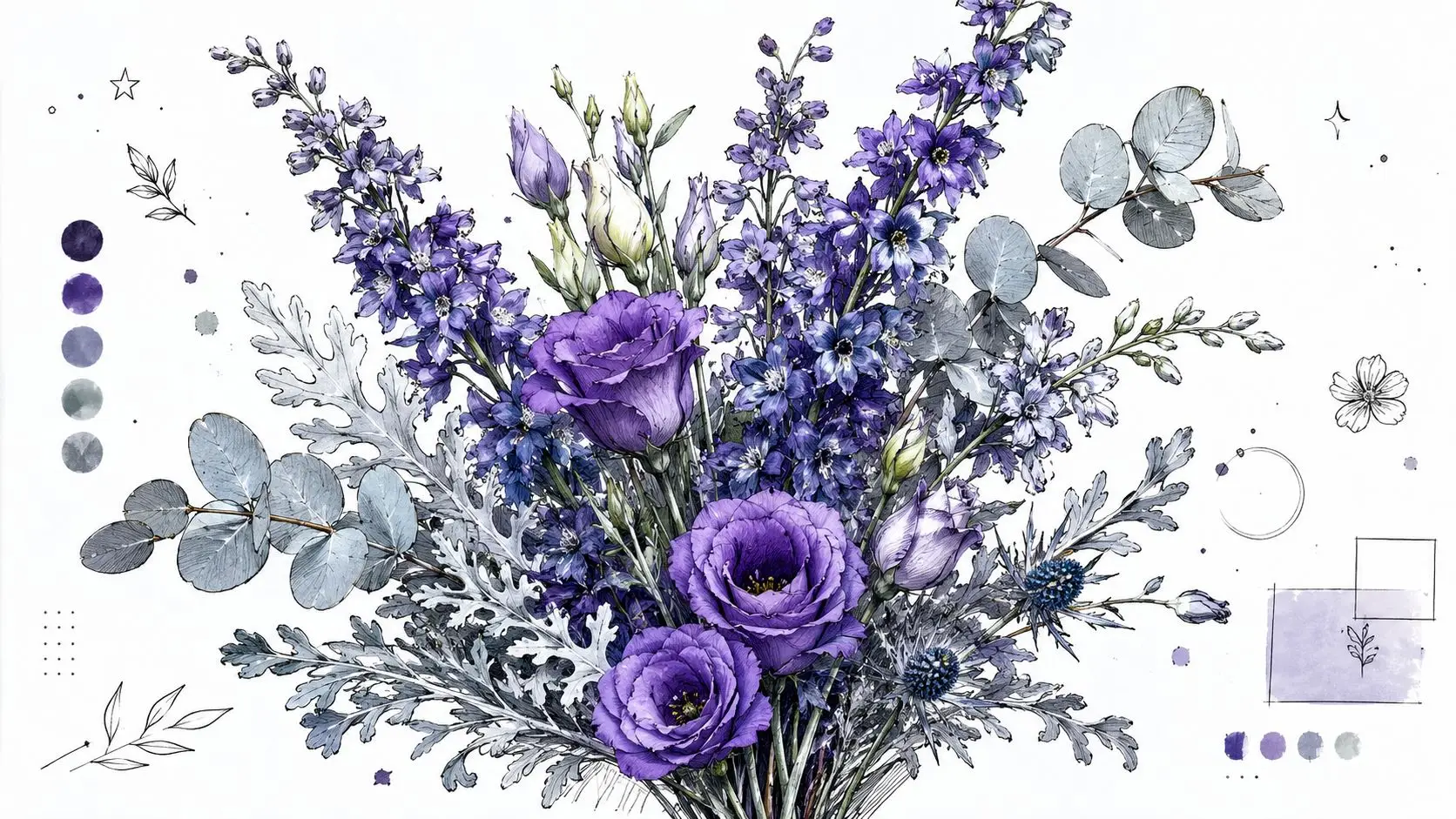
Keep the palette layered, not flat
Use silvery foliage as a design element, not just filler. It separates darker blooms and gives the eye somewhere to rest. Then mix forms. Spiky flowers add tension, feathery stems create drift, and rounded blooms keep the arrangement from becoming scratchy.
When I'm building this kind of recipe, I avoid overusing baby's breath. It can dilute the moody effect. Silvery foliage and selective white blooms do that job with more sophistication.
For florists and planners sourcing unusual stems, specialty cut flowers are often where this palette becomes memorable rather than generic.
One economic reality is worth remembering here. In floral preference research, participants were willing to pay $40.00 more for arrangements containing roses, while arrangements with chrysanthemums were valued $26.75 less than those with alstroemeria in this HortScience study on consumer valuation of floral arrangements. That doesn't mean every moonlit design needs roses, but it does mean species choice can shift how clients perceive value even in a more artistic composition.
4. Rainbow Confetti Pop Bright Multi-Color Cheerful Design
A rainbow design can go wrong faster than almost any other style. Without discipline, it looks accidental. With good color placement, it feels festive, modern, and generous.
This is one of the easiest whimsical flower arrangements to use for birthdays, congratulations flowers, and community events because it reads instantly from across the room. It also photographs well in simple white or clear vessels because the flowers do all the talking.
Control the chaos
Build an invisible structure before you chase color. I like to imagine a loose grid, then assign colors across the arrangement so one hot shade doesn't swallow the rest. Gerbera daisies or another bold bloom can anchor the design, while smaller flowers fill in transitions.
The dome shape is useful here because it keeps the energy contained. Unlike the wildflower style, this one usually looks better when flower heads sit at a more consistent height. That gives the eye a clear silhouette, even when the palette is loud.
Use this quick approach:
- Choose one dominant bright: Let yellow, orange, pink, or red lead instead of asking every color to carry equal weight.
- Repeat each major hue: A single blue stem in one corner looks like a mistake. Repetition makes the palette feel planned.
- Fill with smaller sprays: They smooth harsh gaps between larger focal heads.
For DIY work, zinnias often suit this recipe because they add color without making the arrangement feel stiff. This style also adapts well to event pieces assembled after delivery, since clustered cheerful designs are easier to reconstruct on site than very airy garden forms.
5. Enchanted Forest Deep Green and Burgundy Moody Arrangement
This one leans dramatic, but it still needs breathing room. Many moody arrangements fail because they're packed too tightly with dark blooms and heavy greens. Instead of reading mysterious, they read dense and tired.
Deep burgundy, wine, near-black accents, and rich foliage work best when the arrangement has windows of space and a few lighter interruptions. That contrast is what creates depth.
Weight and contrast matter
Layer dark tones from deepest to lightest. Put your richest burgundy near the visual center, then soften outward with wine and green. Cream or white can help, but only in small doses. Too much contrast breaks the woodland mood.
Texture does most of the work here. Broad foliage, trailing foliage, and finer greenery each play different roles. If every leaf shape is similar, the whole arrangement turns muddy.
A practical formula:
- Start with foliage architecture: Place the strongest greens first so the dark flowers don't sink into the arrangement.
- Use one reflective element: Glass, smoke-colored vessels, or a muted metallic container can keep the design from feeling visually heavy.
- Stay slightly loose: Even a moody arrangement needs air pockets if you want it to feel whimsical instead of formal.
Dark palettes need light somewhere. If not in bloom color, then in spacing, vessel choice, or foliage tone.
This style is popular for fall weddings, hotel installations, and nontraditional ceremonies because it feels cinematic. It's also forgiving for planners who want statement flowers that can stand up against darker interiors, wood venues, or candlelit tables.
6. Sunburst Happiness Golden Yellow and Coral Warmth
Warm palettes can become one-note if every flower is round and every color sits in the same saturation range. The answer is layering shape as much as color. Sunflowers, spray roses, ranunculus, freesia, solidago, and yarrow each contribute a different kind of motion.
This arrangement works for spring celebrations, baby showers, congratulatory flowers, and outdoor events where cooler palettes would disappear in full daylight. It's joyful without needing novelty props.
Warm palettes need shape, not just color
Sunflowers make a strong focal point, but they need support. If you place them all at one level, the arrangement looks flat. Stagger them, then tuck coral and gold companions between them so the eye moves naturally.
Marigolds can be especially useful in this family of colors. Their ruffled form adds density and their orange-red-gold range keeps a warm arrangement from feeling too predictable. Keep stems clean above the water line, especially with yellow flowers, because cloudy water shows quickly in lighter designs.
One practical wedding lesson comes from a documented DIY garden wedding floral project. The flowers were held in about 20 heavy-duty buckets with water, then stored in the darkest, coldest room with blinds closed and lights off to slow premature opening and keep blooms in event condition as described in this DIY wedding floral case study. For warm-toned spring flowers that can move fast, that kind of bloom-stage control can make the difference between fresh and blown open.
7. Delicate Whimsy Soft Peach, Pink, and Ivory Romance
Soft romantic palettes aren't automatically whimsical. In fact, they often drift into standard wedding territory unless the construction stays airy and the flower choices have enough personality. The trick is to let each bloom show itself instead of packing everything into a tight bridal-mass shape.
Garden roses, lisianthus, ranunculus, and sweet pea are natural fits. They offer ruffles, cups, and gentle movement without looking stiff. This style belongs in fine-art wedding work, engagement flowers, and intimate ceremonies where subtlety matters more than impact from across a ballroom.
Use premium flowers carefully
When a recipe leans on premium-looking flowers, every handling choice becomes more visible. Strip foliage below the water line, keep buckets clean, and avoid bruising by overworking the stems during placement. Loose spacing is part of the luxury look here. Crowding destroys it.
A professional whimsical spring design offers a useful construction reference. The recipe used 7 spray roses, 2 spray mums, 3 hypericum, 6 green trick dianthus, 3 stems of solidaster, and 3 hyacinth stems, with gravel stabilizing unconventional boot containers and lily grass cut to trail outward for movement, while the designer rotated the piece to check visual balance on all sides in this Floral Design Institute demonstration. Even if your palette is softer and more bridal, that same discipline applies. Movement should still feel balanced from every angle.
For shipping, include handling notes that tell recipients to unpack gently and let the flowers hydrate before arranging. Romantic flowers often arrive beautifully, but they don't enjoy rough assembly right out of the box.
8. Celestial Dream White, Silver, and Iridescent Ethereal Design
White and silver designs look effortless in photos, but they're among the hardest whimsical flower arrangements to execute well. Every bruise shows. Every water issue shows. Every awkward mechanic shows.
The palette works for winter weddings, art-forward installations, celestial themes, and very modern events where color restraint is part of the statement. White flowers, silver foliage, and a few carefully chosen iridescent touches can look ethereal. Too many accessories, and the arrangement turns crafty.
Why this style is hardest to ship
Texture matters more here than color variety. Use creamy whites, bright whites, and cool white-blue tones together so the design doesn't read flat. Silvery foliage should carry much of the support work, and spiky elements can add shape without forcing extra color into the recipe.
Current style advice in this niche leaves a major practical gap. Existing guidance often pushes crystals, feathers, dried elements, or swirling non-floral additions, but it doesn't solve the basic shipping question of how to create garden-style movement using only living stems that can survive rigid packing for delivery as discussed in this critique of whimsical arrangement guidance for shipped flowers. If you ship with FedEx, that gap matters. Fragile add-ons can snap, shift, or crush delicate white blooms.
White designs need stricter mechanics than colorful ones because they don't hide flaws.
There's another sourcing challenge too. Guidance around naturally curvy stems, varying bloom stages, and negative space remains strong on aesthetics but weak on practical cost breakdowns and remote sourcing realities for shipped flowers as noted in this discussion of garden-style floral sourcing challenges. That means professionals often have to test recipes stem by stem, especially when they can't hand-pick local buckets.
8 Whimsical Flower Arrangements, Side-by-Side Comparison
| Arrangement | 🔄 Design Complexity | ⚡ Resources & Shipping Demands | ⭐📊 Expected Impact & Longevity | 💡 Ideal Use Cases | Key Advantages |
|---|---|---|---|---|---|
| Enchanted Garden Mixed Wildflower Arrangement | Medium–High, asymmetrical skill required | Moderate, foliage-forward, larger vessel, seasonal blooms; heavier shipping | High visual charm; good vase life with foliage, ⭐⭐⭐ | Garden/boho weddings, rustic events | Forgiving, DIY-friendly, cost-effective |
| Whimsical Teacup & Tiny Bud Vase Arrangements | Low–Medium, small scale but time‑intensive if many pieces | Low per piece but vessel logistics; recommend shipping flowers separately | Moderate impact; shorter vase life; very photogenic, ⭐⭐📊 | Tea parties, bridal showers, scattered centerpieces | Low cost per piece, versatile installations, Instagram-friendly |
| Moonlit Enchantment: Purple & Silvery Blue Palette | High, sophisticated color mixing and structure | High, specialty stems (delphinium, lisianthus), careful packing, premium shipping | Strong, memorable drama; premium pricing; delicate handling, ⭐⭐⭐ | Evening/fantasy weddings, editorial shoots, luxury events | Unique, highly photogenic, commands higher price |
| Rainbow Confetti Pop: Bright Multi‑Color Design | Medium, requires careful color balancing/grid placement | Moderate, uses common commercial flowers; dense foam, ships compactly | High celebratory impact; durable when dense, ⭐⭐⭐ | Birthdays, festivals, congratulations, youth markets | Broad appeal, cost-effective, bold color statement |
| Enchanted Forest: Deep Green & Burgundy Moody Arrangement | High, skilled design to avoid overly somber look | High, premium dark blooms, careful packing to avoid bruising | High sophistication and longevity; premium perceived value, ⭐⭐⭐ | Fall/winter luxury weddings, hotel installs, dark-romance events | Luxurious aesthetic, strong photographic results, seasonally versatile |
| Sunburst Happiness: Golden Yellow & Coral Warmth | Low–Medium, structural support for heavy blooms (sunflowers) | Moderate, sturdy stems, upright shipping recommended, seasonal peaks | High emotional/cheerful impact; generally good vase life, ⭐⭐⭐ | Spring weddings, baby announcements, congratulatory gifts | Readily available blooms, high perceived value, budget-friendly |
| Delicate Whimsy: Soft Peach, Pink & Ivory Romance | High, precision and delicate handling required | High, fragile premium flowers, FedEx Priority Overnight recommended | Very high romantic appeal; long-lasting with careful care, ⭐⭐⭐ | Luxury weddings, engagement shoots, bridal editorials | Timeless elegance, commands premium pricing, wedding-focused |
| Celestial Dream: White, Silver & Iridescent Ethereal Design | High, creative/textural focus; careful accent use | High, iridescent materials, meticulous wrapping, priority shipping | Very high uniqueness and shareability; white shows imperfections, ⭐⭐⭐ | Celestial/enchanted weddings, editorial and viral social media pieces | Distinctive, highly shareable, adaptable across fantasy themes |
Your Blueprint for Whimsical Floral Design
Whimsical floral design works when romance and mechanics agree with each other. That's the part people often miss. The airy line, the casual-looking movement, the negative space, and the sense that the flowers fell into place all depend on clear decisions about flower shape, stem strength, vessel size, hydration, and timing.
The most useful way to choose among these styles is to match the arrangement to the setting first. Garden mixed wildflowers suit open-air weddings and relaxed tables. Teacups and bud vases suit scattered, intimate hosting. Purple and silver palettes belong to evening events and editorial moods. Rainbow designs carry celebrations with a lot of energy. Moody burgundy and green designs need contrast and room to breathe. Warm yellow and coral arrangements love daylight. Soft peach and ivory require careful handling. White and silver celestial work demands the cleanest execution of all.
For florists and planners, the trade-offs are straightforward. Loose styles often look best after on-site assembly. Small vessels require more maintenance than clients expect. Premium blooms raise perceived value, but they also make damage more obvious. Dramatic palettes need restraint. Shipping-friendly design usually asks for sturdier mechanics and fewer fragile extras than inspiration photos suggest.
For DIY couples, the strongest approach is usually simpler than the internet makes it sound. Choose a palette with a clear mood. Use fewer flower varieties than you think you need. Let one or two textural ingredients create the whimsical character instead of trying to force it with too many novelty elements. Condition flowers properly, keep water clean, and leave final styling for as late as your timeline allows.
If you're ordering stems to build your own arrangements, it helps to work with growers and sellers who understand both design intent and shipping realities. Barbara's Flower Boutique LLC is one example in that space, offering cut flowers online and shipping with FedEx, with shipping paid by the customer. That kind of direct access can be especially useful when you already know the mood, palette, and flower character you're trying to build.
Whimsy isn't accidental. It's structured freedom. Once you understand that, these arrangements stop feeling intimidating and start feeling buildable.
If you're planning a wedding, styling an event, or sourcing stems for your own whimsical flower arrangements, Barbara's Flower Boutique LLC offers cut flowers online with FedEx shipping. It's a practical option for florists, planners, and DIY couples who want to build designs from shipped stems and handle final styling themselves.
Discover more from Barbara's Flower Boutique
Subscribe to get the latest posts sent to your email.